Moorestown, New Jersey UFO Sighting (December 7, 1963) — FBI Files
An FBI-documented sighting in Moorestown, New Jersey, involved an unusual aerial object observed one day before the Pan Am Flight 709 mid-air explosion.
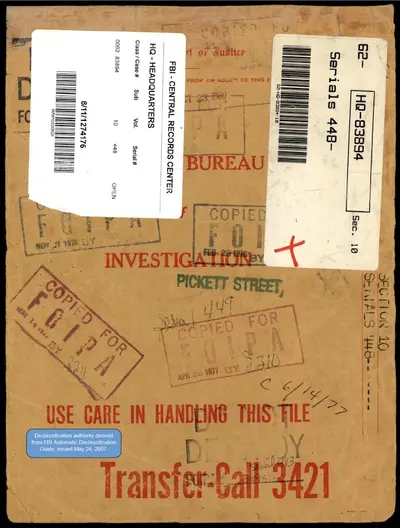
Background
On December 7, 196 and in Moorestown, New Jersey, U.S. government investigators recorded an unidentified-object incident later released to the public on May 8, 2026, as part of the Presidential Unsealing and Reporting System for UAP Encounters (PURSUE). This case emerged from the heightened atmospheric tension of the Cold War, an era characterized by intense scrutiny of the skies and a profound fear of unauthorized aerial incursions. During this period, the United States military and intelligence communities maintained rigorous monitoring of the upper atmosphere to detect potential Soviet technological advancements.
The incident was investigated under the framework of the Air Force’s Project Blue Book or its predecessors, which served as the primary repository for Unidentified Flying Object reports in the United States. Because the sighting occurred in a region of the Atlantic coast that housed various sensitive infrastructure and military interests, the case was filed with the Federal Bureau of Investigation. Under the Bureau’s standing protocols for the protection of vital installations, various field offices, including those in Knoxville, Albuquerque, and Los Angeles, were tasked with routing such reports to headquarters for centralized analysis. This bureaucratic structure ensured that any aerial phenomenon that could potentially threaten national security or involve espionage was processed through high-level federal channels.
What the document records
The released documentation details a specific observation made on December 7, 1963, in which a witness observed an unusual object in the sky exhibiting unusual behavior. The nature of the object’s movement and its physical characteristics remained unidentified by the investigating agencies. Notably, the witness expressed a belief that this object was connected to the tragic crash of Pan American Flight 709, which occurred on December 8, 1963. That aircraft exploded mid-air near Elkton, Maryland, resulting in the deaths of all 81 people on board.
The gravity of the witness’s suspicion was reflected in the manner of their report. The witness sent a recording of the observation directly to J. Edgar Hoover, the Director of the FBI, suggesting a direct link between the presence of the unidentified object and the subsequent disaster involving the Pan Am flight. While the document provides this specific correlation, the total number of witnesses involved in the Moorestown sighting is not specified in the released record.
Type of case
This case is classified as a visual sighting reported by ground or air observers. Such reports were common during the mid-twentieth century, often involving descriptions of lights, metallic spheres, or craft performing maneuvers that appeared to defy the aerodynamic limitations of contemporary jet propulsion.
Status
All records released under the PURSUE program are designated unresolved by the All-domain Anomaly Resolution Office (AARO) by default. The federal government has not concluded that the events were anomalous, has not concluded that they were conventional, and has not ruled out either possibility. The lack of a definitive conclusion is a standard feature of many declassified files from this era, as the technology required to definitively identify such objects was often unavailable to investigators at the time of the sighting.
Conventional candidates for sightings of this period include experimental aircraft, weather balloons, particularly those associated with the Project Mogul series in the late 1940s, and atmospheric optical phenomena such as sundogs or lenticular clouds. Additionally, astronomical objects including Venus, the Moon, and meteors near the horizon frequently provided explanations for unidentified aerial phenomena. The Moorestown case remains a subject of historical interest due to its proximity in time to a major aviation catastrophe and its direct communication with the highest levels of federal law enforcement.