Elkton, Maryland UFO Sighting (December 8, 1963) — FBI Files
An investigation into an unusual aerial object reported in Elkton, Maryland, following the mid-air explosion of Pan American Flight 709.
Background
On December 8, 1963, in Elkton, Maryland, U.S. government investigators recorded an unidentified-object incident later released to the public on May 8, 2026, as part of the Presidential Unsealing and Reporting System for UAP Encounters (PURSUE). This case emerged during the height of the Cold War, a period characterized by intense atmospheric surveillance and heightened sensitivity regarding unauthorized aerial incursions. The incident was investigated under the framework of the Air Force’s Project Blue Book or its predecessors, which served as the primary repository for Unidentified Flying Object data during the mid-twentieth century.
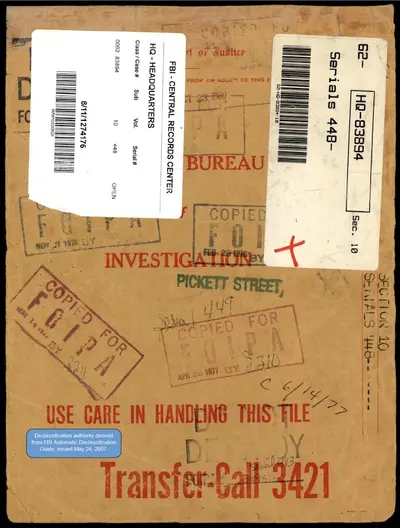
The documentation for this event was filed with the Federal Bureau of Investigation. Under the Bureau’s established protocols for the protection of vital installations, various field offices, including those in Knoxville, Albuquerque, and Los Angeles, were responsible for routing UFO reports to headquarters. This centralized reporting structure ensured that any aerial phenomenon that could potentially threaten national security or critical infrastructure was monitored by federal authorities. The geographic location of Elkton, situated near significant transportation corridors and coastal regions, placed it within a zone of interest for monitoring mid-Atlantic airspace.
The Incident and Documentation
The primary focus of the released documentation concerns the destruction of Pan American Flight 709. On December 8, 1963, the aircraft, which was carrying 73 passengers and a crew of eight, exploded in mid-air and crashed near Elkton, Maryland. While the cause of the mid-air explosion remained a subject of investigation, the records include a specific report from an observer regarding aerial activity. This observer claimed to have seen an unusual object in the sky the previous day, December 7, 1963. The observer expressed the belief that this object was responsible for the crash, specifically suggesting that the plane had been destroyed by an “air mine.”
The released document does not specify the total number of witnesses to the object or the subsequent crash. The investigation into the object’s presence and its potential link to the destruction of Flight 709 remains a central component of the archival record. Such reports of aerial objects being linked to kinetic events or explosions were a recurring theme in Cold War-era sightings, often prompting intense scrutiny from both military and intelligence agencies.
Type of Case and Scientific Context
This case is classified as a visual sighting reported by ground or air observers. During this era, the identification of such phenomena often relied on the interpretation of light patterns, movement, and sudden disappearances of objects against the night sky. The phenomenon of an “air mine” or similar explosive aerial device represents a specific subset of unidentified aerial phenomena reports that involve perceived threats to aviation safety.
The status of all records released under the PURSUE program is designated as unresolved by the All-domain Anomaly Resolution Office (AARO) by default. The federal government has not concluded that the events were anomalous, nor has it concluded that they were conventional, and it has not ruled out either possibility. In the context of the 1960s, investigators frequently evaluated sightings against a variety of known variables. Conventional candidates for sightings of this period included experimental aircraft, weather balloons—specifically those associated with the Project Mogul series—and various atmospheric optical phenomena such as sundogs or lenticular clouds. Additionally, astronomical objects like Venus, the Moon, or meteors near the horizon were often considered as potential sources of misidentification. The Elkton case remains a part of the broader historical record of unidentified aerial activity investigated by the United States government.