Adamski contactee claim Case (1959) — FBI Files (D1P81)
In May 1959, FBI records document a meeting at Soestdijk Palace involving George Adamski and Queen Juliana regarding claims of extraterrestrial contact.
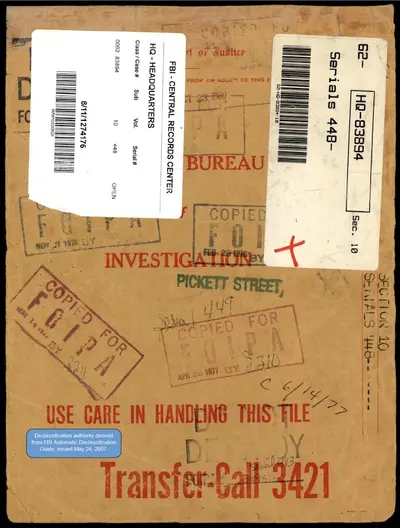
Background
In May 1959, at Soestdijk Palace in Holland, U.S. government investigators recorded an unidentified-object incident. These records were later released to the public on May 8, 2026, as part of the Presidential Unsealing and Reporting System for UAP Encounters (PURSUE). This case emerged during the height of the Cold War, a period characterized by intense atmospheric surveillance and heightened anxiety regarding unauthorized aerial incursions. The investigation of this specific incident fell under the purview of the Air Force’s Project Blue Book or its preceding investigative frameworks, which were tasked with analyzing Unidentified Flying Object reports across various jurisdictions.
The documentation was filed with the Federal Bureau of Investigation, following established administrative procedures. During this era, the FBI’s various field offices, including those in Knoxville, Albuquerque, and Los Angeles, operated under standing protocols designed to protect vital installations and national security interests. When reports of unidentified aerial phenomena surfaced, these offices were responsible for routing the information to headquarters to ensure centralized monitoring of potential threats to airspace or sensitive diplomatic sites.
The Adamski Meeting
The core of the May 1959 entry concerns a specific diplomatic and interpersonal encounter. During this month, Queen Juliana requested a meeting with George Adamski, an individual known for his claims regarding extraterrestrial contact. Adamski presented himself as a contactee, a term used during the mid-twentieth century to describe individuals who asserted they had established communication with beings from other worlds. He described these entities as technologically advanced and benevolent, claiming they originated from planets such as Venus, Saturn, and Mars. According to his accounts, these beings possessed a profound interest in human welfare and advocated for a global philosophy of brotherhood.
While the released document details the nature of these claims and the request for the meeting, the specific number of witnesses present during the encounter is not specified in the official record. The documentation focuses on the recording of the event and the claims made by Adamski rather than providing a detailed roster of attendees.
Classification and Investigation
The case is classified as a visual sighting reported by ground or air observers. Such reports were common during the late 1950s, as the proliferation of high-altitude reconnaissance and the expansion of civilian aviation increased the frequency of sightings of unidentified objects in the sky. The nature of the Adamski claim, however, shifts the focus from a purely kinetic sighting of an object to the documentation of a person’s claims regarding extraterrestrial interaction.
The status of this case remains officially unresolved. All records released under the PURSUE program are designated as unresolved by the All-domain Anomaly Resolution Office (AARO) by default. The federal government has maintained a position of neutrality regarding the incident, neither concluding that the events were anomalous nor confirming that they were the result of conventional phenomena. The government has not ruled out either possibility.
In the broader context of mid-century aerial investigations, researchers often consider several conventional candidates for such sightings. These include experimental aircraft developed during the arms race, weather balloons—specifically those associated with the Project Mogul series of the late 1940s—and various atmospheric optical phenomena such as sundogs or lenticular clouds. Additionally, astronomical objects such as the Moon, Venus, or meteors passing near the horizon are frequently cited as potential explanations for visual reports of unidentified objects during this period.