Kansas City, Missouri UFO Sighting (November 5, 1957) — FBI Files
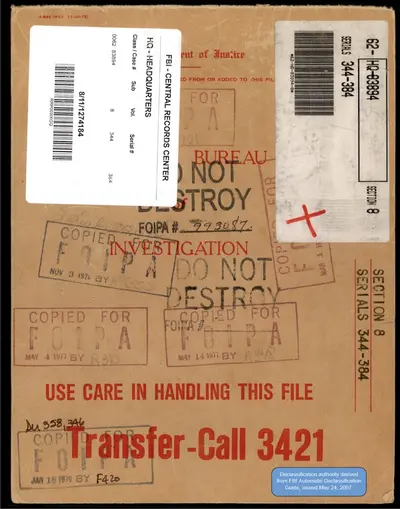
An FBI file reveals a 1957 report of film footage depicting an unidentified object over Kansas City, linked to an aircraft industry employee in Texas.
Historical Context
The late 1950s represented a period of heightened atmospheric tension in the United States, characterized by the rapid advancements of the Cold War and the dawn of the Space Age. Following the 1957 launch of Sputnik 1, the American public and government agencies maintained a state of constant vigilance regarding objects in the upper atmosphere. During this era, unidentified flying objects were not merely viewed as scientific curiosities but as potential matters of national security. The United States Air Force maintained Project Blue Book to investigate these sightings, seeking to determine if any phenomena posed a threat to domestic airspace or represented secret Soviet technology.
Within this climate of surveillance, the Federal Bureau of Investigation maintained specific protocols for handling reports that might involve threats to vital installations or infrastructure. While the Air Force focused on the technical and aerodynamic aspects of sightings, the FBI’s involvement often centered on the intelligence implications of such reports. Field offices in cities such as Knoxville, Albuquerque, and Los Angeles were tasked with routing significant unidentified object reports to headquarters to ensure that any potential breach of domestic security was documented and assessed by federal authorities.
The Kansas City Incident
On November 5, 1957, an incident involving an unidentified object was recorded in Kansas City, Missouri. The details of this case were not made available to the general public until May 8, 2026, when they were released under the Presidential Unsealing and Reporting System for UAP Encounters (PURSUE). The documentation provides a window into how private citizens interacted with federal investigative channels during the mid-century period.
The primary information in the file stems from a report made by Donald Gash. According to the records, Gash’s uncle, who was employed by an aircraft concern in Fort Worth, Texas, had captured footage of an unidentified object in the sky approximately two years prior to the report. This footage, described as being fifteen feet in length, was presented to Gash during a visit to Kansas City roughly eighteen months before the official report was filed. The presence of an individual working within the aircraft industry added a layer of technical significance to the claim, as such employees often possessed the specialized knowledge required to identify conventional aerial phenomena.
The documentation indicates that Gash and his uncle had intentionally avoided reporting the incident for a significant period. The decision to eventually contact authorities was driven by the perceived relevance of the footage in light of recent international events, suggesting that the escalating global space race influenced the decision to disclose the sighting. While the document details the existence of the film, it does not specify the total number of witnesses present during the viewing of the footage. The report notes that the individuals involved felt “foolish” regarding the disclosure, reflecting the social stigma often associated with reporting unidentified aerial phenomena during the 1950s.
Analytical Status
The case remains classified as unresolved by the All-domain Anomaly Resolution Office (AARO), which applies this designation to all records released under the PURSUE program by default. The federal government has maintained a neutral stance, neither concluding that the object was anomalous nor confirming that it was a conventional phenomenon.
In the context of 1950s aerial sightings, several conventional explanations are frequently considered by investigators. These include the presence of experimental high-altitude aircraft, weather balloons—specifically those associated with the Project Mogul series—or atmospheric optical phenomena such as lenticular clouds and sundogs. Additionally, astronomical bodies like the Moon, Venus, or meteors appearing near the horizon are often evaluated as potential sources for such reports. The Kansas City file, which includes the mention of photographic or video evidence, remains a significant piece of the archival record regarding the intersection of private observation and federal intelligence monitoring.