Washington UFO Invasion
UFOs invaded the airspace over the nation's capital on two consecutive weekends, tracked on radar and seen by pilots. The incidents triggered the largest Air Force press conference since WWII.
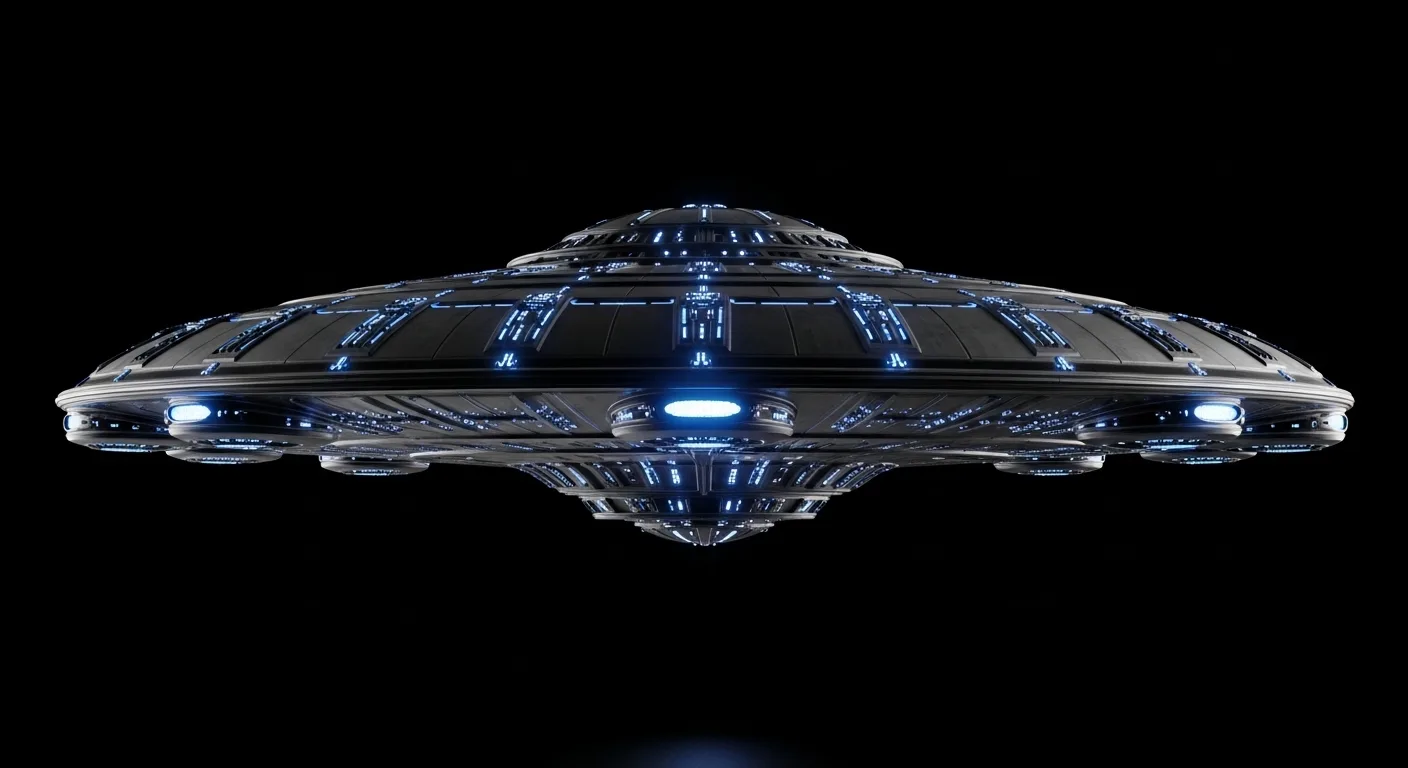
In the summer of 1952, the United States was a nation on edge. The Korean War ground on with no end in sight. The Soviet Union had detonated its first atomic bomb three years earlier, shattering America’s nuclear monopoly and inaugurating an era of existential dread. Senator Joseph McCarthy’s anti-communist crusade was at its zenith, casting suspicion on institutions and individuals at every level of American society. And in the skies above the nation’s capital, something was happening that would make the Cold War’s most alarming scenarios look almost mundane. On two consecutive weekends in July 1952, unidentified flying objects penetrated the most heavily defended airspace in the world, flying over the White House, the Capitol Building, and the Pentagon while being tracked on multiple independent radar systems and observed visually by experienced pilots and ground personnel. The response from the United States government would include the largest military press conference since the end of World War II and would set the course for official UFO policy for decades to come.
The Washington UFO incidents of 1952 remain among the most significant and best-documented UFO events in history, a case in which the evidence, the witnesses, and the implications converged to create a crisis that the most powerful government on earth struggled to contain.
The Summer of Saucers
The Washington sightings did not occur in a vacuum. The summer of 1952 was the peak of what UFO researchers call the Great Flap, a period of intense UFO activity across the United States that produced more reported sightings than any comparable period before or since. Between June and September of that year, the Air Force’s Project Blue Book, the official government investigation of UFO reports, received over seven hundred sighting reports, an average of more than five per day and a dramatic increase over the normal reporting rate.
The reasons for this surge in sightings have been debated ever since. Skeptics point to the psychological climate of the era, arguing that Cold War anxiety, media coverage of UFO reports, and the human tendency to see what one expects to see combined to produce a self-reinforcing cycle of sighting, reporting, and further sighting. Believers counter that the sheer volume and quality of the reports, many from trained military observers using calibrated instruments, cannot be explained by psychological factors alone and that something genuinely anomalous was occurring in American skies.
Whatever the explanation, the Great Flap created a context of heightened attention and expectation that would give the Washington sightings their maximum impact. When UFOs appeared over the nation’s capital, they appeared before an audience that was already primed to take such reports seriously, a circumstance that would simultaneously enhance the sightings’ credibility and provide skeptics with a ready-made explanation for them.
The First Weekend: July 19-20, 1952
The events that would shake the foundations of American UFO policy began shortly before midnight on Saturday, July 19, 1952, at Washington National Airport, the primary commercial airport serving the nation’s capital. Edward Nugent, an air traffic controller working the radar at the Airport Traffic Control Center, noticed a cluster of seven slow-moving targets on his radar screen in an area southeast of Andrews Air Force Base. The targets did not correspond to any known aircraft, and their behavior was unlike anything Nugent had seen in his years of experience.
Nugent alerted his supervisor, Harry Barnes, who confirmed the targets on his own radar screen and quickly determined that they were not the result of equipment malfunction or known atmospheric phenomena. The objects appeared to be solid, their radar returns consistent and well-defined, and they were moving at speeds that varied from roughly one hundred miles per hour to extraordinary velocities that Barnes later estimated at over seven thousand miles per hour.
Barnes contacted the radar operators at Andrews Air Force Base, located approximately ten miles east of the airport, and asked whether they were tracking the same objects. They were. The radar at Andrews showed the same targets in the same positions, providing the crucial element of independent confirmation that distinguishes the Washington sightings from most UFO reports. Two separate radar installations, operated by different personnel using different equipment at different locations, were tracking the same objects simultaneously.
As Barnes and his team watched the radar screens with growing alarm, the objects began to move into restricted airspace over the White House and the Capitol Building, the most tightly controlled air corridor in the United States. Under normal circumstances, any unidentified aircraft entering this airspace would trigger an immediate military response. On this night, the response was delayed by confusion, disbelief, and the sheer unprecedented nature of the situation.
While the radar operators tracked the objects electronically, visual confirmations began to accumulate. The crew of a Capital Airlines flight departing National Airport reported seeing unusual lights in the sky above the city, lights that did not correspond to any known aircraft and that appeared to be moving in patterns inconsistent with conventional flight. Other pilots in the area reported similar observations. On the ground, personnel at Andrews Air Force Base reported seeing a bright orange disc hovering in the sky above the base, an object that they observed for several minutes before it moved away at high speed.
The objects continued to operate over Washington for several hours, appearing and disappearing from radar screens, entering and leaving restricted airspace, and defying all attempts at identification or explanation. They finally departed in the early morning hours of Sunday, July 20, leaving behind a cadre of radar operators, pilots, and military personnel who had witnessed something they could not explain and a government that was not yet ready to address what had happened.
The Second Weekend: July 26-27, 1952
If the events of July 19-20 could be dismissed as an anomaly, a freak occurrence that might have a prosaic explanation, the events of the following weekend put that hope to rest. On Saturday, July 26, the objects returned, and this time they brought more witnesses, more radar confirmations, and a military response that would become one of the most dramatic episodes in Cold War aviation history.
The radar contacts began again at National Airport, detected by the same operators who had tracked them the previous weekend. Once again, multiple targets appeared on the screens, moving through the restricted airspace over the capital with apparent impunity. Once again, Andrews Air Force Base confirmed the targets on their own radar. And once again, visual observations corroborated the electronic data, with pilots and ground personnel reporting bright, erratically moving lights in the sky over Washington.
This time, the military response was swift. F-94 Starfire jet interceptors were scrambled from Newcastle Air Force Base in Delaware, their afterburners glowing as they raced toward the capital at maximum speed. The jets, among the most advanced interceptors in the Air Force inventory, carried radar-equipped weapons officers in addition to their pilots, providing both visual and electronic search capability.
What happened next became the most dramatic element of the Washington sightings and one of the most discussed episodes in UFO history. As the F-94s approached Washington, the objects on the radar screens vanished. They simply disappeared, as if aware that the interceptors were coming and choosing to avoid contact. The jets searched the area and found nothing. When they departed to return to base, their fuel running low, the objects reappeared on the radar screens, resuming their flight patterns over the capital as if the interruption had been merely a brief inconvenience.
A second flight of interceptors was scrambled with the same result. The objects disappeared upon the jets’ approach and reappeared after their departure. On one occasion, a pilot reported seeing lights that seemed to surround his aircraft before streaking away at tremendous speed when he attempted to close on them. The pilot described the objects as moving far faster than anything in his experience, accelerating from a near-stationary position to velocities that left his jet standing still.
The radar operators at National Airport and Andrews Air Force Base watched these encounters unfold on their screens with a mixture of professional fascination and personal unease. The objects’ ability to detect and evade the interceptors suggested not only intelligent control but a level of technological superiority that was difficult to reconcile with any terrestrial origin. If these were Soviet aircraft, they possessed capabilities that no intelligence agency had predicted or even imagined. If they were not Soviet aircraft, the implications were even more unsettling.
The Evidence
The strength of the Washington sightings as evidence for anomalous aerial phenomena rests on three pillars: radar confirmation, visual observation, and the correlation between the two.
The radar evidence is particularly compelling. The objects were tracked on multiple independent radar systems operated by trained personnel at separate locations. The radar returns were described as solid and well-defined, consistent with physical objects rather than atmospheric anomalies or equipment artifacts. The objects’ movements on radar, including their approach to and evasion of the intercepting jets, demonstrated behaviors that were consistent with intelligent control and inconsistent with any known atmospheric phenomenon.
The visual evidence, while less precise than the radar data, corroborated the electronic observations in essential details. Pilots who saw the objects described them in positions and at velocities consistent with what the radar was showing. Ground observers at Andrews and elsewhere saw lights in locations that matched the radar returns. This correlation between visual and radar observations is rare in UFO reports and adds significantly to the credibility of the Washington sightings.
The quality of the witnesses further strengthens the case. The radar operators were experienced professionals whose careers depended on their ability to accurately interpret radar data. The pilots were military aviators trained to identify aerial objects and to maintain clear-headed judgment under pressure. The air traffic controllers were responsible for the safety of commercial aviation in one of the busiest air corridors in the world. These were not casual observers prone to misidentification but trained professionals performing their specialized duties.
The Pentagon Press Conference
The scale and significance of the Washington sightings could not be contained. The events were reported by the press almost immediately, and the story exploded across the nation’s newspapers and radio broadcasts, generating a level of public concern and demand for answers that the government could not ignore.
On July 29, 1952, Major General John Samford, the Director of Intelligence for the Air Force, held a press conference at the Pentagon that remains the largest military press conference since the end of World War II. The room was packed with journalists, and the general’s task was formidable: to explain what had happened over the nation’s capital without admitting that the military could not identify the objects, could not intercept them, and could not guarantee that they would not return.
Samford’s explanation focused on temperature inversions, a well-documented atmospheric phenomenon in which layers of warm air trap cooler air below them, creating conditions that can bend radar beams and produce false returns on radar screens. Temperature inversions were known to be common over Washington during the hot summer months, and Samford argued that the radar contacts tracked over the capital were the product of such inversions rather than physical objects.
The explanation was technically plausible but failed to satisfy either the press or the public. Temperature inversions could account for some radar anomalies, but they could not explain the visual observations by pilots and ground personnel, the correlation between radar and visual data, or the objects’ apparent ability to detect and evade intercepting aircraft. Experienced radar operators who had worked through countless temperature inversions objected that the returns they observed on July 19-20 and July 26-27 were entirely different from inversion-related artifacts, which they could recognize and discount as a matter of routine professional practice.
Harry Barnes, the senior radar operator at National Airport, was particularly emphatic in rejecting the temperature inversion explanation. “I have been in radar work for six years,” he told the press. “I have seen the effects of temperature inversions on radar many times. In every case, the returns were weak, indistinct, and easily identified as non-real targets. The returns from the unknown objects were entirely different. They were strong, clear, and behaved exactly like returns from solid, metallic objects.”
The Robertson Panel
The Washington sightings and the public attention they generated triggered a response from the highest levels of the national security establishment. In January 1953, the Central Intelligence Agency convened the Robertson Panel, a group of prominent scientists tasked with evaluating the UFO phenomenon and recommending a government response.
The panel, chaired by physicist Howard P. Robertson of the California Institute of Technology, met for four days and reviewed the available evidence, including the Washington sightings. Its conclusions and recommendations would shape government UFO policy for the next two decades.
The Robertson Panel concluded that UFOs did not pose a direct physical threat to national security but that the public interest in UFOs, and the potential for UFO reports to clog intelligence channels during a genuine military crisis, represented an indirect threat that needed to be managed. The panel recommended a program of public education designed to strip UFOs of their “special status” and to encourage a skeptical attitude toward UFO reports. It also recommended that civilian UFO groups be monitored for subversive tendencies.
In practical terms, the Robertson Panel’s recommendations led to a policy of active debunking. UFO reports were to be explained away whenever possible, and cases that could not be explained were to be minimized or ignored. Military and civilian witnesses were discouraged from reporting sightings, and those who did report were often subjected to ridicule or professional consequences. The policy created a climate of secrecy and suppression that persisted for decades and that UFO researchers have argued prevented the scientific study of a genuine phenomenon.
The Washington sightings were thus a turning point not only in UFO history but in the relationship between the American government and its citizens on matters of aerial anomalies. Before July 1952, the government’s approach to UFOs was confused and inconsistent but essentially open. After July 1952, it became deliberately secretive and dismissive, a transformation driven not by new understanding of the phenomenon but by the fear that public interest in UFOs might undermine confidence in the government and military.
The Temperature Inversion Debate
The temperature inversion explanation offered by General Samford has been debated for over seven decades, and the scientific consensus remains divided. Weather records for the Washington area in July 1952 do show conditions consistent with temperature inversions on the nights in question, providing a basis for the official explanation. However, the characteristics of the radar returns, as described by the operators who observed them, are difficult to reconcile with known inversion effects.
Temperature inversions can cause radar to detect ground clutter, distant objects, and atmospheric discontinuities that would not normally appear on the screen. These false returns are typically weak, diffuse, and erratic, and experienced operators can usually identify and discount them. The returns observed on July 19-20 and July 26-27 were, according to the operators, strong, consistent, and well-defined, with movement patterns that suggested controlled flight rather than atmospheric refraction.
The visual observations present an even greater challenge to the inversion hypothesis. Temperature inversions can cause optical mirages and atmospheric lensing effects, but these phenomena produce stationary or slowly drifting images, not the bright, rapidly moving lights described by pilots and ground observers. The correlation between the radar returns and the visual observations, with objects appearing on radar in the same positions where pilots reported seeing lights, is particularly difficult to explain through atmospheric effects alone.
Modern analysis of the case has produced no consensus. Some researchers accept the temperature inversion explanation for some or all of the radar returns while acknowledging that the visual observations remain unexplained. Others reject the inversion hypothesis entirely, arguing that the quality of the witnesses and the consistency of the evidence point to genuinely anomalous objects in the skies over Washington. A few have proposed alternative explanations, including experimental military aircraft and electronic warfare tests, but none of these alternatives has been substantiated.
Legacy
The Washington UFO incidents of July 1952 remain a landmark in the history of the UFO phenomenon and a pivotal moment in the relationship between the American government and the mystery of unidentified aerial objects. The sightings demonstrated that whatever UFOs are, they are capable of operating in the most heavily defended airspace in the world, that they can be tracked by the most sophisticated radar systems available, and that they can outperform the most advanced military aircraft sent to intercept them.
The government’s response to the sightings established a pattern of official dismissal and secrecy that would persist for decades, a pattern that was challenged only in the twenty-first century with the release of military UFO videos and the establishment of formal government investigation programs. The Washington sightings are frequently cited by advocates of transparency and disclosure as evidence that the government has long been aware of anomalous aerial phenomena that it cannot explain and has chosen to suppress rather than investigate.
For the radar operators, pilots, and other witnesses who experienced the events of those two July weekends, the memory remained vivid and the conviction that they had witnessed something extraordinary remained unshaken. These were not people given to fantasy or exaggeration. They were professionals doing their jobs, using the tools and training at their disposal, and what they observed exceeded the boundaries of their experience and their understanding.
Something flew over Washington in the summer of 1952. It was tracked on radar, seen by pilots, and observed from the ground. It outran jet interceptors and operated with impunity over the most sensitive installations in the world. The government called it a temperature inversion. The witnesses called it something else. After more than seven decades, the question of what flew over the nation’s capital remains open, a question mark hovering over the skyline of Washington as stubbornly and as inexplicably as the lights that appeared there on two hot July nights at the height of the Cold War.
Sources
- Project Blue Book — National Archives — USAF UFO investigation files, 1947–1969
- CIA UFO/UAP Reading Room — Declassified CIA documents on UAP
- Chronicling America — Historic US newspapers (1690–1963)