Washington National Airport Sightings
Air traffic controllers tracked UFOs on radar at Washington National Airport while pilots reported visual contact. Jets scrambled but couldn't intercept the objects.
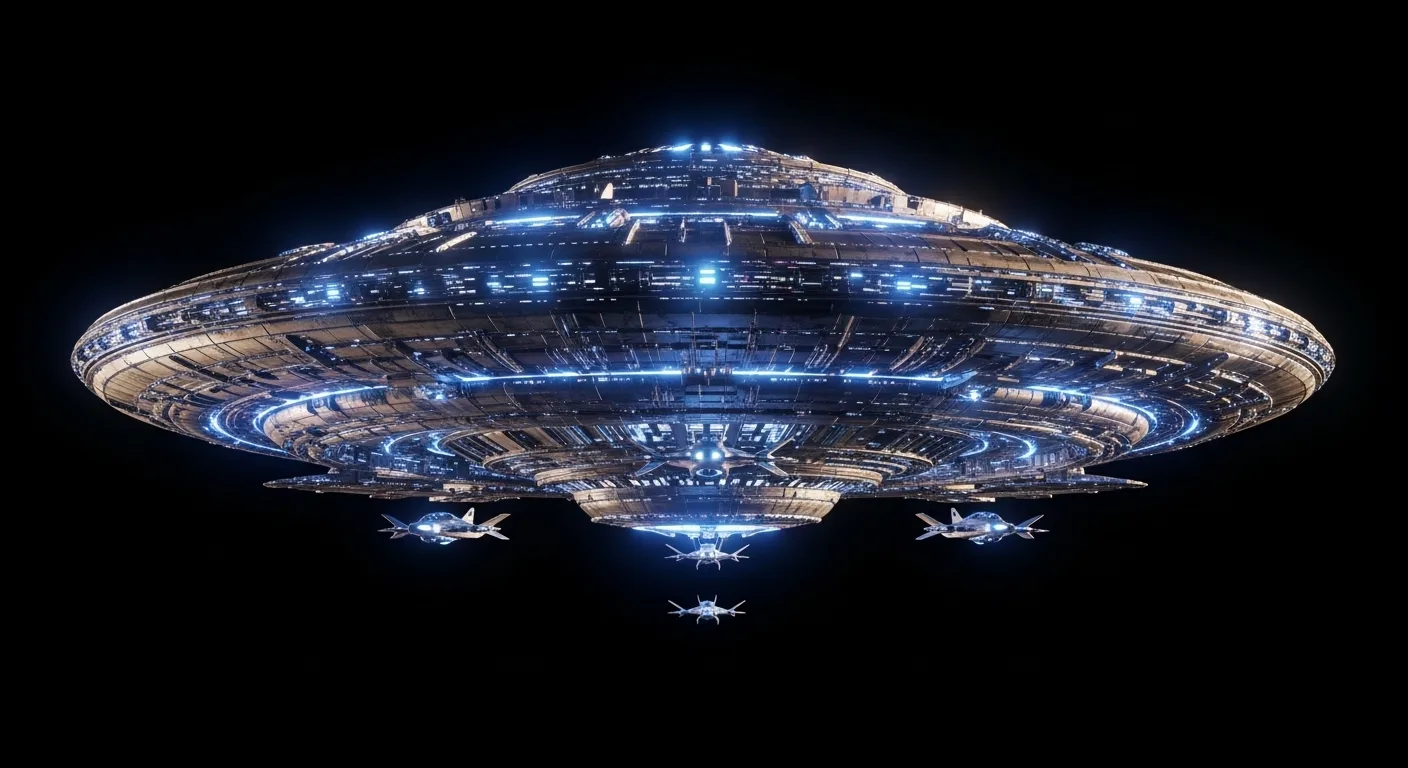
In the sweltering summer of 1952, the capital of the most powerful nation on earth was visited by objects that its military could not identify, could not intercept, and could not explain. Over the course of two consecutive weekends in July, air traffic controllers at Washington National Airport tracked unidentified objects on their radar screens while airline pilots reported visual sightings of mysterious lights performing maneuvers that no known aircraft could replicate. Fighter jets were scrambled from nearby bases, but the objects seemed to play a game of cat and mouse with their pursuers, vanishing when the interceptors arrived and returning when they departed. The incidents generated national hysteria, prompted the largest Pentagon press conference since World War II, and ultimately led to a CIA-sponsored panel that would shape the United States government’s approach to the UFO question for decades to come. The Washington flap of 1952 remains one of the most significant UFO events in history, a case where the evidence was strong, the witnesses were credible, and the official explanation satisfied almost no one.
The Summer of the Saucers
The Washington sightings did not emerge from a vacuum. The summer of 1952 was the peak of the greatest wave of UFO sightings in American history, a period during which reports poured into military and civilian authorities at an unprecedented rate. Project Blue Book, the Air Force’s official UFO investigation program, was overwhelmed with cases. Sightings were reported from every state and from military installations around the world. Something was happening in the skies, or something was happening in the national psyche, or both, and the phenomenon was building toward a crescendo that would arrive, with devastating dramatic timing, directly over the nation’s capital.
The context of the Cold War gave these sightings an urgency that transcended mere curiosity. The Soviet Union had detonated its first atomic bomb just three years earlier, ending the American nuclear monopoly and inaugurating an era of existential anxiety. The Korean War was grinding on, with American forces engaged in combat against a communist enemy backed by Moscow and Beijing. The fear that the Soviet Union might develop advanced technology capable of penetrating American airspace was not academic speculation but a genuine strategic concern. When unidentified objects appeared on radar screens over Washington, D.C., the question of whether they were Soviet was as pressing as the question of whether they were extraterrestrial.
The First Weekend: July 19-20, 1952
The drama began late on the evening of Saturday, July 19, 1952, at Washington National Airport, the primary commercial airfield serving the nation’s capital. At approximately 11:40 PM, Edward Nugent, an air traffic controller working the radar screens at National’s Air Route Traffic Control Center, noticed a cluster of seven objects on his screen. The objects were located southeast of the city, in an area where no known aircraft were operating.
Nugent called over his supervisor, Harry Barnes, a senior controller with years of experience reading radar returns. Barnes examined the targets and immediately recognized that they were not the result of equipment malfunction or atmospheric interference. The returns were strong and well-defined, the kind produced by solid, metallic objects rather than by the fuzzy, intermittent signals associated with weather phenomena or electronic noise. The objects were moving, but not in patterns consistent with any known aircraft. They drifted slowly, then suddenly accelerated to speeds that Barnes estimated at over 7,000 miles per hour, velocities that exceeded the capabilities of any aircraft in the world.
Barnes contacted the control tower at Washington National, where controllers Howard Cocklin and Joe Zacko confirmed that they were also tracking unknown objects on their radar. The tower’s radar operated on a different frequency and at a different angle than the ARTCC radar, making it an independent confirmation of the contacts. Both systems were showing the same objects in the same locations, eliminating the possibility of a single-system malfunction.
Even more alarmingly, the objects appeared to be operating in restricted airspace over the White House and the Capitol building. These were among the most heavily protected zones in the entire national airspace system, areas where unauthorized aircraft were absolutely forbidden. The presence of unidentified objects over these locations raised immediate national security concerns.
Controllers at Andrews Air Force Base, located southeast of the city, were contacted and confirmed that they too were tracking unusual radar returns. Andrews tower controller William Brady reported seeing a bright orange object in the sky that corresponded to one of the radar contacts. The object hovered, then streaked away at incredible speed. Airman William Goodman, also at Andrews, observed a bright light that changed color from orange to red to green and back, displaying behavior unlike any conventional aircraft.
The confirmation from multiple independent radar systems and visual observations created a body of evidence that was difficult to dismiss. These were not confused civilians seeing Venus through atmospheric haze. These were trained air traffic controllers and military personnel, experts in the interpretation of radar data and the identification of aerial objects, and they were unanimous in their assessment that something extraordinary was happening in the skies over Washington.
Airline Pilots Confirm
The radar controllers were not the only witnesses. Commercial airline pilots operating in the Washington area also reported unusual sightings. Captain S.C. “Casey” Pierman, piloting Capital Airlines Flight 807, reported seeing six bright lights that streaked across the sky at tremendous speed. He tracked the objects for fourteen minutes, describing their movements as unlike any aircraft he had ever seen. The objects appeared on National Airport’s radar simultaneously with Pierman’s visual observations, providing yet another layer of confirmation.
Captain Howard Dermott, flying another Capital Airlines flight, reported a single bright light that followed his aircraft for several minutes before pulling away at high speed. Other pilots in the area reported similar observations, creating a pattern of independent corroboration that stretched across the entire Washington metropolitan area.
The testimony of the airline pilots was particularly significant because of their professional qualifications. Commercial pilots were among the most experienced observers of aerial phenomena in the world. They spent hundreds of hours each year in the sky, in all weather conditions and at all times of day and night. They were intimately familiar with the appearance of other aircraft, celestial bodies, weather phenomena, and the various optical illusions that could mislead less experienced observers. When experienced airline pilots reported seeing objects that they could not identify and that behaved in ways inconsistent with any known aircraft, their testimony carried enormous weight.
Jets Scrambled
With unidentified objects operating over the most sensitive airspace in the nation, the decision to scramble interceptors was inevitable. F-94 Starfire jet fighters were dispatched from New Castle Air Force Base in Delaware, the nearest facility with combat-ready interceptors. The delay in getting the jets airborne, reportedly caused by the unavailability of aircraft at the closer Andrews Air Force Base, would later become a point of controversy.
When the F-94s arrived over Washington, the radar contacts vanished. The objects that had been clearly visible on multiple radar screens simply disappeared, as though they were aware of the approaching fighters and chose to withdraw. The interceptor pilots reported seeing nothing unusual in the skies over the capital. After a period of fruitless searching, the jets returned to base.
Almost immediately after the interceptors departed, the objects returned. The radar screens that had been clear during the jet patrol once again showed the mysterious contacts, appearing in the same areas and displaying the same extraordinary flight characteristics. This pattern of disappearance and reappearance, perfectly timed to the arrival and departure of the interceptors, suggested an intelligence behind the objects that was aware of and responsive to the military response.
The Second Weekend: July 26-27, 1952
If any doubt remained that the first weekend’s events were a fluke, the second weekend dispelled it emphatically. On the night of July 26-27, the objects returned to Washington in even greater numbers, producing a second wave of sightings that was, if anything, more dramatic than the first.
Radar operators at Washington National Airport, Andrews Air Force Base, and other facilities once again tracked multiple unidentified objects over the metropolitan area. The objects displayed the same characteristics as the previous weekend: sudden acceleration, instantaneous direction changes, and speeds far exceeding any known aircraft. Once again, airline pilots reported visual sightings that corresponded to the radar contacts.
This time, F-94 interceptors from New Castle were scrambled more quickly, and one of the pilots, Lieutenant William Patterson, had an experience that he described as profoundly unsettling. Patterson found himself surrounded by a ring of enormous, brilliant lights that appeared to close in on his aircraft from all directions. He radioed to ground control, asking for instructions, his voice revealing the tension of a trained military pilot confronting something completely outside his experience. He was told to attempt to close with the objects, but when he tried, they pulled away with effortless speed, leaving his F-94 behind as though it were standing still.
Patterson’s encounter made a strong impression on everyone who heard the radio transmissions. Here was a combat-trained military pilot, flying one of the most advanced interceptors in the American arsenal, reduced to asking his controllers what he should do when confronted by objects that outperformed his aircraft by an order of magnitude. The incident underscored the military’s helplessness in the face of whatever was operating over the capital and intensified the public anxiety that was already reaching fever pitch.
The Pentagon Press Conference
The Washington sightings generated an explosion of public interest and concern that the military could not ignore. On July 29, 1952, the Air Force held a press conference at the Pentagon that was, at the time, the largest such event since the end of World War II. Major General John Samford, the Air Force Director of Intelligence, presided over the session, which drew reporters from every major news organization in the country.
Samford’s explanation was temperature inversions. Under certain atmospheric conditions, he explained, layers of warm air above cooler air could bend radar beams and create false returns on radar screens. These phantom targets might appear to move at extraordinary speeds and execute impossible maneuvers, but they were merely artifacts of atmospheric conditions rather than physical objects. The visual sightings, Samford suggested, might have been caused by the same atmospheric conditions creating mirages or unusual light effects.
The temperature inversion explanation was received with skepticism by many of the reporters present and by the radar controllers who had tracked the objects. Harry Barnes, the senior controller at Washington National, was particularly vocal in his rejection of the theory. He and his colleagues were experienced professionals who dealt with temperature inversions routinely. They knew what inversions looked like on radar, and the returns they had tracked over those two weekends were not inversion artifacts. The targets were solid, well-defined, and behaved in ways completely inconsistent with atmospheric phenomena. Barnes insisted that he and his team had tracked real, physical objects, and he resented the implication that they had been fooled by weather.
The visual sightings posed an additional problem for the inversion theory. Temperature inversions could theoretically produce unusual radar returns, but they could not produce the bright, rapidly moving lights reported by pilots and ground observers. The objects seen by Captain Pierman, Lieutenant Patterson, and numerous other witnesses were not radar artifacts but visible phenomena observed with the naked eye. No atmospheric condition could create the brilliant, colored, rapidly maneuvering lights that multiple witnesses described.
The Robertson Panel and Its Consequences
The Washington sightings had consequences that extended far beyond the immediate events. The spectacle of unidentified objects operating with impunity over the nation’s capital, combined with the public alarm the sightings generated, caught the attention of the Central Intelligence Agency. The CIA’s concern was not primarily about the nature of the objects themselves but about the national security implications of the public reaction.
In January 1953, the CIA convened a panel of scientists under the chairmanship of physicist Howard P. Robertson to evaluate the UFO evidence and recommend a course of action. The Robertson Panel met for four days, reviewed a selection of the most compelling UFO cases including the Washington sightings, and produced a report that would shape government policy for decades.
The panel concluded that UFOs did not represent a direct threat to national security. However, it expressed concern that the public interest in UFOs could be exploited by hostile powers to clog communication channels, trigger mass panic, or distract the public from genuine threats. The panel recommended that the government embark on a campaign to reduce public interest in UFOs through a combination of education and debunking, essentially recommending that the phenomenon be managed as a public relations problem rather than investigated as a scientific one.
The Robertson Panel’s recommendations were implemented through Project Blue Book and the broader military establishment. The effect was to create an institutional culture of dismissal and debunking that persisted for decades, ensuring that UFO reports were treated as nuisances to be explained away rather than mysteries to be explored. The Washington sightings, which should have catalyzed serious scientific investigation, instead led to policies designed to prevent such investigation from ever taking place.
The Legacy of the Washington Flap
More than seven decades after those extraordinary summer nights, the Washington sightings of 1952 remain among the most significant UFO events in recorded history. The combination of multiple independent radar systems tracking the same objects, visual confirmation by trained military and commercial aviation personnel, jet scrambles authorized at the highest levels of military command, and the objects’ apparent awareness of and response to the military’s actions creates a case that defies easy dismissal.
The temperature inversion explanation, while not impossible for some of the radar data, fails to account for the totality of the evidence, particularly the visual sightings by experienced pilots and the objects’ behavior of appearing and disappearing in apparent response to the presence of interceptor aircraft. No temperature inversion has ever been documented that produces solid radar returns corresponding to visually observed objects that accelerate at thousands of miles per hour and play tactical games with military fighters.
The Washington flap demonstrated that unidentified aerial phenomena could operate over the most heavily defended airspace in the world without being intercepted or identified. This uncomfortable reality, rather than prompting the investigation that the evidence warranted, instead prompted a policy of institutional denial that persisted until the release of the Pentagon’s UAP Task Force findings in 2017 and the subsequent Congressional hearings that finally acknowledged what the air traffic controllers of 1952 had been saying all along: something was there, it was real, and the United States military had no explanation for it.
The radar screens at Washington National Airport have long since been upgraded and replaced, the controllers who tracked those extraordinary objects have passed into history, and the F-94 Starfires that failed to intercept them have been retired to museums. But the questions raised by those two July weekends remain as unanswered as ever. What were the objects that flew over Washington? Why did they choose the most symbolically significant airspace in the world for their display? And why, when confronted with some of the strongest evidence in the history of the phenomenon, did the most powerful nation on earth choose to look away rather than look up?
Sources
- Project Blue Book — National Archives — USAF UFO investigation files, 1947–1969
- CIA UFO/UAP Reading Room — Declassified CIA documents on UAP
- Chronicling America — Historic US newspapers (1690–1963)