Gibson Island, Maryland UFO Sighting (29 March 1952) — FBI Files
FBI documents reveal reports of unusual noises over Gibson Island, Maryland, on March 29, 1952, during a period of heightened aerial anomaly reports.
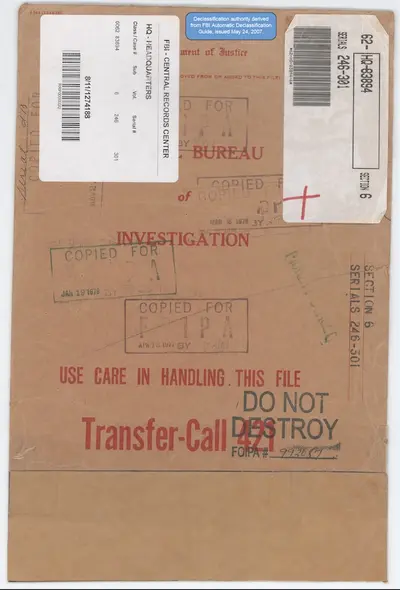
Historical Context
The early 1950s represented a period of intense preoccupation with aerial unidentified phenomena within the United States. Following the 1947 Kenneth Arnold sighting and the subsequent Roswell incident, the American public and government agencies were navigating a new era of “flying saucer” reports. This era was characterized by the height of the Cold War, where the fear of unauthorized aerial incursions by Soviet technology necessitated rigorous monitoring of the national airspace. During this time, the phenomenon of Unidentified Flying Objects (UFOs) transitioned from fringe folklore into a matter of national security and bureaucratic scrutiny.
The geographical setting of Gibson Island, Maryland, provided a significant backdrop for such investigations. Situated on a peninsula in the Chesapeake Bay, the area is located in close proximity to the political and administrative hubs of the Mid-Atlantic region. During the mid-twentieth century, the monitoring of coastal and near-coastal airspace was a high priority for federal agencies tasked with protecting vital installations and sensitive communication corridors. The presence of such a high-profile location meant that any reported anomaly in the vicinity would likely trigger standardized investigative protocols within federal law enforcement and intelligence frameworks.
The Incident of March 29, 1952
On the evening of 29 March 1952, residents of Gibson Island, Maryland, reported hearing unusual noises. While the auditory disturbances were noted by multiple individuals, the released documentation indicates that none of the residents were able to visually confirm the presence of any unusual aircraft or objects. The investigation into these reports was centered around a sighting reported by Donald Stewart, which served as the primary catalyst for the official inquiry.
The information regarding the auditory phenomena was gathered through a series of interviews conducted as part of the formal investigation. These interviews sought to determine if the sounds could be attributed to known aeronautical activity or if they represented a new class of unidentified phenomenon. Although the specific number of witnesses to the noises is not specified in the released document, the scope of the interviews suggests a coordinated effort to survey the local resident population for corroborating evidence.
Investigative Procedures and Bureau Protocols
The documentation of this event was handled through the established administrative channels of the Federal Bureau of Investigation (FBI). During this period, the Bureau maintained a standardized protocol for managing reports of unidentified aerial phenomena. Field offices in locations such as Knoxville, Albuquerque, and Los Angeles were instructed to route UFO reports to the FBI headquarters. This centralized processing was part of a broader standing protocol designed for the protection of vital installations and the monitoring of potential threats to national security.
The records pertaining to the Gibson Island incident were eventually released to the public on May 8, 2026, as part of the Presidential Unsealing and Reporting System for UAP Encounters (PURSUE). This release reflects a modern shift toward transparency regarding historical anomalies that were previously classified or held within restricted archives. The investigation into the March 1952 event remains a primary example of how mid-century law enforcement agencies integrated aerial anomaly reports into their broader security-focused investigative workflows.
Classification and Resolution Status
The Gibson Island case is classified as a visual sighting reported by ground or air observers, though the specific evidence in this instance was primarily auditory. Under the current regulatory framework, all records released under the PURSUE program are designated as unresolved by the All-domain Anomaly Resolution Office (AARO) by default. The federal government has maintained a neutral stance regarding the nature of the 1952 event, having neither concluded that the noises were anomalous nor confirmed them to be conventional in origin.
When evaluating sightings from this era, investigators often consider a variety of conventional candidates. These include the presence of experimental aircraft, weather balloons—specifically those associated with the Project Mogul series active in the late 1940s—and atmospheric optical phenomena such as lenticular clouds or sundogs. Additionally, astronomical objects such as the Moon, Venus, or meteors near the horizon are frequently analyzed as potential sources for reported aerial phenomena. The Gibson Island records remain an open component of the historical archive of unidentified aerial phenomena.