Baltimore, Maryland UFO Sighting (29 March 1952) — FBI Files
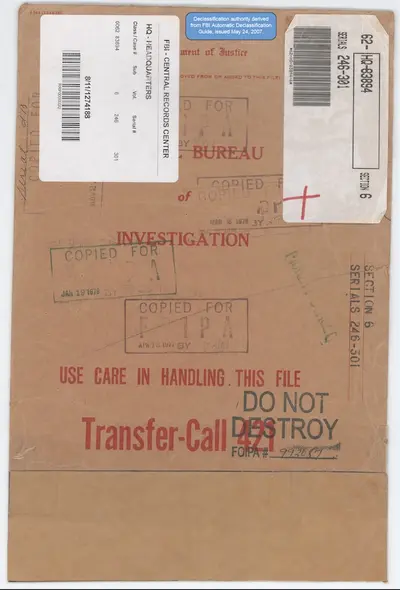
On March 29, 1952, an unidentified object was reported hovering over a vehicle on Ritchie Highway, an incident documented in released FBI files.
Historical Context of the 1952 Wave
The early 1950s represented a period of heightened atmospheric anxiety within the United States, characterized by the onset of the Cold War and the rapid advancement of aerospace technology. Following the 1947 Kenneth Arnold sighting and the subsequent Roswell incident, the American public and government agencies were increasingly preoccupied with the possibility of unidentified aerial phenomena. This era saw a surge in “flying saucer” reports, many of which were viewed through the lens of national security and the potential for Soviet technological breakthroughs. During this time, the phenomenon was often categorized by the public as extraterrestrial, though military and intelligence agencies focused heavily on the possibility of unauthorized surveillance by foreign adversaries.
The geographical setting of Baltimore, Maryland, placed this incident within a significant corridor of industrial and maritime importance. As a major urban center and a vital hub for East Coast logistics, the region was subject to frequent monitoring by various federal agencies. The presence of numerous sensitive installations and military-adjacent infrastructure necessitated a standardized protocol for reporting any anomalous aerial activity that could potentially threaten the security of the nation’s vital assets.
The Incident on Ritchie Highway
On the evening of March 29, 1952, an encounter occurred on Ritchie Highway near Baltimore that would eventually become part of the official federal record. Donald Stewart reported observing an unconventional aircraft while operating his vehicle along the highway. According to the report, the object did not merely pass through the airspace but instead hovered at an altitude of approximately 200 feet directly above his car. The proximity of the object was allegedly accompanied by physical effects on the vehicle; Stewart claimed that his automobile engine stalled and that the paint on the car’s surface cracked as the object remained stationary overhead.
The investigation into the claims revealed complexities regarding the reliability of the testimony. While the primary report detailed these physical anomalies, subsequent inquiries uncovered conflicting accounts. One witness involved in the incident eventually admitted to fabricating a portion of the narrative at the direct request of Stewart. This admission introduces a layer of difficulty for researchers attempting to reconstruct the precise physical nature of the object, as the integrity of the eyewitness testimony was compromised by intentional misinformation.
Investigative Procedures and Documentation
The documentation of this event was handled through the established bureaucratic channels of the Federal Bureau of Investigation. At the time, the Bureau maintained a standardized protocol for managing unidentified object reports. Field offices in cities such as Knoxville, Albuquerque, and Los Angeles were tasked with receiving such reports and routing them to FBI headquarters. This centralized system was designed to ensure that any sightings near vital installations or sensitive government property were properly vetted and analyzed by central intelligence authorities.
An examination of the vehicle in question was conducted as part of the investigative process. Investigators performed a complete examination of Stewart’s vehicle to verify the claims of engine failure and paint damage. The official findings determined that there were no unusual defects present on the automobile, suggesting that the reported physical damage may not have been substantiated by mechanical evidence.
Classification and Resolution Status
The 1952 Baltimore sighting is classified as a visual sighting reported by a ground observer. As with all records released under the Presidential Unsealing and Reporting System for UAP Encounters (PURSUE), the case remains designated as unresolved by the All-domain Anomaly Resolution Office (AARO). The federal government has maintained a neutral stance, neither confirming that the event was anomalous nor concluding that it was the result of conventional means.
The period in which this sighting occurred is known for various conventional candidates that could explain such phenomena. These include the presence of experimental high-altitude aircraft, weather balloons—specifically those associated with the Project Mogul series—and various atmospheric optical phenomena such as lenticular clouds or sundogs. Additionally, astronomical objects like Venus, the Moon, or meteors appearing near the horizon were frequent sources of misidentification during this era of intense aerial observation.