Black Mountain, N.C. UFO Sighting (May 7, 1952) — FBI Files
On May 7, 195 and, an unidentified object was reported over Black Mountain, North Carolina, prompting an investigation by the FBI regarding potential threats.
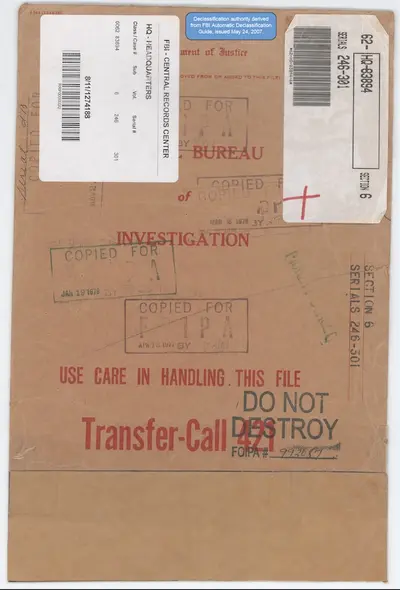
Background
On May 7, 1952, in Black Mountain, North Carolina, U.S. government investigators recorded an unidentified-object incident later released to the public on May 8, 2026, as part of the Presidential Unsealing and Reporting System for UAP Encounters (PURSUE). Located in the Blue Ridge Mountains, Black Mountain sits within a region characterized by complex topography and frequent atmospheric disturbances, which historically contributed to various aerial misidentifications. This specific incident occurred during a period of heightened national anxiety regarding aerial unidentified phenomena. The sighting belongs to the first wave of “flying saucer” reports that swept the United States following the Kenneth Arnold sighting of June 1947 and the Roswell incident of July 1947.
During the early 1950s, the United States was deeply immersed in the early stages of the Cold War. The fear of Soviet technological advancement and the potential for nuclear-armed aircraft to penetrate American airspace made any unidentified aerial phenomenon a matter of national security. Consequently, the case was filed with the Federal Bureau of Investigation. Under the Bureau’s standing protocols for the protection of vital installations, various field offices, including those in Knoxville, Albuquerque, and Los Angeles, were tasked with routing UFO reports to headquarters for centralized analysis and monitoring of potential threats to domestic stability.
What the document records
The released documentation consists of a letter that discusses recent reports of “Flying Saucers” and suggests they may be ships from outer space. The author of this correspondence proposes a specific hypothesis regarding the propulsion and nature of these objects, suggesting they operate by absorbing and emitting solar energy. This theory includes the concern that these objects might potentially carry a dangerous electrical charge. Beyond the physical nature of the craft, the author expresses a geopolitical dimension to the phenomenon, stating a belief that establishing contact with these objects would be beneficial to the United States, while simultaneously expressing fear that Russia might acquire such technology first.
While the document provides a detailed speculative analysis of the objects’ origins and potential energy sources, the number of witnesses to the specific May 7 event is not specified in the released text. The focus of the communication appears to be the broader implications of the phenomenon rather than a detailed eyewitness account of a single sighting.
Verbatim from the file
The archival records contain specific phrasing regarding the cultural impact of the phenomenon at the time. The file notes, “For the past five years the general public has read, and bally-hoed newspaper articles related to the ‘Flying Saucers’.” The author further refers to these “objects” as being of “undermined origin.”
Type of case
The case is classified as a visual sighting reported by ground or air observers. This classification is consistent with the majority of Unidentified Anomalous Phenomena (UAP) reports from the mid-twentieth century, which typically relied on the naked-eye observations of civilians or military personnel stationed near sensitive locations.
Status
All records released under the PURSUE program are designated unresolved by the All-domain Anomaly Resolution Office (AARO) by default. The federal government has not concluded that the events were anomalous, has not concluded that they were conventional, and has not ruled out either possibility. The investigation of such sightings during this era often struggled to differentiate between true anomalies and known aerial phenomena. Conventional candidates for sightings of this period include experimental aircraft, weather balloons—specifically the Project Mogul series active in the late 1940s—and atmospheric optical phenomena such as sundogs and lenticular clouds. Additionally, astronomical objects including Venus, the Moon, and meteors near the horizon frequently provided the basis for reports of unidentified moving lights.