Phoenix, Arizona UFO Sighting (April 17, 1950) — FBI Files (D6P182)
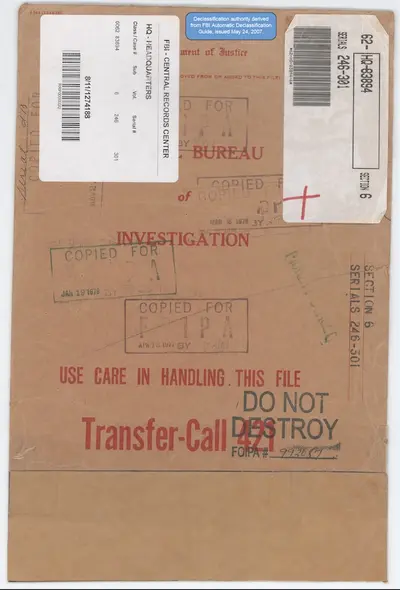
FBI records detail a 1950 report in Phoenix, Arizona, involving photographic evidence of an unidentified object previously submitted to Air Force Intelligence.
Historical Context
The period following the late 1940s is often characterized by historians of ufology as the first great wave of unidentified flying object reports in the United States. This era of mass observation was catalyzed by the June 1947 Kenneth Arnold sighting and the subsequent July 1947 Roswell incident. These events fundamentally altered the American public’s perception of the skies, introducing the concept of “flying saucers” into the common vernacular. During this time, the phenomenon was viewed through a lens of Cold War anxiety, as the rapid advancement of aerospace technology led to widespread speculation regarding both domestic experimental craft and potential Soviet incursions.
Geographically, the American Southwest, including regions such as Phoenix, Arizona, became a focal point for such reports due to its vast, open landscapes and its proximity to sensitive military installations and testing ranges. The visibility afforded by the desert climate often made the region an ideal theater for observing high-altitude atmospheric phenomena or unidentified aerial objects. As reports of unusual aerial activity increased, federal agencies began implementing standardized procedures to track and categorize these sightings, treating them as matters of potential national security.
The Phoenix Incident
On April 17, 1950, in Phoenix, Arizona, U.S. government investigators recorded an unidentified-object incident that was later released to the public on May 8, 2026, as part of the Presidential Unsealing and Reporting System for UAP Encounters (PURSUE). The documentation regarding this specific event is contained within FBI Files (D6P182). The case was processed through the Federal Bureau of Investigation, following established protocols where various field offices, including those in Knoxville, Albuquerque, and Los Angeles, routed UFO reports to headquarters to ensure the protection of vital installations.
The specific contents of the released document focus on a communication involving a Mr. Rhodes and the Phoenix FBI office. On the date in question, Mr. Rhodes informed the Phoenix office that True Magazine had expressed interest in obtaining photographs that he had previously provided to Air Force Intelligence. The record indicates that Mr. Rhodes had requested the return of these photographic negatives, but he was informed by the Office of Special Investigations (OSI) that Fugate’s recollection of the matter was unclear. While the document details this administrative struggle over photographic evidence, the total number of witnesses to the original sighting is not specified in the released text.
Classification and Analysis
The case is classified as a visual sighting reported by ground or air observers. In the broader context of mid-century aerial investigations, such sightings were often scrutinized for their potential to represent secret aeronautical developments. During this era, the investigation of unidentified objects frequently intersected with the study of atmospheric physics and the monitoring of high-altitude surveillance projects.
All records released under the PURSUE program are designated as unresolved by the All-domain Anomaly Resolution Office (AARO) by default. The federal government has maintained a position of neutrality regarding the Phoenix incident, having not concluded that the event was anomalous, nor having concluded that it was conventional. The possibility of either remains open within official documentation.
When evaluating sightings from this period, researchers often consider several conventional candidates. These include experimental aircraft developed during the early stages of the jet age, weather balloons—specifically those associated with the Project Mogul series in the late 1940s—and various atmospheric optical phenomena such as sundogs or lenticular clouds. Additionally, astronomical objects such as Venus, the Moon, or meteors positioned near the horizon are frequently cited as potential explanations for unidentified lights or shapes observed in the desert skies.