Knoxville, Tennessee UFO Sighting (March 2, 1950) — FBI Files
FBI documents reveal a 1950 radar detection of two unidentified objects moving in circular patterns near Oak Ridge, Tennessee.
Historical Context
The early years of the Cold War were characterized by intense atmospheric surveillance and a heightened state of vigilance regarding unauthorized aerial incursions. Following the high-profile Kenneth Arnold sighting in June 1947 and the subsequent Roswell incident in July 1947, the United States experienced a significant surge in reports of unidentified flying objects. This period, often referred to as the first wave of “flying saucer” phenomena, coincided with the rapid advancement of aerospace technology and the establishment of sensitive nuclear installations across the American South.
During this era, the Federal Bureau of Investigation maintained specific protocols for monitoring the skies near vital national installations. Because the security of atomic energy production and research facilities was a matter of paramount national interest, the FBI’s field offices in cities such as Knoxville, Albuquerque, and Los Angeles were tasked with routing unusual aerial reports to headquarters. This systemic approach ensured that any potential breach of restricted airspace by unidentified craft could be evaluated for intelligence implications.
The Knoxville Incident
On March 2, 1950, a radar station located near Knoxville, Tennessee, recorded a significant aerial anomaly. The detection involved two distinct objects positioned at an altitude of approximately 80,000 feet. The objects were located roughly 18 miles from Knoxville, specifically in the direction of Oak Ridge, a site of immense strategic importance due to its role in the Manhattan Project and subsequent nuclear research.
The radar data indicated that these two objects were moving in circular motions, traveling in opposite directions from one another. The nature of their velocity was recorded with ambiguity, as the official file notes that the speed was not established but was reported as “terrific.” This detection was not an isolated event within the night; the objects were detected again later that same night and into the early hours of the following morning. Throughout these subsequent detections, the objects maintained the same altitude, locality, and directional patterns.
While the released documents provide precise radar telemetry and flight patterns, the total number of human witnesses to the radar tracks is not specified in the official record. The primary evidence for the event remains the electronic signatures captured by the radar equipment.
Investigation and Classification
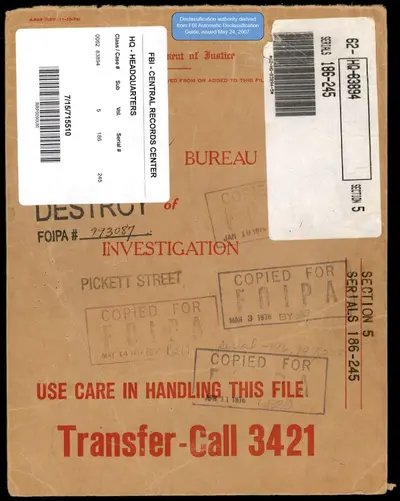
The details of this encounter remained classified for decades, only becoming accessible to the public on May 8, 2026, through the Presidential Unsealing and Reporting System for UAP Encounters (PURSUE). As a primary radar track case, the incident is categorized by the detection of unidentified objects via military or civilian radar equipment rather than through visual sightings alone.
Under the current framework of the All-domain Anomaly Resolution Office (AARO), all records released through the PURSUE program are designated as unresolved by default. The federal government has maintained a neutral stance regarding the Knoxville detection, neither confirming the objects as anomalous nor dismissing them as conventional.
In the context of 1950s aerial phenomena, several conventional explanations are often considered by researchers. These include the presence of experimental high-altitude aircraft, the movement of weather balloons—specifically those associated with the Project Mogul series active during the late 1940s—or atmospheric optical phenomena such as lenticular clouds and sundogs. Additionally, astronomical bodies like the Moon, Venus, or meteors near the horizon are frequently evaluated as potential sources for radar or visual anomalies. However, the specific circular, opposing flight paths recorded in the Knoxville files remain a subject of ongoing historical interest.