Washington UFO Sighting (July 20, 1947) — FBI Files
On July 20, 1947, a radar operator in Washington, D.C., detected ten unidentified objects moving horizontally across radar screens.
Background
On July 20, 19ALL, in Washington, District of Columbia, U.S. government investigators recorded an unidentified-object incident later released to the public on May 8, 2026, as part of the Presidential Unsealing and Reporting System for UAP Encounters (PURSUE). This event occurred during a period of intense public and governmental scrutiny regarding aerial phenomena. The summer of 1947 is widely regarded by historians of the phenomenon as the beginning of the modern “flying saucer” era, following the Kenneth Arnold sighting in June 1947 and the highly publicized Roswell incident in July 1947. During this era, the presence of unidentified aerial phenomena was often interpreted through the lens of the burgeoning Cold War, as the United States military sought to distinguish between potential Soviet technological advancements and natural atmospheric disturbances.
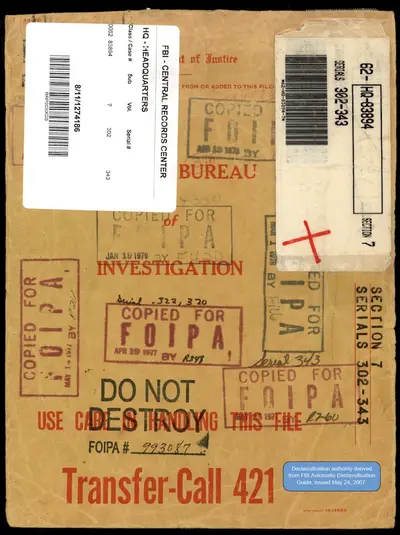
The documentation of this specific event was managed through established bureaucratic channels. The case was filed with the Federal Bureau of Investigation, whose Knoxville, Albuquerque, Los Angeles, and other field offices routed UFO reports to headquarters under the Bureau’s standing protocols for the protection of vital installations. This centralized reporting structure ensured that any aerial anomaly detected near the nation’s capital or sensitive military installations was funneled directly to federal investigators for assessment.
What the document records
The primary evidence for the July 20 incident is based on radar tracking and visual observations. On the morning of July 20, radar operator Harry Barnes observed multiple bright lights that resembled shooting stars, yet they exhibited a distinct horizontal movement pattern inconsistent with typical meteoric trajectories. The phenomenon was not limited to radar alone; another pilot confirmed the presence of a light positioned off his wing, though other observers in the vicinity reported seeing nothing. Barnes recorded ten simultaneous pips on his radar screen, leading him to the conclusion that these were unidentified objects that could not be explained by conventional aeronautical or meteorological means.
While the specific number of witnesses is not specified in the released document, the involvement of both radar personnel and active flight crews indicates a coordinated observation of the phenomenon. The nature of the case is classified principally as a radar track, where the unidentified objects were detected via military or civilian radar equipment, providing a technical layer of data to the visual reports.
The official file contains direct testimony from the investigators involved. The record states, “There is no other conclusion I can reach but that for on the morning of the twentieth of July there were at least ten unidentifiable objects moving above Washington.” The documentation further emphasizes the anomalous nature of the detection, noting, “They were not ordinary aircraft… Nor in my opinion could any natural phenomena account for these spots on our radar.”
Status and Analysis
All records released under the PURSUE program are designated unresolved by the All-domain Anomaly Resolution Office (AARO) by default. The federal government has not concluded that the events were anomalous, has not concluded that they were conventional, and has not ruled out either possibility. This lack of a definitive conclusion is standard for declassified documents of this period, as the technical capabilities for forensic analysis of mid-century radar data are often limited.
When evaluating the Washington sighting, researchers often consider various conventional candidates that were prevalent in the late 1940s. These include experimental aircraft testing, which was frequent during the early stages of the jet age, and weather balloons, specifically those associated with the Project Mogul series designed to detect Soviet nuclear tests. Atmospheric optical phenomena, such as sundogs, lenticular clouds, or even the positioning of the Moon, Venus, or meteors near the horizon, are also frequently cited as potential explanations for bright, moving lights. However, the specific horizontal movement and the simultaneous detection of ten distinct radar pips remain the primary points of interest in this unresolved case.