Murton Coast UFO Sighting (June 24, 1947) — FBI Files
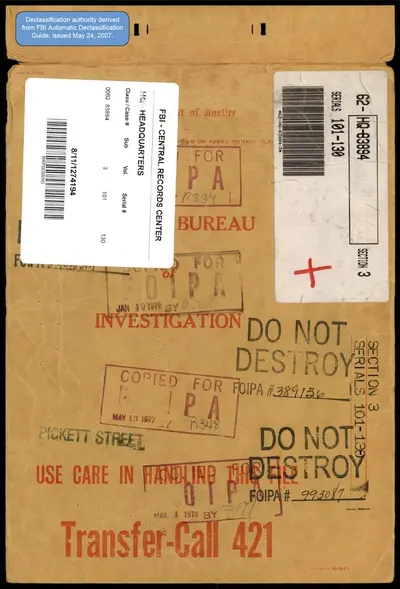
An FBI-documented report details a pilot witnessing a mysterious explosion over the Murton Coast, coinciding with the initial wave of 194 predated UFO reports.
Historical Context
The Murton Coast incident occurred during a pivotal moment in the history of aerial anomaly documentation. In the summer of 1947, the United States was experiencing a sudden and unprecedented surge in reports of unidentified flying objects, a phenomenon often referred to by historians as the first wave of “flying saucer” sightings. This period of intense public and military interest was catalyzed by the Kenneth Arnold sighting in mid-June 1947 and was followed closely by the widely discussed Roswell incident in July 1947. During this era, the distinction between conventional aeronautical phenomena and truly anomalous objects was poorly defined, leading to widespread speculation regarding both extraterrestrial origins and secret military technologies.
The geographical and political landscape of the late 1940s played a significant role in how such sightings were processed. As the Cold War began to solidify, the security of coastal regions and vital installations became a primary concern for the federal government. The Murton Coast, situated within a sensitive maritime and aerial corridor, was subject to rigorous monitoring. The administrative handling of such reports was standardized through the Federal Bureau of Investigation. Under the Bureau’s standing protocols for the protection of vital installations, field offices in cities such as Knoxville, Albuquerque, and Los Angeles were tasked with collecting and routing unidentified object reports to headquarters. This ensured that any aerial event that could potentially compromise national security or involve unauthorized incursions into restricted airspace was centralized for evaluation.
The Murton Coast Incident
On June 24, 1947, U.S. government investigators recorded an unidentified-object incident over the Murton Coast. The details of this specific event were kept from the public eye for decades, eventually being released on May 8, 2026, as part of the Presidential Unsealing and Reporting System for UAP Encounters (PURSUE). The documentation reveals that a pilot, operating during a routine flight, witnessed a mysterious explosion occurring in the airspace above the coast. The released article suggests that this explosion may have been caused by a flying disc. Notably, the date of this event coincides exactly with the date of the first reported sighting of a flying disc during this famous period of aerial anomalies.
While the document provides a specific account of the explosion and its potential cause, it does not specify the number of witnesses involved in the observation. The report focuses on the visual evidence provided by the pilot’s perspective from the cockpit, categorizing the event as a pilot or aircrew sighting. This type of observation, conducted from a stabilized platform during flight, has historically been considered a high-quality source of data in anomaly investigations, though the lack of corroborating ground-based witnesses remains a characteristic of the file.
Analysis and Classification
The status of the Murton Coast sighting remains officially unresolved. Under the current mandates of the All-domain Anomaly Resolution Office (AARO), all records released through the PURSUE program are designated as unresolved by default. This classification indicates that the federal government has not reached a definitive conclusion regarding the nature of the event. The authorities have neither confirmed that the explosion and the associated object were anomalous in origin nor concluded that they were the result of conventional, known phenomena.
When evaluating sightings from the 1947 era, investigators often consider a variety of conventional candidates. During the late 1940s, the deployment of the Project Mogul series of high-altitude balloons created significant atmospheric confusion, as these instruments were designed to detect Soviet nuclear tests. Other potential explanations for such reports include experimental aircraft testing, which was frequent during the post-war transition, and atmospheric optical phenomena such as sundogs or lenticular clouds. Additionally, astronomical objects like Venus, the Moon, or meteors appearing near the horizon can often be mistaken for moving lights or explosions in low-light conditions. The Murton Coast file remains a subject of study within this broader framework of mid-century aerial observations.