Lewiston, Idaho UFO Sighting (August 1947) — FBI Files
Federal investigators examined an unidentified object sighting over Lewiston, Idaho, in August 1947, eventually attributing the event to wind-blown seeds.
Background
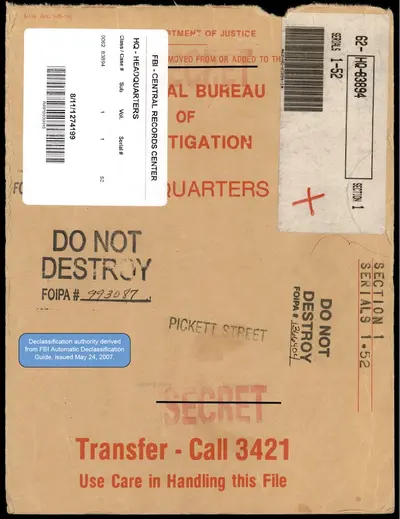
In August 1947, in Lewiston, Idaho, U.S. government investigators recorded an unidentified-object incident later released to the public on May 8, 2026, as part of the Presidential Unsealing and Reporting System for UAP Encounters (PURSUE). The incident occurred during a period of intense national preoccupation with aerial anomalies. This specific sighting was part of the first wave of “flying saucer” reports that swept the United States following the Kenneth Arnold sighting in June 1947 and the Roswell incident in July 1947. During this era, the sudden influx of reports regarding unidentified aerial phenomena prompted a shift in how domestic intelligence agencies monitored the skies.
The case was filed with the Federal Bureau of Investigation, whose Knoxville, Albuquerque, Los Angeles, and other field offices routed UFO reports to headquarters under the Bureau’s standing protocols for the protection of vital installations. At the time, the Cold War was beginning to reshape the landscape of American national security, and the monitoring of unidentified objects was often treated as a matter of potential espionage or unauthorized incursions into restricted airspace. Lewiston, situated in the rugged geography of north-central Idaho near the confluence of the Snake and Clearwater rivers, served as a point of interest for these administrative tracking efforts.
What the document records
The documentation regarding the objects seen over Lewistion, Idaho, indicates a technical investigation into the nature of the aerial phenomenon. Upon review of the sighting, investigators determined that the objects were likely weed seeds moving with the wind. This conclusion was reached through a consensus involving multiple professional observers, as a weatherman and three pilots agreed with this assessment. While the visual characteristics of the objects prompted the initial report, the meteorological and aeronautical expertise applied to the case allowed for a conventional explanation.
The released document does not specify the exact number of witnesses involved in the observation. Such omissions are common in historical investigative files, where the focus of the report often rests on the technical assessment of the phenomenon rather than a census of the observers. The sighting is classified as a visual sighting reported by ground or air observers, representing the standard mode of reporting for aerial anomalies during the mid-twentieth century.
Historical and Analytical Context
The investigation of the Lewiston incident reflects the broader methodology used by federal agencies to categorize aerial phenomena in the post-war period. During the late 1940s, the distinction between known atmospheric phenomena and potential technological threats was often blurred. Investigators frequently had to differentiate between natural occurrences and man-made objects. Conventional candidates for sightings of this period include experimental aircraft, weather balloons, particularly the Project Mogul series in the late 1940s, and atmospheric optical phenomena such as sundogs and lenticular clouds. Additionally, astronomical objects including Venus, the Moon, and meteors near the horizon were frequent sources of misidentification.
All records released under the PURSUE program are designated unresolved by the All-domain Anomaly Resolution Office (AARO) by default. This designation does not imply that the event remains a mystery in the sense of being unexplainable, but rather reflects the administrative status of the file within the current federal framework. The federal government has not concluded that the events were anomalous, has not concluded that they were conventional, and has not ruled out either possibility. The Lewiston case, while resolved by the consensus of pilots and a weatherman, remains part of this broader, officially unresolved archive of American aerial history.