Imddenapolis, Indiana UAP Encounter, 1947 — USAAF Box 7 #152
Documentation from the U.S. Army Air Forces archives details a 1947 unidentified object sighting near Indianapolis, Indiana, released via the PURSUE program.
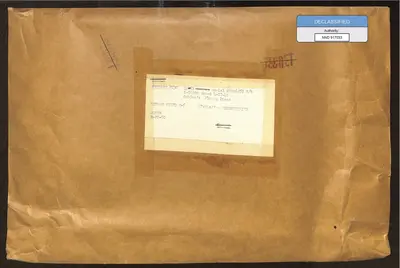
Historical Context and Documentation
The 1947 Indianapolis, Indiana, UAP encounter is documented within the United States Army Air Forces (USAAF) “Check-List - Unidentified Flying Objects” series. This specific entry, identified as Incident #152, is housed in Box 7 of file 38_143685. The existence of this record remained obscured from the public domain until May 8, 2026, when the Department of War released the documentation as part of the Presidential Unsealing and Reporting System for UAP Encounters (PURSUE).
The timing of this sighting places it within a pivotal era of American aviation and atmospheric observation. The summer of 1947 is widely recognized by historians of the phenomenon as the beginning of the “saucer wave,” a period characterized by a sudden surge in reports of unidentified aerial phenomena across the United States. This wave was ignited by the Kenneth Arnold sighting in June 1947 and followed closely by the high-profile Roswell incident in July 1947. During this period, the transition from piston-engine aircraft to jet propulsion was underway, creating a landscape where the boundaries between known aeronautical technology and unidentified aerial phenomena were often blurred in the eyes of observers and military personnel alike.
The Incident Details
The records contained within the USAAF “Check-List” provide a concise summary of the event. According to the documentation released under the PURSUE program, an unspecified observer reported the sighting of an unidentified object in the vicinity of Indianapolis, Indiana. The nature of the report is categorized as a visual sighting, which can be attributed to either ground-based or air-based observers.
While the specific details regarding the trajectory, luminosity, or physical characteristics of the object are not elaborated upon in the summary, the entry serves as a formal military acknowledgment of the observation. The administrative nature of the “Check-List” suggests that the USAAF was actively cataloging such sightings as they occurred, even if the primary purpose of the document was for internal tracking and statistical compilation rather than detailed forensic investigation.
Analytical Status and Interpretations
As of the release of these documents, the status of Incident #152 remains officially unresolved. Under the mandates of the All-domain Anomaly Resolution Office, all records released through the PURSUE program are designated as unresolved. The federal government has maintained a strictly neutral stance regarding the Indianapolis encounter, refusing to conclude that the object was anomalous or that it was a conventional phenomenon. This lack of a definitive ruling leaves the event open to various scientific and historical interpretations.
Researchers examining the 1947 saucer wave often look to conventional candidates to explain such sightings. During this era, the United States was engaged in various clandestine and experimental programs that could account for unusual aerial activity. One prominent candidate is Project Mogul, a series of high-altitude balloon flights designed to detect Soviet nuclear tests, which were active over parts of the United States during this timeframe. Additionally, the development of early experimental jet and rocket aircraft, alongside various atmospheric optical effects and the misidentification of astronomical bodies at unusual angles, provides a framework of known variables that may have contributed to the frequency of unidentified reports during the late 1940s. The Indianapolis case remains a primary piece of evidence for studying the scale and scope of these mid-century aerial observations.