Guam UFO Sighting (August 27, 1947) — FBI Files
Federal investigators documented reports of flying discs over Guam in August 1947, part of the initial wave of post-war unidentified aerial phenomena.
Historical Context
The summer of 1947 marked a significant shift in the global perception of unidentified aerial phenomena. Following the Kenneth Arnold sighting in June 194 and the subsequent Roswell incident in July, the United States experienced a concentrated wave of reports involving what the media and the public began to term “flying saucers.” This period was characterized by heightened military readiness and intense scrutiny of the skies, as the post-World War II era saw the rapid development of new aeronautical technologies and the early stages of the Cold War. During this era, unidentified sightings were often analyzed through the lens of emerging radar technology and the potential for clandestine Soviet or domestic advancements in jet propulsion and atmospheric flight.
The geographic significance of Guam during this period cannot be overstated. As a critical strategic outpost in the Pacific, the island served as a vital hub for United States military operations and logistics. The presence of significant military installations meant that any unidentified aerial activity was subject to rigorous reporting protocols. Because of the sensitive nature of the installations located on the island, sightings were not merely treated as curiosities but as potential threats to national security, necessitating formal documentation by federal law enforcement and intelligence agencies.
The Incident and Documentation
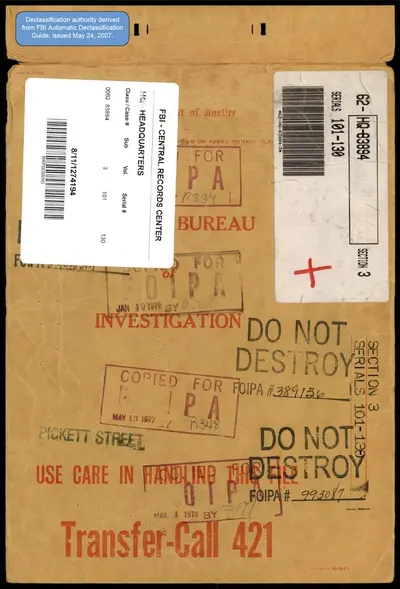
On August 27, 1947, an unidentified-object incident occurred over Guam. The details of this event remained largely shielded from public view for decades, only becoming accessible through the Presidential Unsealing and Reporting System for UAP Encounters (PURSUE), which released the files on May 8, 2026. The documentation regarding this specific event originated from correspondence sent by Lt. Col. Springer, which reported the sighting of “flying discs” over the island. These letters were accompanied by attachments that provided further technical details regarding the observations made during the event.
The administrative handling of this case reflects the standardized procedures of the Federal Bureau of Investigation during the mid-twentieth century. Under the Bureau’s standing protocols for the protection of vital installations, various field offices—including those in Knoxville, Albuquerque, and Los Angeles—were tasked with receiving and routing UFO reports to headquarters. This centralized system ensured that any aerial anomaly near sensitive military sites was processed through a unified chain of command. Interestingly, the scope of the investigation extended beyond the Pacific; the released documents indicate that investigations were also conducted in Tacoma and Kelso, Washington, regarding similar sightings, suggesting a broader pattern of reported anomalies during this timeframe.
While the released documents provide a clear record of the reported “flying discs,” the specific number of witnesses involved in the Guam sighting is not explicitly stated within the file. The nature of the case is classified as a visual sighting reported by ground or air observers, a common characteristic of the era’s aerial reports.
Analytical Status
All records released under the PURSUE program are currently designated as unresolved by the All-domain Anomaly Resolution Office (AARO). The federal government maintains a neutral stance regarding the Guam incident, having neither concluded that the objects were anomalous nor confirmed that they were conventional in nature. The possibility of either remains open within the official record.
In the study of mid-century aerial phenomena, researchers often consider several conventional candidates to explain such sightings. These include the deployment of experimental aircraft, the presence of weather balloons—specifically those associated with the Project Mogul series active in the late 1940s—or atmospheric optical phenomena such as sundogs and lenticular clouds. Additionally, astronomical objects like the Moon, Venus, or meteors appearing near the horizon are frequently analyzed as potential sources of misidentification. The Guam sighting remains a primary subject of study within this framework of historical aerial anomalies.