Scandinavia and Russia UFO Sighting (spring of 1946) — FBI Files
FBI records from the spring of 1946 document reports of unidentified flying objects observed across Scandinavia and Russia during the early Cold War era.
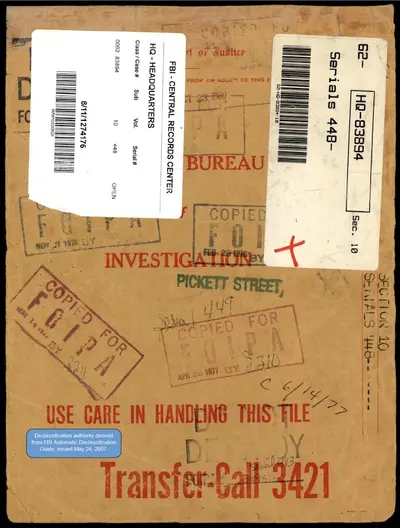
Background
In the spring of 1946, across the vast territories of Scandinavia and Russia, U.S. government investigators recorded an unidentified-object incident that remained classified for decades. The documentation regarding this event was later released to the public on May 8, 2026, as part of the Presidential Unsealing and Reporting System for UAP Encounters (PURSUE). This specific case is categorized as part of the foo-fighter-era reports that emerged from the conclusion of the Second World War. During the preceding years of conflict, Allied aircrews had frequently described unexplained luminous objects that appeared to pace their bombers, a phenomenon that became a point of significant interest for military intelligence.
The administrative handling of this case followed established Bureau protocols. The case was filed with the Federal Bureau of Investigation, which utilized its various field offices, including those in Knoxville, Albuquerque, and Los Angeles, to manage incoming intelligence. Under the Bureau’s standing protocols for the protection of vital installations, these regional offices routed UFO reports directly to headquarters. This centralized processing was intended to monitor potential threats to sensitive infrastructure and strategic assets during the transition from wartime to the early stages of the Cold War.
What the document records
The released documents indicate that flying saucers were reportedly observed in Scandinavia and Russia during the spring of 1946. The author, Frank Edwards, notes that these observations occurred approximately one year after the first atomic bomb test. This timing is often highlighted within the broader context of UFO phenomena, as the period following the Trinity test and the subsequent bombings of Hiroshima and Nagasaki saw a marked increase in reports of unidentified aerial phenomena. The emergence of nuclear technology and the subsequent arms race created a heightened state of vigilance regarding any unidentified objects capable of traversing international borders or approaching sensitive sites.
While the reports detail the presence of these objects in the specified geographic regions, the released document does not specify the number of witnesses involved in the observations. The geographical scope of the sightings, spanning from the Nordic countries through the Soviet territories, suggests a widespread nature to the reported activity, though the specific details of individual encounters remain sparse in the available FBI files.
Type of case
The case is formally associated with a military installation or nuclear facility. The classification of such reports often stemmed from the necessity of investigating any aerial anomaly that could potentially compromise the security of high-value strategic targets or burgeoning nuclear research sites.
Status
All records released under the PURSUE program are designated unresolved by the All-domain Anomaly Resolution Office (AARO) by default. The federal government has not concluded that the events were anomalous, nor has it concluded that they were conventional, and it has not ruled out either possibility. The lack of a definitive conclusion reflects the standard investigative posture regarding historical unidentified aerial phenomena.
Conventional candidates for sightings of this period include experimental aircraft, weather balloons, particularly the Project Mogul series which was active in the late 1940s, and atmospheric optical phenomena such as sundogs and lenticular clouds. Additionally, astronomical objects including Venus, the Moon, and meteors appearing near the horizon are considered plausible explanations for the luminous objects described in the reports. The investigation of such phenomena during the 1940s was often complicated by the lack of advanced radar technology and the geopolitical tensions that restricted ground-based verification in the regions where these sightings were reported.