Sweden UFO Sighting, 1944 — FBI Files
An FBI-documented incident from 1944 involves an unidentified object in Sweden, occurring amidst the era of wartime foo-fighter sightings.
Historical Context of the 1944 Incident
In 1944, during the height of the Second World War, the Swedish landscape became a focal point for various aerial anomalies. As a neutral nation situated between the warring powers of the Axis and the Allies, Sweden occupied a sensitive geopolitical position. This period was characterized by intense aerial surveillance and the rapid development of advanced rocketry and aeronautical engineering. The global atmosphere was heavily influenced by the phenomenon of “foo fighters,” a term used by Allied aircreencies to describe luminous, unidentified objects that appeared to shadow or pace bomber formations. These sightings, while often attributed to optical illusions or secret enemy technology, contributed to a widespread sense of atmospheric uncertainty across much of Europe.
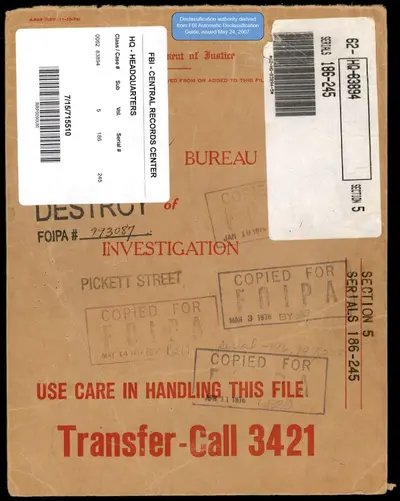
The specific incident documented in 1944 was recorded by United States government investigators. This documentation remained classified for decades until its release to the public on May 8, 2026, through the Presidential Unsealing and Reporting System for UAP Encounters (PURSUE). The administrative handling of the report reflects the intense security protocols of the era. At the time, the Federal Bureau of Investigation maintained a systematic approach to monitoring unexplained aerial phenomena that might impact national security. Field offices in locations such as Knoxville, Albuquerque, and Los Angeles were tasked with routing such reports to headquarters under standing protocols designed to protect vital installations and monitor potential threats to the United States and its interests.
Documentation and Observations
The released FBI document details a specific event involving an experimental V-2 rocket, developed by Germany, which landed within Swedish territory. The presence of such advanced weaponry in the region provided a factual basis for heightened scrutiny of all unidentified aerial phenomena. This specific landing lent significant credence to the speculation that emerged in 1946, wherein observers suggested that various strange objects sighted over Sweden might actually be Soviet-developed guided missiles. The intersection of documented rocket technology and unidentified aerial sightings created a climate where technological experimentation and unidentified phenomena were often viewed as inextricably linked.
While the document provides a record of the event, it does not specify the exact number of witnesses involved in the sighting. The report is classified as a visual sighting, categorized as having been observed by either ground-based or air-based observers. The lack of specific witness counts is common in wartime-era intelligence documents, where the primary focus was on the nature of the object and its potential implications for military intelligence rather than the census of the observers.
Analytical Classification and Status
The nature of this case remains officially unresolved. Under the current mandates of the All-domain Anomaly Resolution Office (AARO), all records released under the PURSUE program are designated as unresolved by default. The federal government has maintained a strictly neutral stance regarding the 1944 Swedish sighting, refusing to conclude that the event was definitively anomalous or that it was caused by a conventional source. The investigation has not ruled out either possibility, leaving the event in a state of permanent ambiguity.
When evaluating sightings from this era, researchers often consider a variety of conventional candidates. These include the testing of experimental aircraft or the presence of weather balloons, such as the Project Mogul series that became prominent in the late 1940s. Atmospheric optical phenomena, including sundogs, lenticular clouds, or meteors appearing near the horizon, are frequently cited as potential explanations for luminous aerial objects. Additionally, bright astronomical bodies like Venus or the Moon can occasionally be mistaken for unidentified craft during low-light conditions. In the context of the 1944 Swedish incident, the documented arrival of the V-2 rocket serves as a primary historical anchor for understanding the era’s preoccupation with advanced, unidentified aerial technology.