The Texas Tech Sightings
University professors witnessed mysterious lights multiple times.
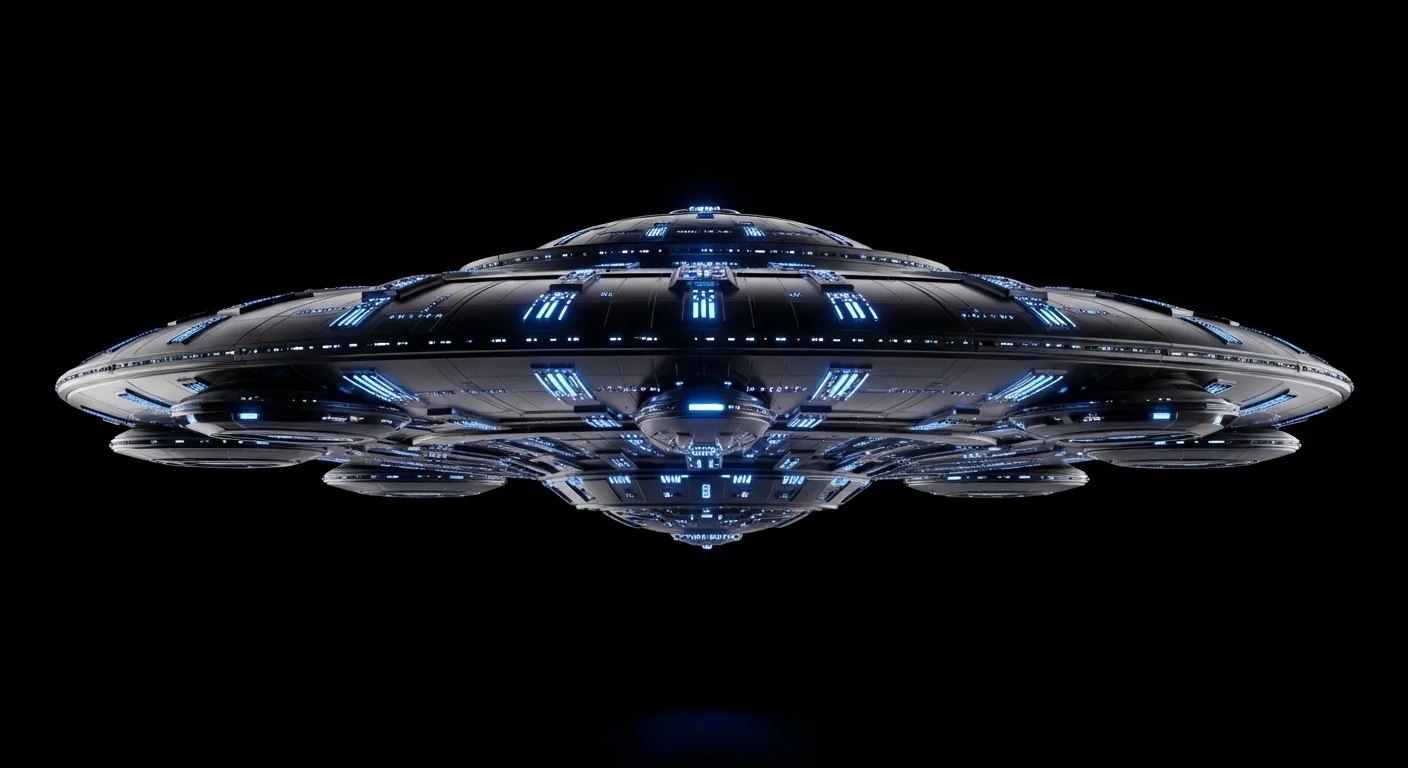
On the evening of August 25, 1951, three professors from Texas Technological College sat in the backyard of one of their homes in Lubbock, Texas, doing what academics often do on warm summer nights—talking shop, sharing observations about the world, and enjoying the vast darkness of the West Texas sky. What happened next would transform their quiet evening into one of the most significant UFO cases in American history, launch a wave of sightings across an entire city, produce some of the earliest photographs of unidentified aerial phenomena, and ultimately confound the United States Air Force. The Lubbock Lights, as they came to be known, remain one of the few UFO cases in which the primary witnesses were trained scientists who observed the phenomenon repeatedly under controlled conditions, applied rigorous methodology to their observations, and flatly rejected the official explanation offered by the military.
Three Scientists in a Backyard
The men who first witnessed the Lubbock Lights were not the sort of people easily given to flights of fancy. Dr. W.I. Robinson was a professor of geology, a man whose career demanded the precise observation and interpretation of physical evidence. Dr. A.G. Oberg was a professor of chemical engineering, trained in the rigorous methodology of the physical sciences. Dr. W.L. Ducker headed the petroleum engineering department, a discipline that required exacting measurements and left little room for speculation. These were men of established reputation, tenured faculty at a respected institution, with everything to lose and nothing to gain from making extraordinary claims about lights in the sky.
They had gathered at Dr. Robinson’s home that Saturday evening for nothing more remarkable than conversation. The three men were friends as well as colleagues, and their backyard discussions ranged freely across topics both professional and personal. The night was clear and warm, typical of late August in West Texas, and the sky above Lubbock stretched out in that enormous way unique to the southern plains—a dome of stars unmarred by the light pollution that would later diminish such views in cities across America.
At approximately 9:10 PM, the conversation was interrupted by something none of them could immediately explain. A formation of soft, glowing lights swept across the sky from north to south, passing almost directly overhead. The lights were arranged in a loose semicircular pattern, numbering between fifteen and thirty individual points. They moved with remarkable speed—far faster than any aircraft the professors had ever observed—and they were utterly silent. In the space of a few seconds, the formation crossed the visible sky and disappeared over the southern horizon.
The three men looked at one another. Each had seen exactly the same thing. Each was certain of what he had observed, and each was equally certain that it did not correspond to any known aircraft, natural phenomenon, or atmospheric effect with which they were familiar. Rather than speculating wildly, they did what scientists do: they began to discuss methodology. If the lights returned, they would be ready.
Repeated Observations
The lights did return. Over the following weeks, the three professors observed similar formations on multiple occasions, and with each sighting they refined their observational technique. They positioned themselves in the backyard with notebooks, plotted the trajectories of the lights against known star positions, estimated angular velocity, and attempted to determine altitude by triangulation. They recruited additional faculty members to serve as independent observers stationed at different locations around the city, hoping to gather data that would allow for more precise calculations.
What they recorded was consistent across every sighting. The lights appeared as a group, always traveling from north to south, always in a roughly semicircular or V-shaped formation. They were soft in quality—not the hard, bright points of aircraft navigation lights, but a diffuse, almost gentle luminescence. Their color was described variously as bluish-green or pale yellow-green, quite unlike any artificial light source the professors had encountered. The formations maintained their shape as they crossed the sky, the individual lights holding their relative positions with a precision that suggested either rigid structural connection or extraordinary coordination.
The speed of the lights was one of their most striking characteristics. Dr. Ducker estimated that the formations crossed thirty degrees of arc in approximately one second, a velocity that was simply incompatible with any known aircraft of the era. Even the fastest military jets of 1951 could not have covered that apparent angular distance at any reasonable altitude. If the lights were at several thousand feet—the altitude the professors estimated based on their apparent size and brightness—their actual velocity would have been extraordinary.
The silence was equally baffling. Any conventional aircraft moving at such speed would have produced tremendous noise, particularly at the relatively low altitudes the professors estimated. Yet the lights passed overhead without a whisper. No engine roar, no sonic boom, no sound of any kind accompanied their transit. The only noise was the ambient sound of a quiet Texas evening—crickets, the occasional distant car, the soft rustle of wind through dry grass.
The professors also noted that the formations varied slightly from one sighting to the next. Sometimes the semicircle was tighter, sometimes more spread out. The number of individual lights fluctuated between roughly fifteen and thirty. On some occasions, the formation appeared to shift or reorganize as it crossed the sky, individual lights changing position relative to one another while the overall pattern was maintained. This variability argued against any mechanical explanation—a rigid craft would not change its configuration from one flight to the next.
A City Looks Upward
Word of the professors’ sightings spread quickly through Lubbock, and within days the phenomenon had captured the attention of the entire city. Hundreds of residents began spending their evenings on porches, in backyards, and on rooftops, scanning the sky for the mysterious formations. Many of them were rewarded. Reports flooded in from across Lubbock, and it became clear that the professors were far from the only witnesses. The lights were being seen by people of every background—housewives, businessmen, students, farmers, children—all describing essentially the same phenomenon.
The consistency of these independent reports was remarkable. Witness after witness described the same soft, glowing lights in semicircular formation, the same north-to-south trajectory, the same extraordinary speed and absolute silence. People who had no contact with the professors and no knowledge of the specific details of their observations were providing descriptions that matched in virtually every particular. Whatever was crossing the skies over Lubbock, it was not a product of suggestion or mass hysteria—too many people were seeing the same thing from too many different vantage points.
The sightings were not confined to a single evening or even a single week. Throughout September and into October of 1951, formations continued to appear over the city with irregular frequency. Some nights produced multiple sightings; other nights passed without incident. The unpredictability added to the sense of mystery surrounding the phenomenon and made systematic observation difficult, despite the best efforts of the professors and the growing community of sky-watchers.
The Hart Photographs
Among the many Lubbock residents drawn to the sky-watching phenomenon was Carl Hart Jr., an eighteen-year-old freshman at Texas Tech. On the night of August 31, 1951, Hart was lying in his bed when he noticed the lights through his bedroom window. He grabbed his Kodak 35mm camera, rushed outside, and over the course of the next few minutes managed to capture five photographs of the formations as they passed overhead.
The resulting images were extraordinary. They showed a distinct V-shaped formation of bright, luminous objects against the dark sky, each individual light clearly resolved. The photographs were sharp, well-exposed, and showed a formation that was consistent with the descriptions provided by the professors and other witnesses. Hart took the photographs to the Lubbock Avalanche-Journal, the city’s newspaper, which published them on September 1. The images were quickly picked up by wire services and reproduced in newspapers across the country, making the Lubbock Lights a national sensation.
The photographs were subjected to intense scrutiny. Photo analysts examined the negatives for evidence of tampering or double exposure and found none. The images appeared to be genuine photographs of actual luminous objects in the sky. Hart himself was interviewed repeatedly by both journalists and military investigators, and his account remained consistent. He was a young man of good reputation, with no apparent motive for fabrication, and those who knew him vouched for his honesty.
Nevertheless, the photographs generated controversy. Some analysts argued that the lights appeared too bright and too well-defined to be consistent with the soft, diffuse glow described by the professors. Others suggested that the V-formation shown in the photographs differed from the semicircular pattern most commonly reported. These discrepancies raised questions about whether Hart had photographed the same phenomenon the professors had observed, or something else entirely. Hart maintained throughout his life that he had simply photographed what he saw, and no evidence of fraud was ever established.
Project Blue Book Investigates
The Lubbock Lights attracted the attention of the United States Air Force, which at the time was operating Project Blue Book—the official military investigation into UFO reports. The case was considered significant enough to warrant a personal investigation by Edward J. Ruppelt, the head of Project Blue Book, who traveled to Lubbock to interview the professors and other witnesses.
Ruppelt was impressed by what he found. In his later book, “The Report on Unidentified Flying Objects,” he described the Lubbock Lights case as one of the most perplexing he had investigated. The credibility of the primary witnesses was beyond question—these were not excitable laypeople but trained scientists who had made careful, repeated observations under favorable conditions. Their descriptions were detailed, consistent, and resistant to easy explanation. Ruppelt noted that the professors had approached the phenomenon with genuine scientific objectivity, neither promoting nor dismissing the possibility of an extraordinary explanation.
The Air Force investigation was thorough but ultimately inconclusive. Investigators examined and dismissed a number of conventional explanations. The lights were not aircraft—no military or civilian flights matched the observed trajectories. They were not meteors—the formations were too organized and too slow for meteoritic phenomena. They were not reflections from ground sources—the lights were clearly airborne and moved independently of any ground-based illumination. They were not searchlights, flares, or any other known source of aerial illumination.
After exhausting the obvious possibilities, the Air Force settled on what many considered a deeply unsatisfying explanation: the lights, they concluded, were most likely reflections from the white breasts of plovers, a species of migratory bird that passes through the Lubbock area in late summer and early fall. According to this theory, the birds were flying in formation at relatively low altitude, and their white plumage was reflecting the newly installed mercury-vapor streetlights that Lubbock had recently adopted. The bluish-green color of these streetlights, the Air Force argued, could account for the unusual color of the lights reported by witnesses.
The Professors Respond
The plover explanation was met with derision by the professors who had spent weeks carefully observing the phenomenon. They rejected it categorically and in detail. Dr. Ducker pointed out that the angular velocity of the lights was far too great to be consistent with birds at any reasonable altitude. Plovers fly at speeds of roughly fifty to sixty miles per hour; even at very low altitude, they could not have produced the apparent angular velocity the professors had measured. If the birds were high enough to be consistent with the observed angular velocity, they would have been invisible to the naked eye.
Furthermore, the professors argued, the quality of the light was entirely wrong for reflected illumination. Reflected light from the breast feathers of a bird would be diffuse, irregular, and subject to constant fluctuation as the bird moved its wings. The lights the professors observed were steady, uniform, and maintained consistent brightness throughout their transit across the sky. They did not flicker, pulse, or vary in intensity in the way that reflected light from a moving biological surface inevitably would.
The formation itself posed problems for the bird hypothesis. While plovers do fly in loose groups, they do not maintain the kind of precise geometric formation that the professors had observed. The semicircular pattern, with its regular spacing and consistent shape, was more suggestive of a rigid structure or a coordinated system than a flock of birds. Moreover, the professors had extensive experience observing bird flights in the open skies of West Texas and were confident they could distinguish birds from whatever they had seen.
The silence of the lights was perhaps the strongest argument against the plover theory. A flock of fifteen to thirty birds passing overhead at low altitude would produce audible sounds—wing beats, calls, the general rush of air displaced by multiple flying bodies. The professors had heard nothing. The formations passed in absolute silence, a characteristic far more consistent with something operating at high altitude than with birds at the close range that would have been necessary to produce the observed apparent brightness.
Ruppelt himself seemed uncomfortable with the official explanation. In his book, he presented the plover theory without enthusiasm, noting the professors’ objections and acknowledging that the case remained genuinely puzzling. He wrote that the Lubbock Lights were among the cases that he personally could not explain and that continued to trouble him long after he left Project Blue Book.
A Broader Wave
The Lubbock sightings did not occur in isolation. During the same period, a number of other significant UFO reports emerged from the West Texas region and beyond, suggesting that whatever was happening over Lubbock was part of a larger pattern of activity. On the same night that the professors made their first observation, August 25, an employee of the Atomic Energy Commission in Albuquerque, New Mexico, reported seeing a huge flying wing pass over the city at high speed. The object, which the witness described as being larger than any known aircraft, was visible for only a few seconds before disappearing to the south—roughly along the trajectory that would have carried it toward Lubbock.
Other reports from the region described similar formations of lights, fast-moving luminous objects, and unusual aerial phenomena that defied conventional explanation. The concentration of sightings in the American Southwest during the late summer and fall of 1951 was striking, and some researchers have suggested that the Lubbock Lights were merely the most well-documented manifestation of a broader phenomenon that was occurring across a wide geographic area.
This broader context adds weight to the significance of the professors’ observations. If the Lubbock Lights were merely plovers reflecting streetlights, one would not expect similar phenomena to be reported simultaneously across hundreds of miles of the American Southwest by witnesses who had no knowledge of each other’s observations. The geographic spread of the sightings suggests something more extensive and more unusual than a local trick of light and feathers.
Legacy and Significance
The Lubbock Lights hold a unique place in the history of UFO research for several reasons. First and foremost, the caliber of the primary witnesses sets this case apart from the vast majority of UFO reports. The professors were not anonymous callers to radio stations or lone drivers on deserted highways—they were named, credentialed scientists who stood behind their observations publicly and subjected themselves to scrutiny from both the media and the military. Their willingness to risk professional ridicule by reporting what they had seen speaks to the strength of their conviction that they had witnessed something genuinely anomalous.
Second, the repeated nature of the sightings distinguishes this case from most UFO encounters, which typically involve a single, brief observation. The professors saw the formations multiple times over a period of weeks, allowing them to refine their observational methods and accumulate a body of data that went far beyond what a single sighting could provide. This repetition also gave other witnesses the opportunity to confirm the phenomenon independently, creating a web of corroborating testimony that is difficult to dismiss.
Third, the photographic evidence, while controversial, provides a visual record that most UFO cases lack entirely. Whether Carl Hart Jr. photographed the same phenomenon the professors observed or something different, his images demonstrate that unusual luminous formations were present in the skies over Lubbock during this period—a fact that is not in dispute.
The Lubbock Lights remain unexplained in any fully satisfying sense. The plover hypothesis, while not impossible, fails to account for the full range of observed characteristics. No alternative conventional explanation has been proposed that fits the evidence any better. The professors themselves went to their graves insisting that they had seen something that did not correspond to any known phenomenon, and no subsequent investigation has conclusively proven them wrong.
What crossed the skies over Lubbock in the late summer of 1951 remains an open question. The lights came silently out of the north, swept overhead in their strange, soft formations, and vanished into the southern darkness, leaving behind a trail of questions that more than seven decades of investigation have failed to answer. In a field crowded with dubious claims and unreliable witnesses, the Lubbock Lights stand as a case grounded in scientific observation and honest inquiry—a reminder that the unexplained does not always come from the margins of credibility, but sometimes from its very center.
Sources
- Project Blue Book — National Archives — USAF UFO investigation files, 1947–1969
- CIA UFO/UAP Reading Room — Declassified CIA documents on UAP
- Chronicling America — Historic US newspapers (1690–1963)