Aguadilla UFO Video
DHS aircraft thermal cameras captured a UFO that split into two objects and flew in and out of the ocean. Scientific analysis ruled out birds, balloons, and drones. The video remains unexplained—and officially unacknowledged despite being government footage.
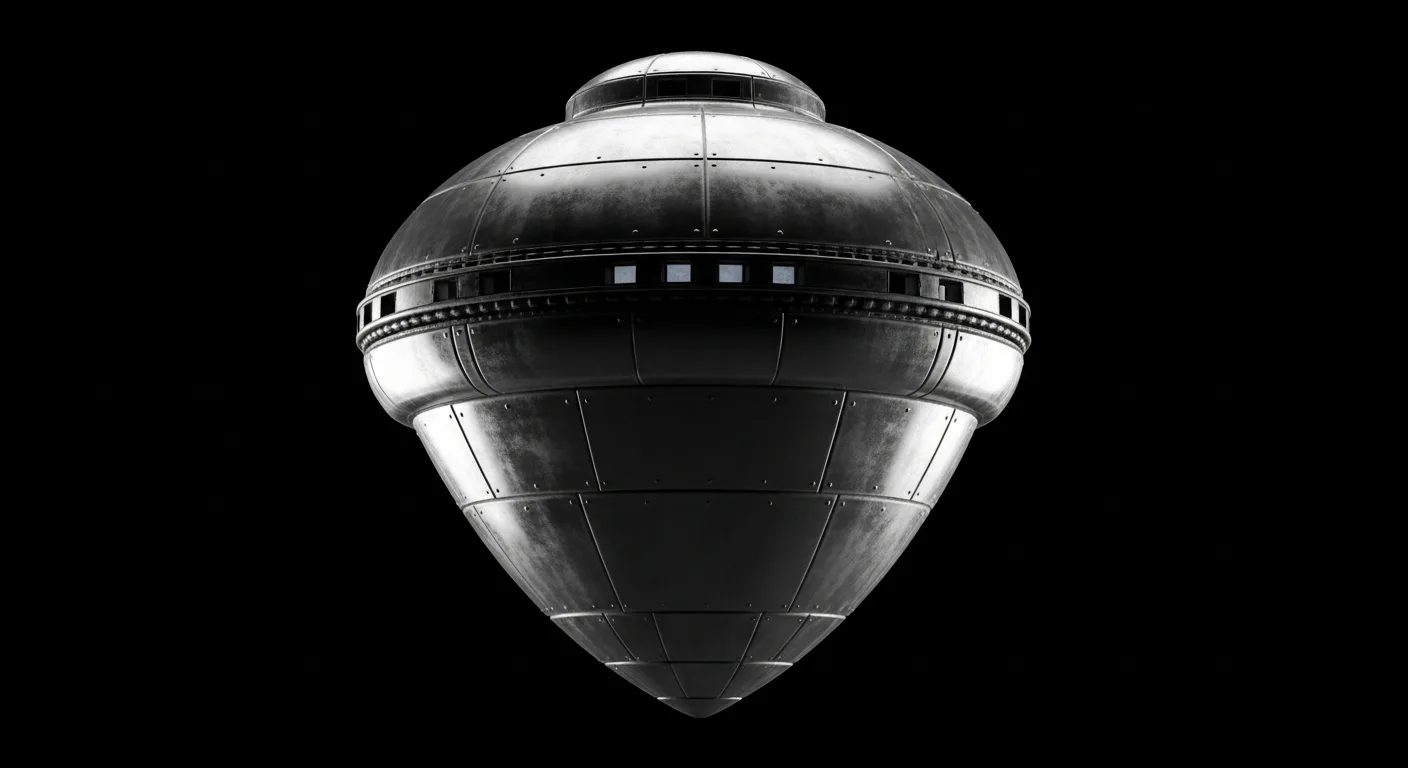
On the night of April 25, 2013, a United States Department of Homeland Security aircraft conducting a routine patrol over the northwestern coast of Puerto Rico captured thermal camera footage of an object that should not exist. The video, roughly three minutes of infrared imagery recorded by a sophisticated FLIR system aboard a DHC-8 turboprop, shows a small, rapidly moving object traversing the airspace near Rafael Hernandez Airport, executing maneuvers that defy conventional explanation, splitting into two separate objects, and repeatedly entering and exiting the Atlantic Ocean without any apparent change in velocity or trajectory. The footage was never officially released, never publicly acknowledged by the government agency that recorded it, and has never been explained. It is one of the most compelling pieces of UAP evidence captured by a government platform—and one of the most studiously ignored.
The Setting
Aguadilla sits on the northwestern tip of Puerto Rico, a city of roughly sixty thousand people nestled between the Caribbean coastline and the green foothills of the island’s mountainous interior. Rafael Hernandez Airport, formerly Ramey Air Force Base, lies just to the north of the city, its runways extending toward the Atlantic. The airport serves both civilian traffic and government operations, including flights by U.S. Customs and Border Protection, an agency within the Department of Homeland Security that conducts aerial surveillance along the island’s coastline to detect drug smuggling, illegal immigration, and other threats.
On the evening in question, a CBP DHC-8 aircraft—a twin-engine turboprop widely used for maritime patrol—was conducting a standard surveillance mission in the Aguadilla area. The aircraft was equipped with a Rafael FLIR system, a sophisticated thermal imaging platform capable of detecting heat signatures at considerable range and recording high-resolution infrared video. The crew consisted of trained operators experienced in using this equipment to track and identify vessels, aircraft, and individuals. These were professionals accustomed to distinguishing between boats, swimmers, birds, and aircraft on their thermal displays—the quotidian business of border surveillance.
At approximately 9:20 PM, the crew detected something on their thermal sensor that did not fit any familiar category.
The Object
The footage begins with the FLIR system locked onto a small, clearly defined thermal signature moving at low altitude over the terrain near the airport. The object appears as a bright spot against the cooler background, indicating that it is either emitting or reflecting thermal energy. It moves with steady, purposeful velocity, traveling roughly from south to north in a direction that takes it over the airport and toward the ocean.
The object’s behavior is immediately unusual. It maintains a consistent altitude of perhaps one hundred feet or less, traveling at an estimated speed of eighty to one hundred twenty miles per hour. There is no visible heat signature consistent with conventional propulsion—no engine exhaust, no rotor wash, no jet plume. The object is simply a compact thermal source moving through space with no apparent means of generating thrust.
As the camera tracks the object, its flight path becomes increasingly difficult to reconcile with known aircraft or drone capabilities. It passes directly over the runway at Rafael Hernandez Airport during a period when airport operations had reportedly been delayed, suggesting that whatever the object was, it had already attracted attention from air traffic control. The object continues northward over the coastline and out over the Atlantic, where the footage captures the event’s most extraordinary sequence.
The Transmedium Event
The term “transmedium” has entered the UAP lexicon to describe objects that appear capable of operating in multiple environments—air, water, and potentially space—without the performance degradation that physics would impose on any known vehicle. The Aguadilla footage provides one of the clearest demonstrations of apparent transmedium capability ever recorded by a government sensor platform.
As the object crosses the coastline and passes over the ocean, it descends toward the water surface and enters the Atlantic. On the thermal display, the object’s signature does not disappear or diffuse upon contact with the water, as would be expected if it were a bird diving for fish or a piece of debris falling from the sky. Instead, the object appears to maintain its integrity and velocity, passing through the air-water boundary without any visible splash, spray, or disruption. It continues moving beneath the surface, its thermal signature still detectable, before emerging from the water and resuming flight.
This transition between air and water occurs multiple times during the recorded sequence, each time without any apparent deceleration, change in trajectory, or physical disturbance of the water surface. The implications are staggering. Any conventional aircraft, drone, or projectile entering water at eighty to one hundred twenty miles per hour would experience catastrophic deceleration forces. Water is roughly eight hundred times denser than air, and the transition between these media at speed generates enormous drag and structural stress. An object that moves seamlessly between air and water at speed is either operating on principles of physics not currently understood or is something that our engineering cannot replicate.
The Split
Perhaps the single most baffling moment in the Aguadilla footage occurs when the object appears to divide into two separate objects. The thermal signature, which has been tracking as a single compact source, separates into two distinct signatures that continue to move in coordinated fashion. The two objects maintain their velocities and appear to operate in concert, as though they are components of a single system or two entities acting under shared direction.
This splitting event has no conventional analogue. Birds do not divide. Balloons do not bifurcate. Drones do not spontaneously separate into two independently functioning vehicles. The event occurs cleanly, without debris, without any change in the thermal characteristics of the resulting objects, and without any loss of velocity or altitude. It is as though the object simply decided to become two objects, executed the transition, and continued on its way.
The two objects continue to be tracked by the FLIR system after the split, each maintaining a thermal signature consistent with the original object. Their coordinated behavior—maintaining similar speeds and trajectories—suggests either a physical connection between them or a shared guidance system. Eventually, both objects pass out of the camera’s field of view, and the footage ends.
Scientific Analysis
The Aguadilla video came to the attention of the Scientific Coalition for UAP Studies, a group of scientists and engineers who apply rigorous analytical methods to UAP evidence. The SCU subjected the footage to one of the most thorough analyses ever conducted on a piece of UAP video, employing frame-by-frame examination, speed calculations based on the known capabilities and position of the recording aircraft, triangulation of the object’s position using geographic references visible in the footage, and elimination of conventional explanations.
The SCU’s analysis systematically ruled out every prosaic explanation they could identify. A bird was eliminated on the basis of speed—the object was traveling far too fast for any avian species, and its thermal signature was inconsistent with a biological entity. A balloon was eliminated because the object was traveling against the prevailing wind, maintaining a steady course rather than drifting. A conventional drone was eliminated because no commercially or militarily available drone in 2013 possessed the performance characteristics displayed by the object, particularly its ability to enter and exit water while maintaining speed.
Chinese lanterns, flares, atmospheric phenomena, and reflections were all considered and rejected. The object’s behavior—its consistent velocity, its transmedium transitions, its splitting into two objects—could not be attributed to any known natural or man-made phenomenon. The SCU concluded that the footage depicted an unknown aerial vehicle demonstrating capabilities beyond current technology, and they recommended formal investigation by appropriate government agencies.
Their report, running to over one hundred sixty pages, represents one of the most detailed scientific analyses of UAP footage ever produced. It has been peer-reviewed by scientists outside the organization and has withstood sustained scrutiny since its publication. No credible alternative explanation has been proposed that accounts for all the observed characteristics of the object.
Government Silence
Perhaps the most remarkable aspect of the Aguadilla case is the absolute silence from the government agency that recorded the footage. The Department of Homeland Security, through its Customs and Border Protection division, operates the aircraft and sensor systems that captured the video. The footage was recorded on government equipment, during a government mission, by government employees. It is, by any reasonable definition, a government document.
Yet the Department of Homeland Security has never publicly acknowledged the existence of the footage, never offered an explanation for what its aircraft recorded, and never confirmed or denied the authenticity of the video that subsequently appeared online. This silence persists despite the growing public and congressional interest in UAP following the New York Times’ 2017 revelations about the Pentagon’s Advanced Aerospace Threat Identification Program and the subsequent establishment of formal UAP investigation offices within the Department of Defense.
The video’s path from government sensor to public awareness remains somewhat opaque. It was apparently obtained by researchers through channels that have not been fully disclosed, and its authenticity was confirmed through analysis of the metadata, the known capabilities of the sensor system, and the geographic features visible in the footage. No government official has disputed its authenticity, which itself is telling—if the footage were fabricated or misinterpreted, a simple statement to that effect would resolve the matter instantly.
This pattern of silent non-denial has become familiar in the UAP field. Government agencies that possess evidence of anomalous phenomena neither confirm nor deny, neither investigate nor explain, preferring the ambiguity of silence to the complications of engagement. The Aguadilla footage sits in this institutional void, too authentic to dismiss and too troubling to address.
Puerto Rico as a UAP Hotspot
The Aguadilla incident did not occur in isolation. Puerto Rico and its surrounding waters have long been recognized as an area of concentrated UAP activity, with reports stretching back decades and encompassing a wide range of phenomena. The island’s combination of military installations, deep ocean trenches, and relatively sparse radar coverage may contribute to the frequency of sightings, though the causal relationship between these factors and UAP activity remains entirely speculative.
The waters off the northwestern coast of Puerto Rico, precisely where the Aguadilla footage was recorded, are particularly active. Multiple reports of unidentified submerged objects have come from fishermen, recreational boaters, and military personnel operating in these waters. The Puerto Rico Trench, the deepest point in the Atlantic Ocean at over 28,000 feet, lies to the north of the island, and some researchers have speculated that the extreme depths of this region might be relevant to the observed transmedium behavior of UAP in the area.
Whether Puerto Rico represents a genuine concentration of anomalous activity or simply an area where observation conditions and reporting culture produce a higher rate of documentation is an open question. What is clear is that the Aguadilla incident is part of a larger pattern of UAP encounters in this region—a pattern that government agencies have been documenting but not explaining for years.
The Technology Question
The capabilities demonstrated by the Aguadilla object raise profound questions about the state of technology on Earth and the possibility that non-human technology is operating in our atmosphere and oceans. The three key capabilities—propulsion without visible exhaust, transmedium travel, and the ability to split into multiple objects—are individually extraordinary and collectively unprecedented.
No known propulsion system produces the kind of flight observed in the footage. The object moves at significant speed without any thermal signature consistent with a jet engine, rocket motor, or propeller system. This implies either a form of propulsion that does not generate waste heat in the conventional sense or a technology that somehow manages its thermal signature to an extraordinary degree.
The transmedium capability is perhaps the most significant from a physics perspective. The transition between air and water at speed requires either a way to manage the enormous forces involved in crossing the density boundary or a means of interacting with both media that circumvents those forces entirely. No known technology accomplishes this. Military submarines surface slowly and carefully; torpedoes launched from aircraft hit the water at high speed but are designed to absorb the impact forces through their construction. An object that moves seamlessly between air and water as though they were the same medium is operating on principles we do not currently understand.
The splitting behavior adds yet another dimension of mystery. Self-replicating or dividing vehicles exist in no known military or civilian inventory, and the concept raises fundamental questions about what the object actually is. Is it a vehicle carrying passengers or a payload? Is it an autonomous probe? Is it something else entirely—a phenomenon rather than a craft, operating according to rules we have yet to identify?
What the Footage Means
The Aguadilla video occupies a unique position in the UAP evidence base. It is government footage, recorded by a government sensor platform, during a government mission, by trained government operators. It has been subjected to rigorous scientific analysis by qualified researchers and has resisted all attempts at conventional explanation. It depicts capabilities—transmedium travel, object splitting, propulsion without visible exhaust—that are consistent with the observations described by military pilots in other high-profile UAP cases.
Yet it remains officially unacknowledged. No government agency has claimed responsibility for investigating the footage, no official explanation has been offered, and no member of the aircraft’s crew has been publicly identified or debriefed on the record. The footage exists in a peculiar institutional limbo, simultaneously authenticated and ignored, analyzed but never addressed.
For researchers and members of the public seeking answers about the nature of UAP, the Aguadilla video represents both a promise and a frustration. It promises that genuine evidence exists, captured by reliable instruments under controlled conditions. It frustrates because the institutions best positioned to investigate that evidence have chosen silence over inquiry. Somewhere in the files of the Department of Homeland Security, the original recording of the Aguadilla encounter presumably sits in its full, unedited form, along with the flight logs, crew reports, and mission data that could provide definitive context for what was captured that April night.
Until those records are released and the crew members are free to share their accounts, the Aguadilla footage will remain what it is today: one of the most compelling pieces of UAP evidence ever captured by a government platform, and one of the most conspicuous examples of official silence in the face of the inexplicable. Something flew over Puerto Rico that night, entered the ocean, emerged again, split in two, and disappeared into history. The cameras saw it. The government recorded it. And no one in authority will say what it was.
Sources
- CIA UFO/UAP Reading Room — Declassified CIA documents on UAP