Great Lakes UFO Incursions
In October-November 1975, UFOs penetrated restricted airspace over multiple US and Canadian military bases near the Great Lakes. Fighter jets were scrambled but could not intercept the objects.
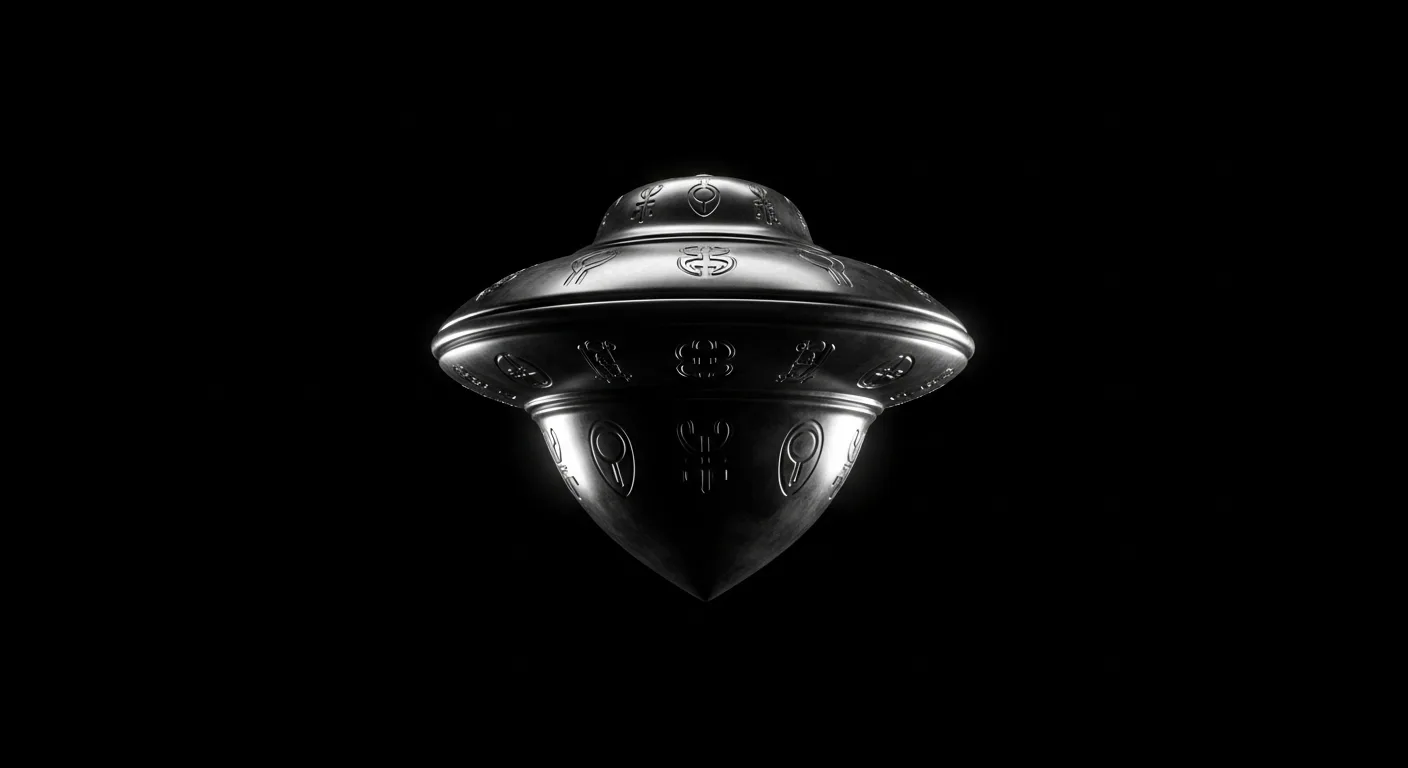
In the autumn of 1975, a wave of unexplained aerial intrusions swept across the northern United States and Canada, targeting some of the most sensitive military installations in North America. Night after night, unidentified objects penetrated restricted airspace over nuclear-equipped bases, triggering alerts, scrambling fighters, and demonstrating capabilities that made interception impossible. The incidents were tracked on radar, observed by trained military personnel, and documented in official communications that have since been declassified, revealing a pattern of activity that posed direct challenges to national security during the height of the Cold War.
The bases affected read like a list of America’s most critical defense installations: Wurtsmith Air Force Base in Michigan, Loring Air Force Base in Maine, Malmstrom Air Force Base in Montana, Minot Air Force Base in North Dakota, and various Canadian Forces facilities. These were not ordinary military installations but strategic nuclear sites, home to bomber squadrons and intercontinental ballistic missiles that formed essential components of America’s deterrent capability. Whatever was penetrating their airspace seemed to know exactly where the most sensitive targets were located.
The Timeline of Incursions
The wave began in late October 1975 and continued through November, with incidents occurring at multiple locations over a period of weeks. The pattern suggested coordinated activity rather than random phenomena, a systematic series of penetrations that moved from base to base as if following a planned reconnaissance mission.
Loring Air Force Base in Maine experienced some of the earliest and most dramatic incidents on October 27 and 28. The base’s weapons storage area, where nuclear munitions were kept, became the focus of particular attention from the intruding objects. Security personnel reported bright lights hovering over the restricted zone, objects that displayed no identification and responded to no challenges. The proximity to nuclear weapons made these incursions especially alarming to base commanders.
Wurtsmith Air Force Base
Wurtsmith AFB in Michigan became another focal point of the wave. On October 30, 1975, an object was observed over the base, displaying characteristics that no known aircraft could match. A KC-135 tanker was dispatched to investigate, but the object easily evaded any approach, demonstrating acceleration and maneuverability far beyond the tanker’s capabilities.
The object at Wurtsmith was tracked on radar, providing technical confirmation that matched the visual observations of ground personnel. It was not a false return or equipment malfunction but a solid contact that behaved in ways radar operators had never seen. The object could hover motionless, then accelerate to tremendous speeds, then change direction instantaneously, all while being observed both visually and electronically.
Military Response
The response to these incursions demonstrated how seriously military authorities took the threat. Fighter jets were scrambled repeatedly, tasked with intercepting and identifying the intruders. F-106 interceptors, among the fastest aircraft in the American inventory, were launched to pursue the objects. They failed every time.
The objects consistently outperformed the interceptors. They could accelerate faster, climb higher, and maneuver more sharply than any aircraft the Air Force possessed. Pilots would close on a target only to watch it pull away effortlessly, demonstrating a technological superiority that was as humiliating as it was concerning. Whatever was flying over these bases was not worried about American air defenses.
NORAD, the joint US-Canadian command responsible for aerospace defense, was heavily involved in tracking and responding to the incidents. Strategic Air Command headquarters received real-time updates as events unfolded. The level of command attention devoted to these incursions reflected their perceived importance, far exceeding what would be expected for routine violations of military airspace.
Radar Confirmation
The radar evidence from the 1975 wave provides some of the strongest technical documentation of UFO activity ever collected. Multiple radar installations tracked the objects simultaneously, allowing technicians to triangulate positions and calculate speeds with precision. The data showed objects that could hover, accelerate to thousands of miles per hour, change direction without slowing, and perform maneuvers that would have destroyed any conventional aircraft.
The radar operators who tracked these objects were experienced professionals, trained to distinguish between real contacts and electronic anomalies. They knew what weather returns looked like, what equipment malfunctions could produce, and what conventional aircraft performance parameters were. What they tracked during those autumn nights fell outside all of those categories.
The Nuclear Connection
The pattern of the incursions pointed unmistakably to a focus on nuclear weapons and delivery systems. Base after base affected was nuclear-equipped. The objects showed particular interest in weapons storage areas and missile installations. The correlation was too consistent to be coincidental.
This was not the first time UFOs had demonstrated interest in nuclear facilities. The incidents at Malmstrom in 1967, when missiles had been disabled during UFO observations, had established a pattern that the 1975 wave reinforced. Whatever intelligence operated these craft seemed determined to survey, and perhaps warn about, humanity’s most destructive weapons.
Declassified Documentation
In the years since 1975, Freedom of Information Act requests have yielded substantial documentation of the incursions. NORAD logs, wing commander reports, and Strategic Air Command communications all confirm that the events occurred as witnesses described. The documents reveal a military establishment that was genuinely alarmed by what was happening and genuinely unable to respond effectively.
The tone of these documents conveys frustration and concern. Military commanders were responsible for defending the most sensitive installations in North America, and they were watching unknown craft violate that airspace with impunity. No identification could be made. No interception could be achieved. No explanation could be offered.
Security Implications
The 1975 incursions raised profound questions about national security that have never been adequately answered. If unidentified objects could penetrate the most restricted airspace in North America without being intercepted, what did that imply about the effectiveness of continental defense? If these objects were of foreign origin, whether Soviet or something else entirely, their technological superiority was deeply troubling. If they were something other than foreign military craft, the implications were perhaps even more disturbing.
The Air Force investigated each incident but produced no conclusions that satisfactorily explained what had occurred. The objects were not identified as any known aircraft, domestic or foreign. Their capabilities exceeded anything in the American or Soviet arsenals. They came, they observed, they demonstrated their superiority, and they departed, leaving behind radar tracks, witness testimony, and official documentation of events that should have been impossible.
Aftermath
The 1975 wave eventually subsided, the nightly incursions becoming less frequent and finally ceasing altogether. The bases returned to their normal operations, the alerts ended, and the incidents faded from immediate concern into the longer process of documentation and analysis. But the questions raised during those autumn nights have never been answered.
The declassified files remain available, testimony to a series of events that challenged the most powerful military in the world and found it wanting. Whatever flew over those bases in 1975, whatever surveyed America’s nuclear deterrent with such impunity, demonstrated capabilities that exceeded human technology and intentions that remain unknown.
The 1975 Great Lakes incursions stand as one of the most significant episodes in UFO history, not because of spectacular claims but because of solid documentation. Radar tracks, military communications, witness testimony from trained observers, and the involvement of the highest levels of command all confirm that something extraordinary occurred. The objects that penetrated restricted airspace over America’s nuclear bases remain unidentified, their origin unknown, their purpose a mystery that half a century of inquiry has failed to solve.
Sources
- CIA UFO/UAP Reading Room — Declassified CIA documents on UAP