Dulce Base Claims
Since the late 1970s, claims have circulated about a secret underground base beneath Archuleta Mesa near Dulce, New Mexico, allegedly housing a joint US-alien facility. Whistleblower Paul Bennewitz first promoted the story. Despite no evidence, the legend persists in UFO lore and has spawned investigations.
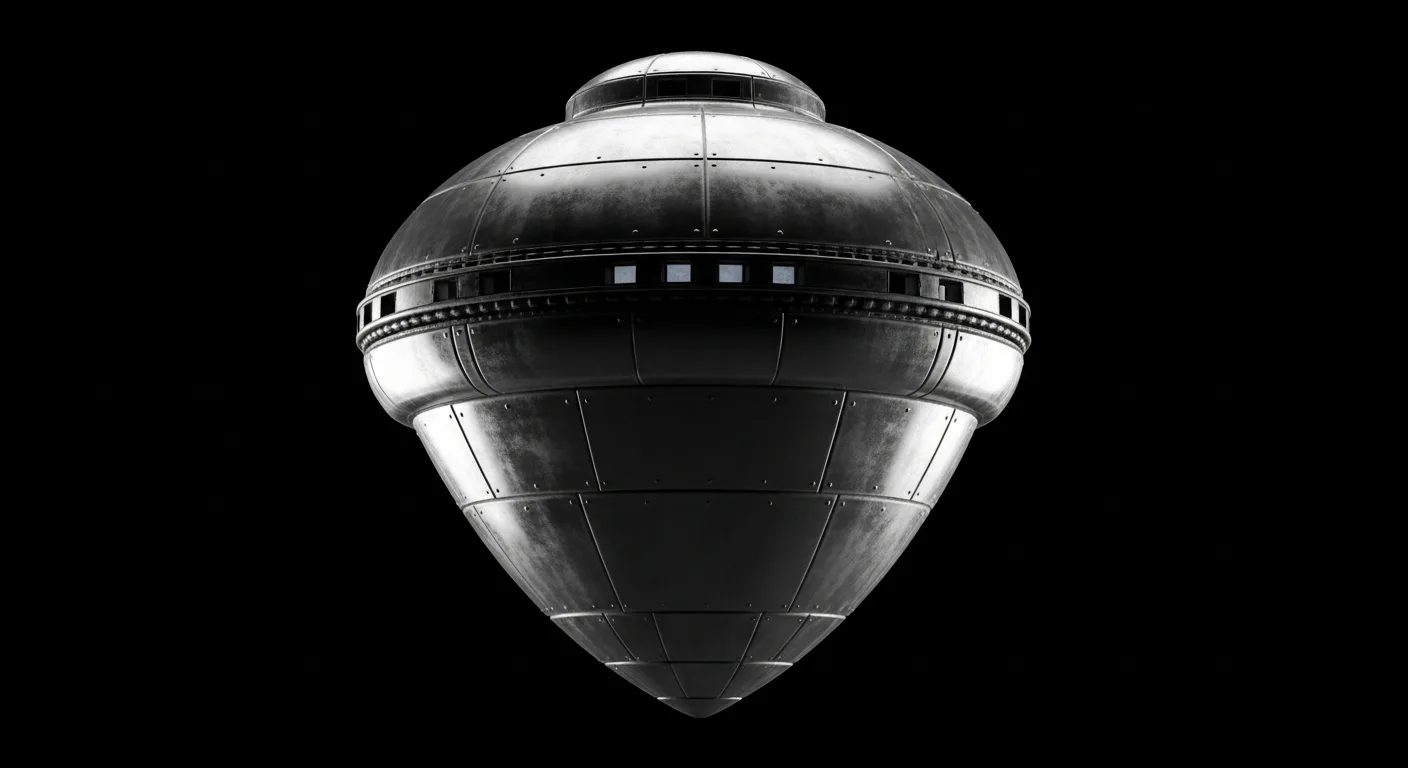
Few stories in the annals of UFO lore have proven as persistent or as elaborate as the claims surrounding Dulce Base, a supposed underground facility hidden beneath Archuleta Mesa in the remote high desert of northern New Mexico. Since the late 1970s, a sprawling narrative has grown around this small town on the Jicarilla Apache Reservation, alleging that deep beneath the sun-scorched earth lies a multi-level complex where the United States government and extraterrestrial beings collaborate on genetic experiments, advanced weapons research, and projects so dark they defy comprehension. No physical evidence has ever been produced to confirm the base’s existence. No entrance has been found, no construction records unearthed, no satellite imagery has revealed anything unusual. Yet the legend of Dulce Base has proven remarkably resilient, feeding on government secrecy, genuine military activity in the region, and the deep human need to believe that the truth is being hidden just beneath the surface.
The Landscape of Secrecy
To understand why the Dulce Base legend took root where it did, one must first appreciate the character of the land itself. Dulce sits at roughly seven thousand feet of elevation in Rio Arriba County, a small community of approximately three thousand people nestled in the high plateau country where the southern Rockies give way to the vast expanses of the American Southwest. Archuleta Mesa rises above the town to the northwest, a flat-topped geological formation that dominates the surrounding landscape with an almost fortress-like presence.
The region has long been associated with strangeness. The Jicarilla Apache people, whose reservation encompasses Dulce and the surrounding territory, have oral traditions that speak of beings who came from the sky and of passages beneath the earth that connect to other worlds. These stories predate European contact by centuries and were never intended as literal descriptions of underground military installations, but they provided a cultural substrate upon which later claims could be grafted.
Northern New Mexico is also home to some of the most secretive military and scientific facilities in the United States. Los Alamos National Laboratory lies roughly a hundred miles to the south, the birthplace of the atomic bomb and still one of the most heavily guarded research installations in the world. Kirtland Air Force Base in Albuquerque hosts the Air Force Research Laboratory and has long been associated with advanced weapons testing. Sandia National Laboratories, White Sands Missile Range, and numerous other classified facilities dot the state. New Mexico is a place where the government genuinely does keep enormous secrets, where restricted airspace blankets vast stretches of desert, and where unusual lights in the sky might be experimental aircraft rather than extraterrestrial visitors. This atmosphere of legitimate secrecy made the idea of yet another hidden facility seem plausible to those inclined to believe.
The late 1970s also brought a wave of cattle mutilation reports to the region. Ranchers on and around the Jicarilla Apache Reservation discovered livestock that had been killed and surgically altered in ways that defied easy explanation. Organs were removed with apparent precision, blood was drained, and incisions appeared cleaner than anything a predator or scavenger could produce. Law enforcement investigations attributed most cases to natural predation and decomposition, but the mutilations fueled speculation about secret experiments being conducted in the area. When the Dulce Base narrative emerged, the cattle mutilations were quickly incorporated into the story as evidence of biological research conducted by the facility’s alleged occupants.
Paul Bennewitz and the Birth of the Legend
The Dulce Base story traces its origins primarily to one man: Paul Bennewitz, an Albuquerque physicist and electronics entrepreneur whose descent into obsession would ultimately destroy his mental health and reshape the landscape of American ufology. Bennewitz was not a fringe character when the story began. He held a legitimate doctorate in physics, ran a successful company called Thunder Scientific Corporation that manufactured humidity instruments, and lived near Kirtland Air Force Base, where his work occasionally brought him into contact with military personnel.
In 1979, Bennewitz began intercepting unusual electronic signals that he believed originated from extraterrestrial sources. Using equipment of his own design, he recorded what he interpreted as communications between alien craft and a ground-based facility. He also filmed lights in the sky near the Manzano Weapons Storage Area at Kirtland, lights that he became convinced were alien vehicles operating in coordination with elements of the United States military. He began compiling his findings into reports and presentations, growing increasingly certain that he had stumbled upon evidence of a vast conspiracy involving the government and non-human intelligences.
What Bennewitz did not know, and what would not become publicly understood for years, was that some of the signals he was intercepting were almost certainly related to classified military projects at Kirtland. The lights he filmed may have been connected to testing of advanced aircraft or weapons systems. Rather than correcting his misunderstanding, elements within the Air Force Office of Special Investigations reportedly chose to encourage it. According to documents later obtained through Freedom of Information Act requests and the testimony of former AFOSI agent Richard Doty, the military actively fed Bennewitz disinformation, reinforcing his belief in alien activities to keep his attention focused on extraterrestrial explanations rather than on the classified programs he had inadvertently detected.
This disinformation campaign appears to have included specific details about an underground base near Dulce. Whether the Dulce element was entirely fabricated by intelligence operatives or whether Bennewitz arrived at it independently through his own investigations remains a matter of debate. What is clear is that by the early 1980s, Bennewitz had developed an elaborate narrative about a multi-level underground facility beneath Archuleta Mesa where aliens conducted experiments on abducted humans, and that agents of the United States government were aware of his claims and, at minimum, did nothing to disabuse him of them.
The toll on Bennewitz was devastating. As his obsession deepened, his behavior became increasingly erratic. He installed elaborate monitoring equipment at his home, spent days without sleep watching for alien signals, and grew convinced that the extraterrestrial occupants of the base were personally targeting him. By the mid-1980s, his mental health had deteriorated to the point that he required hospitalization. He largely withdrew from public life in the years that followed, though the narrative he had constructed took on a life of its own, spreading through UFO research communities and evolving far beyond anything he had originally described.
The Dulce Papers
As the Dulce Base story gained traction within the UFO community during the 1980s, a collection of documents, photographs, and diagrams began circulating that purported to be leaked materials from inside the facility itself. Known collectively as the “Dulce Papers,” these materials described in lurid detail the layout and operations of the supposed base, lending a veneer of documentary evidence to what had previously been a single individual’s claims.
The papers described a facility of seven underground levels, each dedicated to a different purpose. The upper levels were said to house security offices, human staff quarters, and administrative functions. The middle levels allegedly contained laboratories for advanced research, including the study of alien technology and the development of mind control techniques. The deepest levels, according to the papers, were the most disturbing: vast halls filled with tanks containing human-alien hybrid embryos, vats of biological material, and cages holding human subjects undergoing genetic experimentation. The lowest level was sometimes referred to as “Nightmare Hall,” a name that captured the horror of what was supposedly taking place there.
Accompanying the written descriptions were crude diagrams purporting to show the layout of each level, photographs allegedly taken inside the facility showing tanks and equipment, and what were claimed to be copies of security badges and identification cards. Some versions of the papers included technical specifications for alien technology, descriptions of different alien species inhabiting the base, and accounts of conflicts between human military personnel and their extraterrestrial collaborators.
The provenance of these documents has never been established. No original source has been reliably identified, and the materials have been copied, modified, and embellished so many times as they passed through the UFO community that tracing them to their origin has proven impossible. Skeptics note that the documents contain no information that could not have been fabricated by someone with a vivid imagination and a passing familiarity with science fiction. The photographs are uniformly low quality and ambiguous, showing nothing that conclusively depicts alien technology or biological experimentation. The diagrams are simplistic and lack the technical detail one would expect from actual architectural plans of a sophisticated underground facility.
Despite their dubious origins, the Dulce Papers became foundational texts in the underground base mythology. They provided the specific details that transformed a vague claim into a richly described narrative world, complete with floor plans, organizational charts, and a cast of alien characters. For believers, the papers were smoking-gun evidence of the greatest secret in human history. For skeptics, they were an elaborate hoax that had taken on a life of its own.
Phil Schneider: The Man Who Said He Was There
If Paul Bennewitz provided the seed of the Dulce Base legend, Phil Schneider gave it its most dramatic and controversial flowering. Beginning in the early 1990s, Schneider appeared at UFO conferences and lecture circuits across the United States, claiming to be a former government geologist and structural engineer who had personally worked on the construction of underground military bases, including the facility at Dulce. His presentations were vivid, emotional, and deeply disturbing, and they transformed the Dulce story from an artifact of 1980s ufology into a living conspiracy narrative with a human face.
Schneider claimed that in August 1979, he was part of a drilling team tasked with expanding the underground facility near Dulce when workers accidentally broke through into a cavern already occupied by extraterrestrial beings. According to his account, a violent confrontation erupted between the human workers and the aliens, resulting in the deaths of dozens of military personnel and the wounding of Schneider himself. He displayed scars on his chest and hands that he attributed to being struck by an alien weapon during the firefight, and he showed audiences what he claimed was a piece of an alien metal alloy that he had retained from his time working on classified projects.
His lectures painted a picture of a vast network of underground bases connected by high-speed magnetic levitation trains, a shadow government that had entered into treaties with multiple alien species, and a coming conflict between humanity and its extraterrestrial overlords that would determine the future of the planet. He claimed that the government had murdered numerous people to keep these secrets, and he frequently stated that he expected to be killed for going public with his knowledge.
In January 1996, Schneider was found dead in his apartment in Wilsonville, Oregon. The medical examiner ruled his death a suicide by ligature strangulation, but many in the UFO community immediately suspected foul play. Schneider had been vocal about his belief that forces within the government were targeting him, and his death was interpreted by believers as confirmation that the secrets he had been revealing were genuine and that powerful interests would stop at nothing to silence those who spoke out.
Schneider’s claims have proven extremely difficult to verify. No independent records have confirmed his involvement with classified government projects, and some researchers have questioned whether his stated credentials were genuine. The scars he displayed could have had numerous causes unrelated to alien combat. The metal sample he showed at lectures was never subjected to rigorous independent analysis. His father, Oscar Schneider, was a United States Navy captain, which Schneider cited as evidence of his family’s connections to the military-industrial complex, though this connection does not itself validate his more extraordinary claims.
Investigations and the Search for Evidence
Over the decades since the Dulce Base claims first emerged, numerous individuals and groups have attempted to find physical evidence of the supposed facility. These investigations have ranged from informal expeditions by curious UFO enthusiasts to more systematic efforts by researchers with scientific training and proper equipment.
The mesa itself has been explored on foot many times. Investigators have searched for ventilation shafts, hidden entrances, construction debris, or any surface indication that large-scale underground excavation has taken place. None has been found. The terrain around Archuleta Mesa shows no evidence of the massive construction project that would have been required to build a seven-level underground facility. No roads suitable for transporting heavy construction equipment lead to the mesa, no spoil piles from excavation have been identified, and no infrastructure for supporting a large underground population has been located.
Aerial and satellite imagery of the area has been examined repeatedly without revealing anything unusual. Geological surveys have not detected the cavities or structural anomalies that a large underground complex would produce. Ground-penetrating radar studies, while limited in scope, have not identified artificial structures beneath the mesa.
The United States government has consistently denied the existence of any facility at Dulce. Military and intelligence officials have stated that no underground base exists beneath Archuleta Mesa, that no agreements with extraterrestrial beings have been made, and that the entire narrative is a fabrication. Skeptics point out that these denials are exactly what one would expect whether the base existed or not, but they also note that the absence of any physical evidence after more than four decades of searching is telling.
Local residents of Dulce have generally been dismissive of the base claims, though some have reported unusual experiences in the area. Strange lights over the mesa, unexplained sounds, and the aforementioned cattle mutilations have been cited by believers as circumstantial evidence of unusual activity. However, none of these phenomena require an underground alien base as an explanation, and most can be accounted for by prosaic factors including military aircraft from nearby installations, natural atmospheric phenomena, and ordinary predation.
Why the Legend Endures
Despite the complete absence of physical evidence, the Dulce Base legend has not only survived but thrived for nearly half a century. Understanding why requires looking beyond the specific claims to the broader cultural and psychological forces that sustain them.
The story persists in part because it taps into genuine and well-documented patterns of government secrecy. The United States government has a long and verified history of conducting classified programs, some of which involved activities that would have seemed outlandish if described before their official acknowledgment. The Manhattan Project, MKUltra, and various black-budget aerospace programs all demonstrate that the government is capable of maintaining elaborate secrets for extended periods. When officials deny the existence of Dulce Base, believers can point to these historical precedents and argue that denial is precisely what one would expect from an institution with a proven track record of deception.
The narrative also draws strength from its location within a cultural landscape already primed for belief in the extraordinary. The American Southwest is deeply associated with mystery and the unknown in the popular imagination, from the Roswell crash of 1947 to the ongoing UFO sightings at Area 51. Northern New Mexico adds additional layers of mystique through its association with nuclear weapons research, Native American spiritual traditions, and a landscape that feels alien even without extraterrestrial intervention. The vast emptiness of the high desert, the strange geological formations, and the enormous skies all contribute to a sense that anything might be hidden out there.
The Dulce story also serves psychological needs that go beyond simple curiosity about UFOs. The narrative provides a framework for understanding a world that often feels chaotic and threatening, offering the comfort of a single, unified explanation for phenomena that might otherwise seem random and meaningless. Cattle mutilations, government secrecy, unexplained lights, and the general anxiety of modern life can all be subsumed into the Dulce narrative, transformed from separate mysteries into pieces of a coherent, if terrifying, puzzle.
The tragedy of Paul Bennewitz adds a genuinely disturbing dimension to the story. Whether or not an underground base exists at Dulce, the documented involvement of military intelligence operatives in feeding disinformation to a private citizen raises serious ethical questions about the relationship between government agencies and the public. Bennewitz’s mental breakdown was real, his suffering was real, and the apparent willingness of certain officials to exploit and exacerbate his delusions for operational purposes represents a genuine scandal that has never been fully accounted for. In this sense, the Dulce Base story is about a real conspiracy, even if the conspiracy involved disinformation rather than aliens.
A Mesa and Its Secrets
Archuleta Mesa still rises above the town of Dulce, as it has for millennia, indifferent to the stories that humans have told about what lies beneath its surface. The Jicarilla Apache people continue to live in its shadow, maintaining traditions that long predate the UFO age. Cattle graze on the surrounding rangelands. The sun sets behind the mesa in spectacular displays of color that need no alien technology to explain.
The base, if it exists, has kept its secrets perfectly. No whistleblower has produced a verifiable photograph, a confirmed document, or a piece of alien technology that has withstood independent scientific analysis. No former employee has come forward with testimony that can be corroborated by records or physical evidence. The story remains what it has always been: a collection of claims, suspicions, and imaginative elaborations built on a foundation of genuine government secrecy and one man’s tragic unraveling.
Yet people continue to visit Dulce, scanning the mesa for signs of ventilation shafts or hidden entrances, watching the skies for unusual lights, and listening for the hum of machinery that might betray the presence of something vast and hidden beneath the earth. They come because the story speaks to something fundamental in the human experience: the suspicion that the world is not what it seems, that authorities cannot be trusted, and that the most important truths are the ones most carefully concealed.
Whether Dulce Base is a genuine secret, an elaborate disinformation campaign that spiraled beyond anyone’s control, or simply a modern myth born from the collision of Cold War paranoia and the human imagination, its place in UFO lore is secure. The mesa keeps its silence, the desert wind scours the high plateau, and the questions remain unanswered, perhaps because the answers, like the base itself, were never really there at all.
Sources
- CIA UFO/UAP Reading Room — Declassified CIA documents on UAP