Coyame UFO Incident
US radar tracked a UFO on collision course with a small civilian plane over Mexico. Both crashed near Coyame. Mexican military recovered the wreckage—then something happened. US forces allegedly intervened, took the disc-shaped object, and all Mexican personnel died mysteriously.
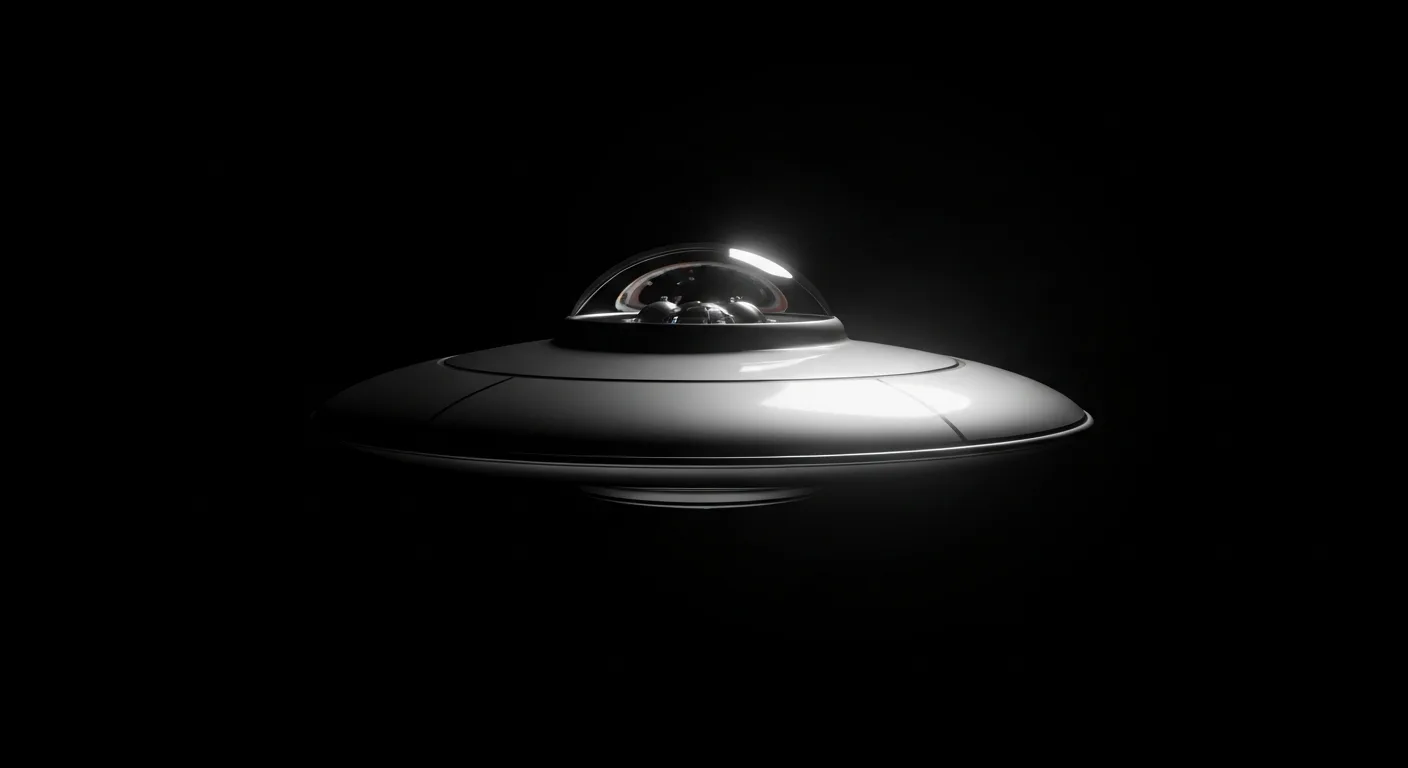
On the evening of August 25, 1974, something streaked across the skies of northern Mexico that would give rise to one of the most disturbing and enduring UFO cases in the history of the phenomenon. What allegedly began as a routine radar contact at a US military installation ended with the deaths of an entire Mexican military recovery team, the covert retrieval of a disc-shaped craft of unknown origin, and a silence so complete that the story would not surface for over two decades. The Coyame UFO Incident, sometimes called “Mexico’s Roswell,” remains one of the few cases in ufology where the alleged consequences extended beyond mere sighting or encounter into something far darker — a collision, mysterious deaths, and an international coverup conducted under the most extreme secrecy.
The remote desert terrain surrounding the small town of Coyame, in the Mexican state of Chihuahua, is a landscape of vast emptiness. Scrubland stretches toward low mountains under skies so clear and wide that anything moving through the upper atmosphere is visible for miles. It is country that few people traverse and fewer still inhabit — the kind of terrain where extraordinary events can unfold with almost no one to witness them. On that August evening, whatever happened in those skies and on that ground would be observed primarily by instruments, military personnel, and ultimately by the dead.
Radar Contact Over the Desert
According to the account that eventually emerged, the sequence of events began at approximately 10:07 PM on August 25, 1974, when a US military radar installation — believed to be part of the extensive air defense network monitoring the southern border — detected an unknown object entering US airspace from the Gulf of Mexico. The object was tracked moving at extraordinary speed on a trajectory that carried it roughly west-northwest across Texas airspace. Its velocity was estimated at approximately 2,500 miles per hour, a speed that immediately distinguished it from any conventional aircraft operating in the region.
Radar operators noted that the object was not transmitting any transponder signal, had filed no flight plan, and did not correspond to any known military or civilian traffic. As the object crossed into Mexican airspace over the state of Chihuahua, US radar continued to track it — standard practice for installations tasked with monitoring broad swaths of airspace regardless of national boundaries. The object appeared to decelerate as it moved deeper into Mexican territory, its speed dropping from the initial extraordinary velocity to something closer to the performance envelope of a fast jet aircraft, though still exhibiting flight characteristics that did not match any known airframe.
At roughly the same time, radar operators were tracking a second contact — a small civilian aircraft flying at much lower altitude on a generally southwesterly heading. This aircraft, believed to have been a light single-engine plane, was following a course that would take it over the Sierra Madre foothills near the town of Coyame. The two contacts were on converging paths. Operators watched as the unknown object, still traveling at considerable speed despite its deceleration, closed the distance with the small civilian plane. At approximately 10:15 PM, the two radar returns merged into one, then disappeared entirely from the scope.
The implication was unmistakable. Whatever the unknown object was, it appeared to have collided with the civilian aircraft somewhere over the desert south of the Texas border, in the rugged terrain between the Rio Grande and the town of Coyame. Both contacts had simply vanished, suggesting that both had gone down.
Discovery in the Desert
What happened in the immediate hours following the radar event remains uncertain, as the primary account of the Coyame Incident relies on documents and testimony that did not surface until the 1990s. According to the narrative that has been pieced together, the Mexican government became aware of the crash — possibly through its own radar systems, possibly through local reports of an explosion or fireball in the sky — and dispatched a military search-and-recovery team to the area.
The Mexican military team reportedly arrived at the crash zone sometime on August 26, the day after the collision. What they found in the desert was the scattered wreckage of a small civilian aircraft, its debris field consistent with a violent midair impact. The plane had been utterly destroyed, its fuselage shattered across a wide area of scrubland. Any occupants would have been killed instantly. But it was not the airplane wreckage that commanded the soldiers’ attention. Approximately a mile and a half from the civilian plane’s debris field, resting on the desert floor with relatively little damage, was an object that defied immediate explanation.
The object was described as disc-shaped — a metallic craft roughly sixteen feet in diameter, with a smooth, silvered surface that showed signs of impact damage but was largely intact. It had no visible wings, no engine nacelles, no tail assembly, and no markings of any kind. It bore no resemblance to any known aircraft, missile, or satellite component. Whatever it was, it appeared to be a manufactured vehicle of some kind, constructed from materials that the recovery team could not readily identify. The disc had apparently survived the collision and the subsequent fall to earth far better than the conventional aircraft it had struck, suggesting either extraordinary structural integrity or some other property that had cushioned the impact.
The Mexican soldiers secured both crash sites and began the process of recovering the wreckage. The civilian aircraft debris was catalogued and collected. The disc-shaped object, despite its considerable weight, was loaded onto a flatbed military truck. A convoy was organized to transport the recovered materials south, away from the border region and toward a military installation where the objects could be examined more thoroughly.
A Convoy That Never Arrived
US intelligence agencies were, according to the account, monitoring the Mexican recovery operation closely. Whether through satellite reconnaissance, signals intelligence, or human sources within the Mexican military, American authorities were aware that the Mexican team had recovered not only the aircraft wreckage but also the anomalous disc. The implications of a foreign government possessing an object of potentially extraordinary technological significance apparently triggered an urgent response at the highest levels of the US national security apparatus.
A rapid reaction team was assembled at an installation in the southwestern United States — Fort Bliss, Texas, has been most frequently cited, though some accounts point to other facilities in the region. This team, composed of personnel trained in hazardous materials recovery and operating under strict secrecy protocols, was placed on standby to cross into Mexican territory and retrieve the disc-shaped object. The political and diplomatic ramifications of such an operation — an unauthorized military incursion into a sovereign nation — were evidently considered secondary to the imperative of securing the unknown craft.
As US forces prepared to intervene, they continued to monitor the Mexican convoy’s progress. The trucks carrying the wreckage and the disc moved south along desert roads, tracked by aerial surveillance. Then, sometime during the journey, the convoy stopped. It simply ceased moving and did not resume. Hours passed with no change in the convoy’s position, no radio communications from the Mexican team, and no indication of why the vehicles had halted in the middle of the desert.
When US reconnaissance assets obtained closer imagery of the stopped convoy, the reason for the halt became horrifyingly apparent. Every member of the Mexican recovery team was dead.
The Deaths of the Recovery Team
The scene at the convoy was, by all accounts relayed through the emerging narrative, deeply disturbing. The Mexican soldiers had not been attacked in any conventional sense. There were no bullet wounds, no signs of an ambush, no evidence of an explosion or firefight. The vehicles were undamaged. Weapons remained holstered or stacked in their carriers. The soldiers appeared to have simply died — quickly, simultaneously, and without any visible cause.
The bodies showed no external injuries, no signs of struggle, and no indication that the men had attempted to flee or take defensive action. Some were found in their vehicles, slumped in their seats as if they had lost consciousness without warning. Others were found on the ground near the trucks, suggesting they had been outside when death overtook them. The uniformity and suddenness of the deaths pointed away from any natural cause — illness, dehydration, or heatstroke would not claim an entire unit simultaneously and without prodrome.
The most commonly cited hypothesis within the Coyame narrative is that the disc-shaped object emitted some form of radiation, biological agent, or other contaminant that proved lethal to anyone in close proximity. Whether this contamination was an inherent property of the craft, a result of damage sustained in the collision, or some form of defensive mechanism has been the subject of endless speculation. Some researchers have suggested that the craft’s propulsion system, whatever its nature, may have leaked harmful energy or material when its structural integrity was compromised. Others have proposed that the object carried biological material — perhaps cargo, perhaps part of the craft’s own ecosystem — that was toxic to human beings.
The US rapid reaction team, upon learning of the deaths, reportedly moved into action immediately. Helicopters carried the team across the border under cover of darkness. The operation was conducted with the urgency and precision that suggested prior planning and authorization at the highest levels. When the American team reached the convoy, they approached the site with extreme caution, wearing full hazardous materials protective equipment — an indication that they had anticipated the possibility of contamination.
The Retrieval
The US team’s operations at the convoy site were methodical and thorough. According to the account, the disc-shaped object was transferred from the Mexican flatbed to American transport. The craft was wrapped or sealed in some form of containment material before being loaded, and all personnel who handled it maintained strict hazmat protocols throughout the process. Every precaution suggested that the Americans either knew or strongly suspected what had killed the Mexican soldiers and were determined not to suffer the same fate.
The bodies of the Mexican military personnel posed a separate problem. The American team could not simply leave evidence of their presence, nor could they leave the bodies in a state that might indicate exposure to an unknown contaminant — such a discovery would invite questions that no one in the US chain of command wanted asked. According to some versions of the account, the bodies were treated with chemicals or subjected to some form of decontamination before being repositioned. Other versions suggest that the entire convoy was burned, the fire serving both to destroy potential biological hazards and to obscure the true cause of death.
The disc-shaped object was transported back across the border by helicopter and ground vehicle, eventually reaching a secure military facility in the United States. Its ultimate destination has been the subject of considerable speculation. Wright-Patterson Air Force Base in Ohio, long associated in ufology with the storage and analysis of recovered UFO materials, is one frequently cited possibility. The Nevada Test Site complex, including the installation popularly known as Area 51, is another. Some researchers have suggested that the object was taken to a facility specifically designed for the analysis of exotic materials, a installation whose very existence remains classified.
The civilian aircraft wreckage was reportedly left at the scene or returned through channels that would support a cover story — a simple plane crash in the desert, tragic but unremarkable. The identity of the civilian pilot, and any passengers, has never been definitively established in the public record.
Silence and Suppression
In the immediate aftermath of the retrieval operation, a comprehensive effort was undertaken to ensure that no credible account of the events would reach the public. The operation had been conducted covertly, without the knowledge or consent of the Mexican government — or, if elements within the Mexican government were aware, they had compelling reasons of their own to maintain silence. The diplomatic consequences of disclosure would have been severe on both sides of the border: for the United States, the admission of an unauthorized military operation on Mexican soil; for Mexico, the revelation that its military personnel had been killed by an unknown force and that a foreign power had entered its territory to recover evidence.
No official report on the Coyame Incident has ever been released by either the US or Mexican government. No military records pertaining to the radar contacts, the crash recovery, the deaths of the Mexican soldiers, or the retrieval operation have been declassified or acknowledged. Freedom of Information Act requests related to the incident have either returned no responsive documents or have been denied on grounds of national security — responses that researchers note are themselves suggestive, since a truly nonexistent event would simply generate a “no records found” response rather than a security classification denial.
The families of the Mexican soldiers who reportedly died in the incident have never received a public explanation for the deaths of their loved ones. If the account is accurate, these men were casualties of an encounter with something unprecedented, and their sacrifice has gone entirely unrecognized. The Mexican military’s official records for the period, to the extent they have been examined, contain no reference to a recovery operation near Coyame in August 1974 and no acknowledgment that an entire unit was lost under unexplained circumstances.
The Story Emerges
The Coyame Incident remained entirely unknown to the public for nearly two decades. The first substantive account appeared in the early 1990s, when a document purporting to be a summary of the events was circulated within the UFO research community. The document, whose provenance has never been conclusively established, was written in the style of an intelligence briefing and contained specific details about radar contacts, coordinates, military units, and operational procedures that lent it an air of authenticity.
The researcher most closely associated with bringing the Coyame case to public attention is Elaine Douglass, who investigated the incident extensively and corresponded with sources who claimed firsthand or secondhand knowledge of the events. Additional research was conducted by Noe Torres and Ruben Uriarte, who published a detailed examination of the case and conducted interviews with individuals in the Coyame region who recalled unusual military activity in the area during the relevant period. Some local residents reported seeing military helicopters — both Mexican and, later, unmarked aircraft consistent with US military types — operating in the desert during late August 1974. Others recalled hearing explosions or seeing bright lights in the sky on the night of August 25.
Denise Marcel Brashier, the granddaughter of Jesse Marcel — the intelligence officer famously associated with the Roswell incident of 1947 — has noted parallels between the two cases: a crash recovery in remote desert terrain, military secrecy, the rapid involvement of specialized retrieval teams, and a subsequent campaign of silence and denial. Whether these parallels indicate a pattern of genuine UFO crash retrievals or merely a recurring template in UFO mythology is a question that divides researchers to this day.
Skepticism and Counterarguments
The Coyame Incident has attracted its share of skepticism, and legitimate questions surround virtually every aspect of the account. The primary document from which the narrative derives has never been authenticated, and its author remains unknown. No corroborating military records have surfaced from either the US or Mexican side. No physical evidence — fragments of the disc, soil samples from the crash site, medical records of the deceased soldiers — has been produced for independent analysis.
Skeptics have proposed several alternative explanations. The radar contacts could have been equipment anomalies, atmospheric phenomena, or misidentified conventional aircraft. The civilian plane crash, if it occurred at all, may have been an unrelated accident — light aircraft go down with distressing regularity in remote terrain, and not every crash is thoroughly investigated or publicly reported. The deaths of the Mexican soldiers, if they occurred, might be attributable to any number of mundane causes, from toxic chemical exposure at an illegal dump site to carbon monoxide poisoning from vehicle exhaust in an enclosed space.
The timing of the story’s emergence — during the early 1990s, a period of intense public interest in UFOs fueled by television programs, bestselling books, and the growing internet — has led some critics to suggest that the Coyame narrative was fabricated or embellished to capitalize on popular fascination with government conspiracy and alien contact. The document’s resemblance to an intelligence briefing could indicate authenticity, or it could indicate that its author was familiar with the format and chose it deliberately to lend credibility to a fictional account.
Others have pointed out that the geopolitical context of 1974 — a period of Cold War tensions, extensive military surveillance, and secretive government operations on both sides of the US-Mexico border — provides a framework within which unusual military activities might have occurred for reasons entirely unrelated to UFOs. Covert operations, drug interdiction missions, intelligence-gathering flights, and experimental weapons tests were all regular features of the border region during this era, and any of these could have generated the kind of secrecy and suppression described in the Coyame account.
A Desert That Keeps Its Secrets
Despite the skepticism, the Coyame Incident persists in the literature of ufology as one of the most compelling and troubling cases on record. Its power lies not in photographic evidence or radar recordings — none have been produced — but in the internal coherence of the narrative and the gravity of its implications. If the account is accurate, even in broad outline, it represents not merely a UFO sighting but a catastrophic event involving the deaths of military personnel, an unauthorized cross-border military operation, and the recovery of technology of non-human origin.
The desert around Coyame remains as empty and forbidding as it was in 1974. The town itself is a small, quiet settlement that gives no outward sign of its association with one of the most controversial incidents in UFO history. The terrain where the crash allegedly occurred has been examined by researchers on several occasions, but the passage of decades, the harsh desert climate, and the remoteness of the location have erased any physical traces that might once have existed. If something extraordinary fell from the sky that August night, the desert has long since reclaimed the evidence.
What remains is the story itself — a story of radar screens lighting up with an impossible contact, of a small plane meeting something it could not avoid, of soldiers who recovered an object beyond their understanding and paid for that discovery with their lives, and of a foreign power that moved swiftly and secretly to claim what the desert had yielded. Whether this story represents a genuine incident suppressed by two governments or an elaborate fabrication woven from Cold War paranoia and UFO mythology, the questions it raises about what governments know, what they conceal, and what might be sharing our skies continue to resonate with those who look up and wonder what else might be out there, streaking across the darkness above the desert, just beyond the reach of our understanding.
Sources
- CIA UFO/UAP Reading Room — Declassified CIA documents on UAP