Bragg Road Ghost Light
An unexplained light has been reported drifting along an old logging tram bed in the Big Thicket of southeast Texas for more than a century, defying easy explanation.
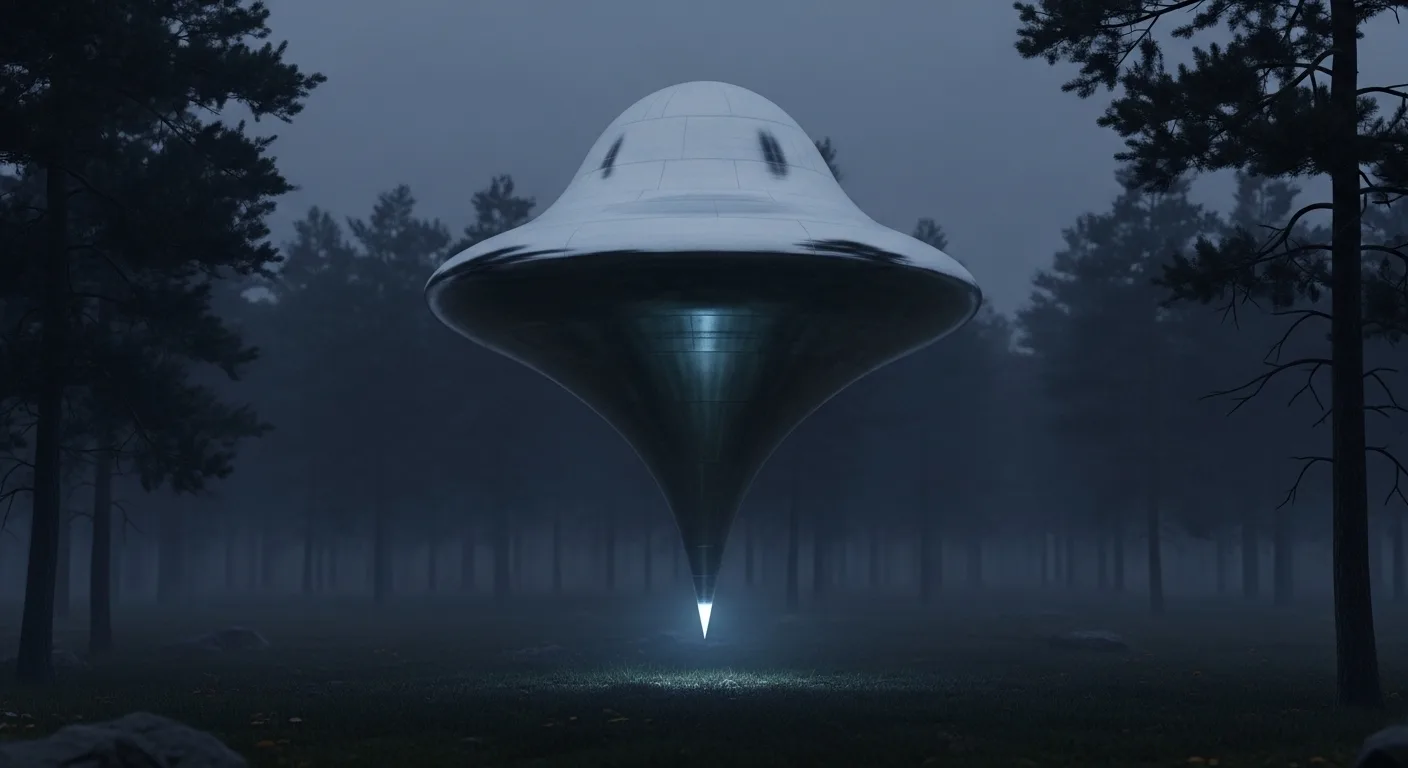
Eight miles of straight, unpaved road cut through the dense pine and hardwood of southeast Texas, and somewhere along that corridor a light has been reported for more than a century. The locals call it the Bragg Road Light, though older residents knew it as the Saratoga Ghost Light, and the road itself is sometimes still called Ghost Road. The phenomenon sits at the heart of the Big Thicket, a biological preserve once described by naturalists as the most ecologically diverse pocket of forest in North America. Whatever the light is, it has been seen by enough people, for long enough, to make outright dismissal awkward.
A Road Built on a Railroad Bed
The road runs along the path of the abandoned Santa Fe Railroad spur that once carried timber out of the Big Thicket. Construction of the line began in 1901, and by 1902 the small mill town of Bragg Station had grown around its terminus. The rails were pulled up in 1934 when the timber operations moved on. What remained was a perfectly straight, eight-mile clearing through the woods, which Hardin County eventually graded into a county road. The straightness matters. Anyone who watches for the light knows that the road’s geometry is part of what makes the phenomenon visible at all, since it allows an observer to see far down the corridor without obstruction.
The First Reports
Accounts of a strange light along this stretch predate the road itself. Workers on the timber line in the early 1900s reported a glowing point that drifted along the tracks at night, sometimes mistaken for a brakeman’s swinging lantern. Folklore quickly absorbed it. One persistent story holds that the light is the lantern of a railroad worker decapitated in an accident, forever searching for his head. Another, with grimmer credibility, names a Mexican laborer murdered for his pay. A third invokes Confederate deserters or Civil War-era violence in the surrounding swamp. Like most ghost light traditions, the legends multiply faster than the witnesses, and the witnesses are not few.
What People Describe
The light is most often reported as a single yellow or white orb, roughly the apparent size of a basketball or a distant headlamp, hovering a few feet above the road surface. It typically appears at the far end of the road and seems to drift toward the observer, sometimes splitting into two, occasionally changing color through orange or pale red. Witnesses report that it can vanish abruptly when approached on foot, only to reappear behind the observer. It is reported in all seasons, though many regulars insist the cooler months produce the clearest sightings. Vehicle engines are sometimes said to falter in its vicinity, an old motif also attached to other Texas mystery lights such as the Marfa Lights far to the west.
Investigations and Theories
A 1960s investigation by Texas folklorist Archer Fullingim, longtime editor of the Kountze News, gathered accounts from dozens of locals who insisted the light was a regular feature of the road. In the 1970s, journalist Bryan Woolley spent multiple nights along the route and published a widely cited account describing two separate luminous events that he could not reconcile with passing traffic. Subsequent observers have proposed several conventional explanations, none entirely satisfying. Swamp gas combustion is the most familiar, drawing on the abundant decaying biomass of the surrounding bottomland, though such gases rarely produce the kind of steady, mobile glow described. Distant headlights refracted along the corridor, similar to the dominant explanation for many Texas ghost lights, are difficult to invoke when the road is closed at both ends and witnesses report sightings in eras before automobiles. Piezoelectric or earth lights generated by tectonic strain in the underlying geology have been proposed by researchers like Paul Devereux, who studied similar phenomena globally.
The Big Thicket Setting
The forest itself shapes the experience. The Big Thicket National Preserve, established in 1974, protects roughly 113,000 acres of an ecological crossroads where southeastern swamp, central plains, and southwestern desert habitats overlap. Old-growth pine, cypress sloughs, carnivorous plant bogs, and dense palmetto undergrowth combine to make the area unusually disorienting after dark. Sound carries strangely. The air on humid nights holds a fine mist that can refract distant light in unfamiliar ways. Visitors who have never spent a night in southern bottomland often underestimate how dark such places truly are, which may amplify ordinary stimuli into seemingly anomalous events. Whether or not that fully explains Bragg Road, it certainly conditions how the road is experienced.
Modern Visitors and Folklore Tourism
Bragg Road today is something of a regional pilgrimage. Hardin County maintains the road, and signs at either end identify it as Ghost Road Scenic Drive. On weekends in October, traffic along the route can be heavy enough that locals avoid it. Researchers from Sam Houston State University and Lamar University have made periodic field visits, recording lights with cameras of varying sensitivity. None has produced an unambiguous photograph. Skeptics point out that this absence is itself telling. Defenders counter that ordinary cameras struggle with low-light point sources at long distances and that the phenomenon, whatever its cause, has never been reliably predictable enough to capture on demand.
Place Within the Texas Mystery Light Tradition
Bragg Road belongs to a small but persistent family of Texas ghost light sites that includes the Marfa Lights of Presidio County, the Anson Light, and the lesser-known Iraan Light of Pecos County. Each has produced its own folklore and its own conventional explanations. Each has resisted complete debunking. The Bragg Road Light may yet turn out to be some combination of swamp gas, atmospheric refraction, and human suggestion. It may also be something stranger that has not yet been satisfactorily named. Until then, the road continues, the woods continue, and on certain nights, watchers along the eight straight miles continue to see what they cannot explain.
Sources
- Big Thicket National Preserve, National Park Service
- Archer Fullingim, Kountze News editorial archives, 1960s
- Bryan Woolley, “The Ghost Road of Saratoga,” Texas Monthly, 1977
- Texas State Historical Association, “Bragg Road”