Montreal Bonaventure Hotel Sighting
Hotel guests and staff observed a massive, silent object hovering over downtown Montreal for three hours. The object was seen from the rooftop pool and featured multiple lights in formation.
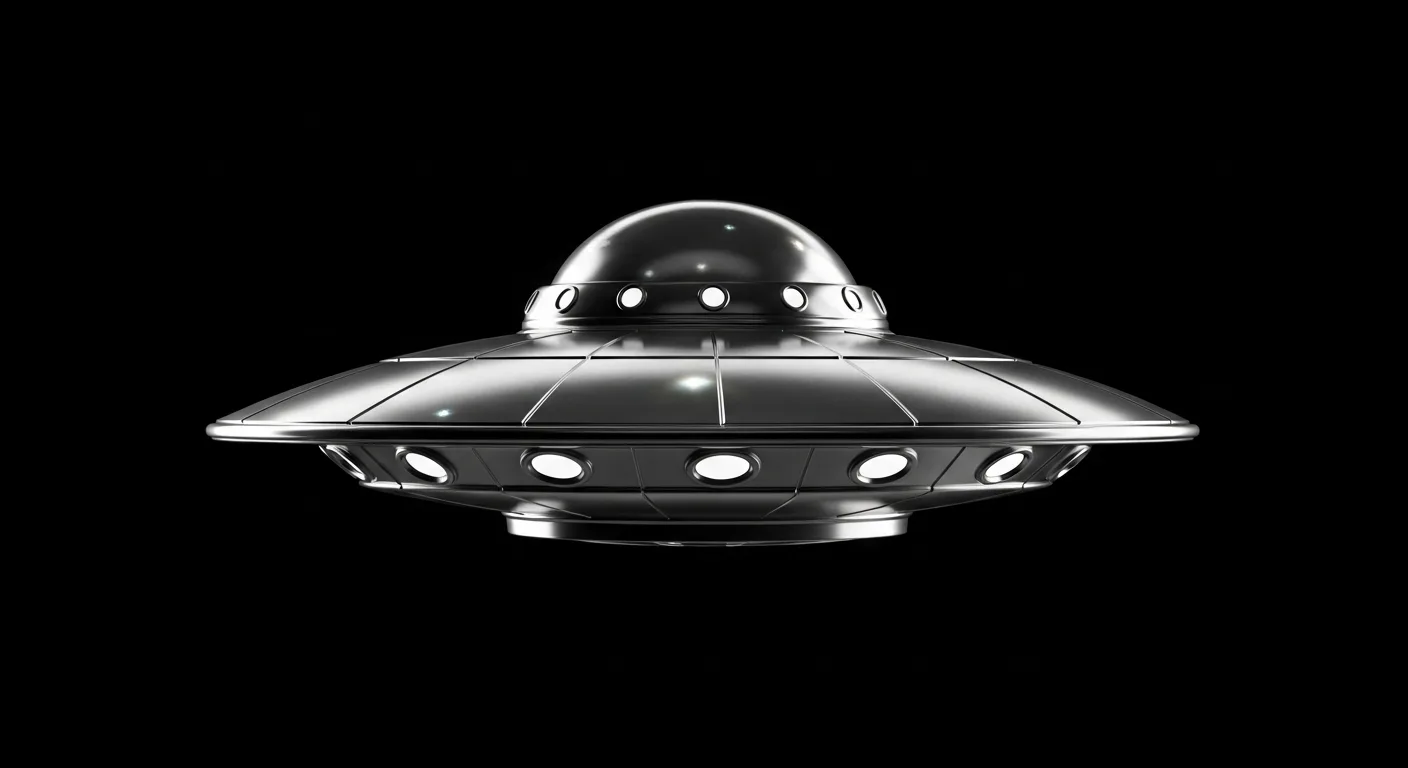
On the evening of November 7, 1990, the guests swimming in the rooftop pool of Montreal’s Hotel Bonaventure looked up into the night sky above downtown and saw something that none of them could explain. Hovering silently above the city, at an altitude that seemed impossibly low for anything so large, was a massive object — dark, oval or circular in shape, studded with lights that moved in patterns no conventional aircraft could produce. It remained there, stationary and silent, for approximately three hours, observed by more than forty witnesses including hotel guests, staff members, security personnel, and Montreal police officers who were called to the scene. When it finally departed, rising slowly and then accelerating upward until it disappeared from view, it left behind a collection of witnesses who had enjoyed the rare luxury, in UFO cases, of extended observation from a comfortable vantage point. The Montreal Bonaventure Hotel sighting remains one of Canada’s most significant mass UFO events, distinguished by the number of witnesses, the duration of the observation, and the absence of any conventional explanation.
The Setting
The Hotel Bonaventure occupies a distinctive position in Montreal’s urban landscape. Built atop the Place Bonaventure exhibition complex in the heart of downtown, the hotel sits several stories above street level, its upper floors rising into the open sky above the surrounding buildings. The hotel’s most unusual feature is its rooftop garden and outdoor swimming pool, an amenity that provides guests with an unobstructed view of the sky — a rarity in a dense urban environment where buildings typically block the horizon in all directions.
On the evening in question, the weather was clear and cold, typical of early November in Montreal. The sky above the city was dark, with city lights providing the ambient illumination that makes urban stargazing difficult but large, luminous objects easy to spot. The rooftop pool was in use, with guests enjoying the heated water and the bracing contrast of the cold autumn air. The conditions, in short, were ideal for observation — clear skies, a high vantage point with minimal obstruction, and a group of relaxed, attentive witnesses with nothing to do but look up.
Montreal in 1990 was a cosmopolitan city of three million people, served by two major airports, multiple military installations, and the usual complement of commercial and private aviation. The skies above downtown were well-traveled, and the residents and visitors of the city were accustomed to seeing aircraft at all hours. What appeared above the Hotel Bonaventure that evening was not an aircraft, and the witnesses knew it.
The Sighting
The first witnesses to notice the object were hotel guests using the rooftop pool, who spotted unusual lights in the sky at approximately 7:00 PM. The lights were not moving in the manner of conventional aircraft — they were stationary, hovering in a fixed position above the city at what appeared to be a relatively low altitude. As the initial witnesses pointed out the lights to others, a group began to gather at the pool area, watching the phenomenon from the hotel’s elevated vantage point.
What the witnesses saw, as they watched over the following three hours, was a large, dark object that appeared to be roughly oval or circular in shape, with multiple lights arranged across its surface. The object was estimated by witnesses to be several hundred feet in diameter, though the difficulty of judging the size of an object at an unknown altitude and distance in the dark makes such estimates inherently uncertain. What was not uncertain was that the object was large — much larger than any conventional aircraft — and that it was hovering motionless in a manner that no known aircraft could sustain.
The lights on the object were its most striking feature. Witnesses described multiple individual lights arranged in a pattern or formation across the object’s surface, some appearing to be embedded in the structure and others seeming to move or rotate around it. The lights were of various colors — white, yellow, and what some witnesses described as a warm amber or orange. They were steady rather than blinking, and their arrangement gave the impression of a structured, artificial object rather than any natural phenomenon.
The silence of the object was as remarkable as its appearance. Despite its apparent size and proximity, it produced no sound whatsoever — no engine noise, no rotor wash, no sonic disruption of any kind. This silence was repeatedly emphasized by witnesses as one of the most unsettling aspects of the experience. An object of the estimated size, hovering at the estimated altitude, should have been producing sound if it were any known type of aircraft. The complete absence of sound suggested a propulsion mechanism utterly unlike anything in the conventional aviation inventory.
The object did not remain perfectly static throughout the three-hour observation period. Witnesses reported occasional slight movements — lateral shifts, gentle rocking, and what appeared to be slow rotational movement around its vertical axis. These movements were subtle, visible primarily because of the shifting patterns of the lights, but they confirmed that the object was not a stationary atmospheric phenomenon, a satellite, or a celestial body. It was moving, however slightly, in ways that indicated controlled, powered flight.
The Witnesses
The approximately forty witnesses to the Montreal sighting constitute one of the strongest aspects of the case. They included a diverse cross-section of people with no prior connection to each other and no apparent motive for fabrication.
Hotel guests who witnessed the event included business travelers, tourists, and local residents using the pool facilities. They came from various backgrounds and nationalities, and many had no particular interest in or knowledge of UFO phenomena. Their testimony was spontaneous — they saw something in the sky, they watched it, and they later reported what they had seen. Several guests requested that the hotel staff come to the roof to confirm what they were seeing, reluctant to believe their own eyes.
Hotel staff members who were summoned to the rooftop confirmed the sighting independently. Security personnel, whose job required them to be alert and observant, provided particularly detailed accounts of the object’s appearance and behavior. These were employees whose professional function demanded reliable observation and accurate reporting — they had no incentive to fabricate or exaggerate, and their accounts were consistent with those of the guests.
The involvement of Montreal police added another layer of credibility. Officers who responded to calls about the object reportedly observed it themselves, though the official police response was cautious and no formal statement was issued. The fact that law enforcement personnel observed the phenomenon and were unable to identify it carries weight, as police officers are among the categories of witnesses most resistant to accepting extraordinary explanations for ordinary events.
The witnesses came and went during the three-hour observation period, as individuals arrived at the pool, watched the object, and eventually left. This rotation of observers means that the sighting was not dependent on the testimony of any single individual or group — it was confirmed independently by multiple people at multiple times throughout the evening. The consistency of descriptions across this rotating pool of witnesses is one of the case’s most compelling features.
The Departure
After approximately three hours of hovering, the object began to move. Witnesses described a slow, vertical ascent that began almost imperceptibly — the object seemed to drift upward, gradually increasing its altitude. As it rose, the lights on its surface became less distinct, dimming or being obscured by distance and the ambient glow of the city. The object accelerated as it gained altitude, moving upward with increasing speed until it was lost from view.
The departure was as silent as the hovering had been. No sound accompanied the ascent, no atmospheric disturbance was felt or observed, no trail or exhaust was visible. The object simply rose and disappeared, leaving the witnesses on the rooftop looking up at an empty sky, processing what they had just spent three hours watching.
The manner of the departure is significant because it further eliminates conventional explanations. A helicopter, even a very large one, produces considerable noise and downdraft, particularly during takeoff and ascent. A balloon or airship, while potentially silent, cannot accelerate upward — it rises at a rate determined by its buoyancy and cannot increase that rate at will. No conventional aircraft of 1990 technology could hover motionless for three hours and then accelerate vertically without producing sound. The departure characteristics, like the hovering characteristics, suggest a technology or phenomenon outside the known aviation inventory.
Investigation and Response
The sighting attracted immediate media attention. Local television and radio stations reported the event, and newspapers published accounts the following day. The story was picked up by the national media in both English and French Canada, making it one of the most widely reported UFO events in Canadian history.
UFO researchers descended on the Hotel Bonaventure in the days following the sighting, conducting interviews with witnesses and collecting testimony. The case was investigated by several Canadian UFO research organizations, which compiled extensive files of witness statements, sketches, and analyses. The quality of the witness pool — numerous, diverse, credible, and independently corroborating — made the case particularly attractive to serious researchers.
Efforts were made to identify the object through conventional means. Flight records from Montreal’s two airports, Dorval and Mirabel, were checked for any aircraft that might have been in the area at the relevant time. No flight plans or radar tracks corresponded to the reported position and behavior of the object. Military records were requested, though the response from Canadian military authorities was limited and unhelpful — a pattern familiar to UFO researchers in many countries.
Weather data for the evening was examined to determine whether any atmospheric phenomenon might explain the sighting. The clear conditions ruled out most meteorological explanations — there were no unusual cloud formations, no temperature inversions that might produce optical effects, no atmospheric conditions known to generate persistent luminous phenomena. The astronomical record was also checked; no bright planets, satellites, or other celestial objects were in positions consistent with the sighting.
The investigation reached no definitive conclusion. The object seen above the Hotel Bonaventure on November 7, 1990, was not identified as any known aircraft, atmospheric phenomenon, celestial body, or man-made object. It remains officially unexplained.
Significance in Canadian Ufology
The Montreal Bonaventure Hotel sighting occupies a prominent position in the history of Canadian UFO research for several reasons that distinguish it from the hundreds of other sightings reported in Canada each year.
The duration of the sighting is perhaps its most significant feature. Most UFO sightings last seconds or minutes — brief, startling encounters that leave witnesses questioning what they saw. The Montreal sighting lasted three hours, giving witnesses ample time to observe, discuss, and confirm what they were seeing. The extended duration also means that the object survived the usual process of elimination that resolves most UFO reports — during three hours of observation, any conventional explanation would have become apparent. Aircraft land. Balloons drift. Stars move. The Montreal object did none of these things.
The number and diversity of witnesses provides another layer of significance. Forty independent witnesses, including security professionals and police officers, observing the same phenomenon from the same location over an extended period, represent a quality of testimony that is difficult to dismiss. The witnesses did not know each other, had no common motive for fabrication, and provided descriptions that were consistent in their essential details while varying in the minor particulars that one would expect from genuine independent observation.
The urban setting of the sighting is also noteworthy. The object appeared over downtown Montreal, one of Canada’s largest and most cosmopolitan cities, in full view of anyone who happened to look up. This is not a lonely rural sighting by a single witness on a dark road — it is a mass observation in a dense urban environment, with all the opportunities for corroboration and investigation that such a setting provides.
Questions Without Answers
More than three decades after the event, the Montreal Bonaventure Hotel sighting remains unexplained. No conventional identification has been proposed that accounts for all of the observed characteristics — the size, the shape, the lights, the silence, the extended hovering, and the vertical departure. The witness testimony has never been credibly challenged, and no evidence of hoax or fabrication has been identified.
The sighting took place during a period of heightened UFO activity in the Quebec region, with multiple reports from the province in the late 1980s and early 1990s. Whether these reports are related — representing a sustained period of activity by whatever produces UFO phenomena — or coincidental is unknown. The Quebec wave, as it has been called, produced several high-quality cases, but the Bonaventure Hotel sighting remains the most compelling by virtue of its witness quality and observation duration.
For the witnesses themselves, the experience was transformative. Many described it as one of the most significant events of their lives — not because it was frightening, but because it demonstrated, in a way that no amount of reading or theorizing could match, that there are things in the sky that cannot be explained by current human knowledge. They watched for three hours. They saw what they saw. And what they saw has no name, no category, no place in the taxonomy of known objects.
The night sky above Montreal has been observed by millions of people in the decades since November 7, 1990. Whatever appeared above the Hotel Bonaventure that evening has not returned — or if it has, it has not presented itself with the same duration and visibility that made the 1990 sighting so remarkable. The object came, it hovered, it was watched, and it departed. It left behind no physical evidence, no explanation, and no resolution. It left behind only the testimony of forty people who looked up from a rooftop swimming pool and saw something that the sum total of human knowledge could not account for. In the study of the unexplained, such testimony is both everything and not quite enough — sufficient to establish that something happened, insufficient to establish what.
Sources
- CIA UFO/UAP Reading Room — Declassified CIA documents on UAP