Gulf of Mexico Oil Platform UFO
Workers on multiple oil platforms watched a massive, brilliantly lit UFO hover over the Gulf for hours, describing a craft larger than any known aircraft with multicolored rotating lights.
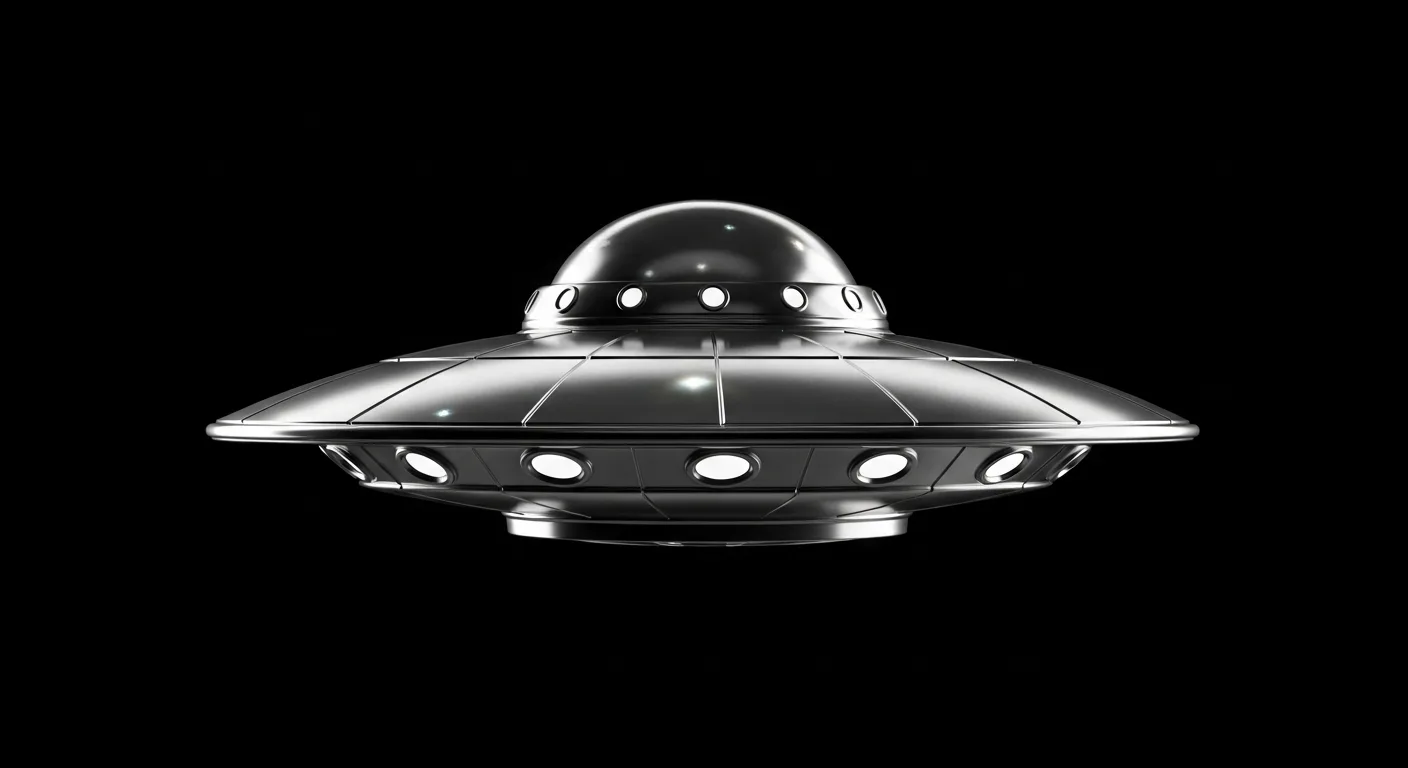
The Gulf of Mexico is a place of extremes. By day, its surface glitters under a subtropical sun, stretching to the horizon in every direction with nothing to break the infinite flatness of water meeting sky. By night, it becomes one of the darkest places accessible to large numbers of people, the light pollution of the mainland reduced to a faint glow on the northern horizon while the stars blaze overhead with an intensity that city dwellers never experience. It is also one of the most heavily worked bodies of water on Earth, its floor studded with thousands of oil and gas platforms whose crews spend weeks at a time in this isolated environment, intimately familiar with every type of vessel, aircraft, and natural phenomenon that the Gulf can produce. In November 1988, workers on multiple platforms approximately one hundred miles off the Louisiana coast observed something that none of their extensive experience could explain: a massive, brilliantly illuminated object that hovered over the dark water for hours, defying identification and leaving dozens of hardened offshore workers struggling to describe what they had seen.
Life on the Platforms
To understand the significance of the 1988 Gulf of Mexico sighting, one must first understand the people who reported it. Offshore oil platform workers are a distinctive breed, selected for their ability to perform demanding physical and technical work in one of the most challenging environments on Earth. They live and work on steel structures rising from the ocean floor, surrounded by water on all sides, accessible only by helicopter or crew boat. Their shifts typically run two weeks on and two weeks off, and during their time on the platform they are immersed in an environment where accurate observation is not merely a professional skill but a survival necessity.
Platform workers are deeply familiar with the aerial and maritime traffic of the Gulf. Helicopters shuttle between the platforms and the mainland constantly, their distinctive silhouettes and engine sounds as recognizable to the crews as the faces of their coworkers. Supply boats ply the waters below, their running lights visible at night across miles of open water. Military aircraft from bases along the Gulf Coast occasionally pass overhead, their formations and flight profiles familiar to workers who have spent years watching the sky from their elevated perches. Coast Guard cutters, fishing boats, commercial vessels, weather phenomena, celestial objects, all of these are part of the daily visual vocabulary of the offshore worker.
This familiarity is precisely what makes platform workers such valuable witnesses to anomalous phenomena. When a person who has spent years observing the Gulf from a platform tells you that they saw something they could not identify, that assessment carries considerable weight. These are not people who mistake Venus for a UFO or confuse a helicopter with an alien craft. They know what belongs in their sky and what does not.
The platforms themselves provide excellent observation conditions, particularly at night. Elevated well above the water surface, they offer unobstructed sight lines to the horizon in every direction. The absence of light pollution, save for the platform’s own working lights, means that objects in the sky are visible with a clarity that is impossible in urban or suburban settings. And the multiple platforms dotting the Gulf provide a natural network of observation points, allowing the same object to be seen from different locations simultaneously, enabling rough triangulation of position and estimates of size and distance.
The Night of the Sighting
The precise date in November 1988 is not fixed with certainty in the available records, a reflection of the limited formal investigation the case received. What is established is that the sighting occurred during a night shift on multiple platforms operating approximately one hundred miles off the Louisiana coast, in the deep-water drilling and production zone that was then the frontier of the American offshore oil industry.
The first reports came from workers who noticed an unusual light on the horizon. In the Gulf, distant lights are commonplace. Other platforms, ships, and aircraft all produce visible illumination that is part of the normal nighttime scenery. But this light was different. It was brighter than any platform or vessel, and it did not move in the manner of any known aircraft or ship.
As workers watched, the light grew larger and more distinct, eventually resolving into an object of staggering proportions. Witnesses described a craft that was larger than any known aircraft, so large that several workers compared it to a floating city. The object was brilliantly illuminated by multicolored lights that appeared to rotate or pulse in patterns, creating a display that was both beautiful and deeply unsettling.
The object’s most remarkable characteristic was its hovering capability. It remained stationary over the water for an extended period, maintaining its position with a stability that was inconsistent with any known aircraft. Helicopters can hover, but they produce an enormous amount of noise and downwash, and they cannot maintain a hover for hours at a time without refueling. The object in the Gulf showed none of these characteristics. It hung silently above the water, apparently effortlessly, for a period that witnesses estimated at several hours.
Multiple Platform Confirmation
The sighting’s credibility was substantially enhanced by the fact that workers on several different platforms independently reported seeing the same object. These platforms were separated by distances of miles, providing different viewing angles on the phenomenon. The consistency of the descriptions from different platforms, all reporting a massive, brightly lit object hovering over the water, eliminated the possibility that a single platform crew was misidentifying a local phenomenon or that the sighting was the product of a single witness’s imagination.
Workers on different platforms communicated with each other by radio during the sighting, comparing observations and confirming that they were all watching the same object. These real-time communications added a layer of corroboration that many UFO sightings lack. Rather than independent witnesses providing accounts after the fact, with all the potential for memory distortion and suggestion that implies, the Gulf platform workers were comparing notes while the event was still in progress, ensuring that their descriptions were not influenced by post-event discussion.
The different viewing angles also provided some basis for estimating the object’s size and distance. While precise triangulation was not performed at the time, the fact that workers on platforms separated by several miles all reported seeing a massive object in approximately the same direction suggested that the object was at a considerable distance and that its apparent size was not an artifact of proximity. An object that appears large from a single vantage point might be a small, nearby thing; an object that appears large from multiple vantage points separated by miles is either genuinely large or is a coordinated illusion of remarkable sophistication.
The Object’s Description
Despite the natural limitations of nighttime observation over water, the witnesses provided detailed and broadly consistent descriptions of the object. These descriptions, drawn from workers on different platforms with different backgrounds and different vantage points, paint a picture of something that was unambiguously anomalous.
The object’s size was the feature that made the deepest impression on the witnesses. Offshore workers are accustomed to large structures; their own platforms are massive industrial installations, and the ships that service them are substantial vessels. The object in the Gulf dwarfed all of these. Workers struggled to find adequate comparisons, with one describing it as resembling a floating city, an analogy that conveys both the object’s scale and the sense of organized structure that it projected.
The lights were equally remarkable. They were not the static white or red-and-green navigation lights of conventional aircraft or vessels. Instead, they were multicolored, bright, and appeared to rotate or pulse in patterns. Some witnesses described the lights as arranged in a ring or band around the object; others described them as covering a larger area. The rotation or pulsing gave the object a dynamic quality, as if it were actively operating rather than simply drifting.
The object’s eventual departure was as striking as its presence. After hovering for what witnesses estimated at several hours, the craft departed at high speed. The acceleration was described as dramatic, the object transitioning from a stationary hover to rapid movement in a time frame that was inconsistent with any known propulsion technology. Within moments of beginning to move, the object had disappeared from view, leaving the workers staring at empty sky and dark water, trying to process what they had just witnessed.
The Coast Guard Report
The sighting was reported to the United States Coast Guard, which logged the incident as a matter of course. Coast Guard personnel who received the reports were reportedly unable to provide any explanation for the object. They confirmed that no known vessels or aircraft were operating in the area that could account for the sighting, and they received no other reports from ships or aircraft that might explain what the platform workers had observed.
The Coast Guard log represents the most formal official documentation of the incident. However, the entry was apparently routine, a notation of a reported sighting without investigation or follow-up. The Coast Guard’s mandate is maritime safety rather than the investigation of unidentified aerial phenomena, and the agency had neither the resources nor the institutional interest to pursue the matter further.
The absence of formal investigation is one of the most frustrating aspects of the case. A sighting of this magnitude, involving dozens of witnesses across multiple locations with hours of observation time, would seem to warrant thorough investigation. The platform workers were available and willing to provide detailed accounts, the timing was recent, and the consistency of the reports was immediately apparent. Yet no military or civilian investigative body undertook a systematic study of the event.
This gap in the investigative record is unfortunately common in UFO cases from this era. The Air Force’s Project Blue Book had been shuttered in 1969, and no government agency had officially assumed responsibility for investigating UFO reports. Civilian organizations like MUFON did what they could with limited resources, but cases from remote locations like offshore platforms often fell through the cracks, documented only in the memories of the witnesses and the brief entries in Coast Guard logs.
Platform Workers as Witnesses
The credibility of the witnesses in this case deserves particular emphasis. Oil platform workers operate in an environment where accurate observation is directly connected to personal safety. They must be able to identify approaching weather, assess sea conditions, recognize aircraft types, and monitor equipment indicators with precision. Their training emphasizes attention to detail, clear communication, and the accurate reporting of anomalous conditions, qualities that make them ideal witnesses to unusual phenomena.
Platform workers also have little incentive to fabricate UFO reports. The offshore oil industry is conservative, practical, and results-oriented. Workers who develop a reputation for unreliability or fanciful thinking are unlikely to maintain their positions for long. Reporting a UFO sighting to colleagues and superiors carries social risk in this environment, making it less likely that workers would report such an event unless they had genuinely observed something they could not explain.
The fact that workers on multiple platforms independently reported the same phenomenon further strengthens the case. A single platform crew might conceivably engage in collective fantasy or mutual reinforcement of a misidentification. But workers on separate platforms, separated by miles of open water, arriving independently at the same description of the same object, represent a degree of corroboration that is difficult to dismiss.
The Gulf of Mexico as a UFO Theater
The 1988 sighting was not the first or last UFO report from the Gulf of Mexico. The body of water has generated a steady stream of sighting reports over the decades, from military pilots, civilian aviators, fishermen, Coast Guard personnel, and offshore workers. The Gulf’s combination of vast open spaces, dark skies, constant human presence, and proximity to military facilities creates conditions that are conducive to both sightings and misidentifications.
The Pensacola Naval Air Station, Eglin Air Force Base, and other military installations along the Gulf Coast conduct regular training exercises that include advanced aircraft and weapons systems. Some sightings in the Gulf can undoubtedly be attributed to military activity, though the military is rarely forthcoming about the specific nature of its operations. The presence of these facilities provides a potential conventional explanation for some reports but also raises the possibility that the military’s own interest in the Gulf is partly motivated by the unusual aerial activity that has been reported there.
The Gulf’s waters have also been the site of reported USO (Unidentified Submerged Object) activity, with witnesses describing luminous objects entering or leaving the water. These reports, while even more difficult to investigate than aerial sightings, add another dimension to the Gulf’s reputation as a theater for anomalous phenomena.
Theories and Explanations
Several theories have been proposed to explain the 1988 sighting, none of them entirely satisfactory.
The experimental aircraft hypothesis suggests that the object might have been a classified military craft undergoing testing in the remote Gulf environment. The offshore location would provide security from prying eyes, and the military has historically used remote areas for testing advanced technology. However, this explanation faces significant challenges. No known aircraft, then or now, matches the description provided by the witnesses: massive size, multicolored rotating lights, extended hovering capability, and silent operation followed by departure at extreme speed. If the military possessed such technology in 1988, its existence has remained secret for nearly four decades, an implausibility that grows with each passing year.
Atmospheric phenomena, including superior mirages and temperature inversions, can create unusual visual effects over water. These effects can cause distant light sources to appear enlarged, distorted, or displaced from their actual positions. However, atmospheric explanations struggle to account for the object’s apparent structured form, its consistent description across multiple viewing angles, its extended duration, and its sudden departure at high speed. Mirages are typically static or slowly evolving; they do not hover for hours and then accelerate away.
The mass misidentification hypothesis suggests that the workers were all looking at the same conventional object, perhaps a distant vessel or aircraft, and that their unfamiliarity with its appearance led them to interpret it as something extraordinary. This explanation is weakened by the workers’ extensive experience with Gulf traffic and by the fact that the object’s characteristics, particularly its size, hovering capability, and departure speed, were fundamentally different from those of any known vessel or aircraft.
Legacy
The Gulf of Mexico oil platform UFO of November 1988 occupies a modest but significant position in the catalog of unexplained aerial phenomena. It lacks the dramatic confrontations of cases like the Nimitz encounter of 2004 or the physical evidence of landing trace cases, but it possesses qualities that make it valuable to serious researchers: multiple independent witnesses, real-time corroboration across separated locations, observers with extensive relevant experience, and a description that resists conventional explanation.
The case also illustrates a broader truth about UFO encounters: they do not confine themselves to remote wildernesses or isolated rural communities. They occur in industrial settings, witnessed by working professionals who bring no agenda to their observations beyond the honest reporting of what they have seen. The men on those oil platforms in 1988 did not seek the experience. They were doing their jobs, standing their watches, scanning the Gulf as they had done a thousand times before. What they saw that night was something new, something that defied their extensive experience and for which they had no explanation.
The dark waters of the Gulf kept their secret, and the object that hovered above them returned to wherever it had come from, leaving behind only the memories of the men who watched it and the brief entry in a Coast Guard log. It is not enough evidence to prove anything, but it is too much to ignore, and it joins the growing catalog of encounters that suggest the skies above our oceans hold mysteries that we have barely begun to comprehend.
Sources
- CIA UFO/UAP Reading Room — Declassified CIA documents on UAP