Loring Air Force Base UFO Incident
Unknown objects penetrated restricted airspace over nuclear weapons storage at Loring AFB. The incidents continued for days and were part of a wave of UFO incursions at military bases.
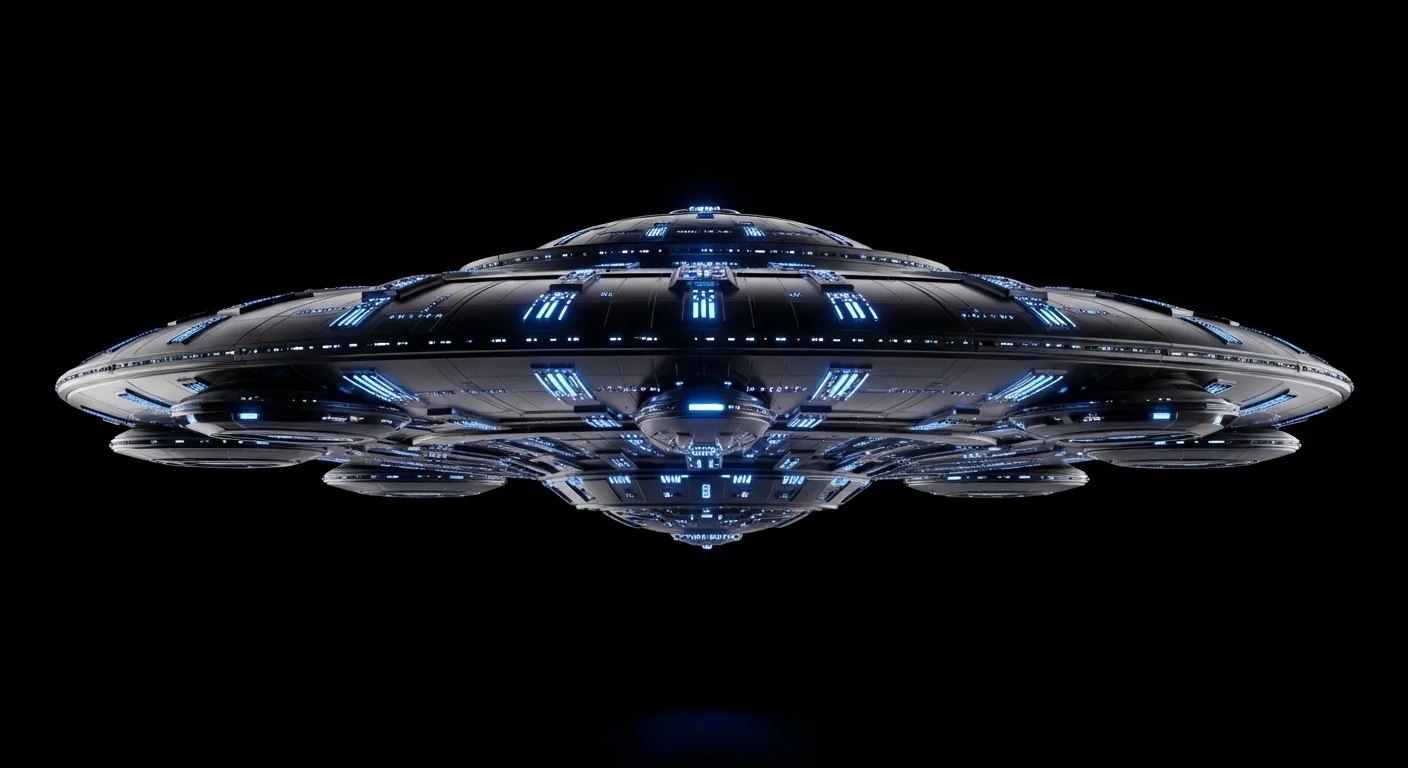
In the autumn of 1975, a series of incursions over American and Canadian military installations shattered any remaining illusion that the most heavily defended airspace on Earth was impenetrable. Beginning on October 27 at Loring Air Force Base in northern Maine, unidentified objects repeatedly violated restricted zones directly above nuclear weapons storage areas, evading every attempt at interception and identification. The intrusions continued for days, spread to other Strategic Air Command bases across the northern tier of the United States, and generated a cascade of classified reports that would not see the light of day for decades. When those documents were finally released through Freedom of Information Act requests, they revealed something that the Air Force had worked hard to keep quiet: something was surveilling America’s nuclear arsenal, and the United States military could not stop it.
Loring Air Force Base: The Front Line of the Cold War
To appreciate the gravity of what occurred in October 1975, one must first understand what Loring Air Force Base was and why its security was considered a matter of existential national importance. Located near Limestone, Maine, just twelve miles from the Canadian border, Loring was the northeasternmost air base in the United States and one of the most critical installations in the Strategic Air Command’s nuclear deterrent posture.
Loring was home to the 42nd Bombardment Wing, equipped with B-52 Stratofortress bombers capable of delivering nuclear weapons to targets in the Soviet Union. The base maintained a constant state of readiness, with aircraft, crews, and weapons prepared for immediate launch in the event of a Soviet first strike. The nuclear weapons storage area, a hardened complex of bunkers and magazines, held some of the most destructive devices ever created by human beings. Security around this area was absolute. Multiple perimeter fences, armed guards, motion sensors, surveillance cameras, and standing orders to use deadly force against intruders made the weapons storage area one of the most tightly controlled pieces of real estate on the planet.
The base also served a strategic geographic function. Its location made it the closest American bomber base to the Soviet Union via a polar route, meaning that Loring’s B-52s would be among the first to reach their targets in a nuclear exchange. This proximity made the base a high-priority target for Soviet intelligence and a high-priority asset for American defense planners. Any unauthorized intrusion into Loring’s airspace was, by definition, a matter of the gravest national security concern.
The First Night: October 27, 1975
The events began on the evening of October 27, 1975, when radar operators at Loring detected an unknown target approaching the base from the north. The contact was moving slowly, far more slowly than any conventional aircraft, and at an altitude of approximately 300 feet. This low altitude was itself alarming; it suggested either extreme confidence on the part of the intruder or a deliberate attempt to exploit gaps in the base’s radar coverage, which was optimized for higher-altitude threats.
As the object penetrated the base’s restricted airspace, security personnel were alerted and ground teams were dispatched to the perimeter. What happened next would be documented in detail in official incident reports that convey, even in their clipped military language, a palpable sense of confusion and alarm.
The object proceeded directly toward the nuclear weapons storage area. Ground observers reported seeing an elongated craft displaying red and orange lights, with a flashing white strobe. The object did not behave like any known aircraft. It hovered, changed direction abruptly, and demonstrated maneuvering capabilities that witnesses found deeply unsettling. Sergeant Danny Lewis, one of the security personnel who observed the object, later described it as unlike anything he had seen in his military career.
The base went to a higher security condition. Security teams fanned out around the weapons storage area, weapons at the ready, scanning the darkness for the source of the lights. But the object remained elusive, hovering at the edge of visibility, never coming close enough for a clear identification but never leaving the restricted zone. After approximately forty minutes, the object departed to the north, crossing back into Canadian airspace.
October 28: The Object Returns
The following evening, October 28, the object returned. Once again, radar picked up a slow-moving contact approaching from the north. Once again, the object penetrated the restricted zone and approached the weapons storage area. And once again, every attempt to intercept or identify the intruder failed.
This time, the base commander took more aggressive action. Fighter aircraft were requested from other installations to intercept the object. The National Military Command Center in Washington was notified, elevating the incident from a local security concern to a national defense matter. Additional security forces were deployed around the weapons storage perimeter, and the entire base was placed on heightened alert.
The object, however, seemed entirely unconcerned with these measures. It repeated its pattern from the previous night, hovering near the weapons storage area, displaying its characteristic lights, and demonstrating maneuverability that no known helicopter or aircraft could match. When interceptors finally arrived in the area, the object departed, once again heading north.
The incident reports from this second night reveal a growing sense of frustration among base commanders. The intruder was not merely violating restricted airspace; it was doing so with apparent impunity, returning to the same sensitive location on consecutive nights as if to demonstrate that American military power could not deter it. The psychological impact on security personnel was significant. These were men trained to defend the nation’s nuclear arsenal against the most formidable adversaries on Earth, and they were confronting something they could neither identify nor stop.
October 29 and Beyond
The intrusions continued on October 29, following the same general pattern. By this point, the chain of command was fully engaged. Reports were flowing to SAC headquarters at Offutt Air Force Base in Nebraska, to NORAD’s underground complex at Cheyenne Mountain in Colorado, and to the Joint Chiefs of Staff at the Pentagon. The unknown intruder at Loring was no longer an isolated incident; it was a national security crisis.
Investigators explored every conventional explanation. Could the object be a helicopter? The maneuverability was consistent with rotary-wing aircraft, but no helicopter was known to be operating in the area, and the object’s ability to evade military interceptors argued against a conventional civilian or military helicopter. Could it be a drone or remotely piloted vehicle? In 1975, drone technology was in its infancy, and no known drone possessed the flight characteristics described by witnesses. Could it be a Soviet intrusion? This was the most alarming possibility, but it seemed unlikely that the Soviets would risk an act of war by flying a manned or unmanned vehicle over an American nuclear installation.
The most troubling aspect of the investigation was the negative evidence: whatever the object was, it did not match anything in the inventory of known aircraft, drones, or surveillance platforms operated by any nation on Earth.
The Northern Tier Wave
Loring was not alone. In the days and weeks following the initial incidents in Maine, similar intrusions were reported at military installations across the northern United States, creating a pattern that investigators found deeply disturbing.
On October 30, just days after the Loring incidents, radar operators at Wurtsmith Air Force Base in Michigan detected an unknown object in their restricted airspace. Wurtsmith, like Loring, was a Strategic Air Command base housing B-52 bombers and nuclear weapons. The object at Wurtsmith behaved similarly to the one at Loring: it penetrated the restricted zone, hovered near sensitive areas, and departed when interceptors approached. Ground observers at Wurtsmith reported seeing a large, dark object with bright lights that moved in ways inconsistent with conventional aircraft.
In November 1975, Malmstrom Air Force Base in Montana reported similar activity. Malmstrom was home to Minuteman intercontinental ballistic missiles, the ground-based component of America’s nuclear triad. Unknown objects were detected near missile launch facilities, raising the specter of a connection to the famous 1967 Malmstrom incident in which UFO activity had coincided with the shutdown of nuclear missiles.
Canadian Forces bases also reported incidents during this period. Installations in Ontario and other provinces detected unidentified objects in their restricted airspace, suggesting that whatever was conducting these surveillance operations was not limiting itself to American territory. The Canadian incidents added an international dimension to the crisis and complicated the investigation, as information sharing between American and Canadian military intelligence was subject to bureaucratic friction.
The geographic pattern was striking. All of the affected installations were in the northern tier of the continent, stretching from Maine to Montana. All were nuclear facilities: bomber bases, missile fields, or weapons storage sites. The targeting was specific and consistent, focused exclusively on the most sensitive and heavily defended assets in the Western nuclear deterrent.
The Official Response
The military’s response to the northern tier wave was characterized by a tension between the seriousness of the incidents and the reluctance to publicize them. Internally, the intrusions were treated with the utmost gravity. Security conditions were elevated, additional forces were deployed, and interagency coordination was initiated at the highest levels. Reports were classified and distributed through restricted channels.
Externally, however, the military said almost nothing. No public statements were issued about the Loring incidents or the broader wave. When journalists eventually learned of the events, military spokespeople offered vague responses that neither confirmed nor denied the details. The incidents were treated as security matters rather than public interest stories, and the classification of the relevant documents ensured that the full picture would not emerge for years.
This approach was consistent with the military’s longstanding policy on UFO-related incidents: acknowledge nothing, classify everything, and wait for public attention to move elsewhere. In most cases, this strategy worked. The northern tier wave of 1975 received relatively little media coverage at the time and faded from public consciousness.
But the documents remained in the archives, waiting.
FOIA Revelations
Beginning in the late 1970s and continuing through the 1980s and beyond, researchers used the Freedom of Information Act to pry loose the classified reports from the 1975 incidents. What they found was remarkable, not for any smoking gun of extraterrestrial contact, but for the candor with which military personnel had documented events they could not explain.
The incident reports from Loring were detailed and specific. They included radar data showing the track of the unknown object, descriptions of its visual appearance from multiple observers, records of the security measures taken in response, and the frustrated conclusion that the intruder could not be identified. The reports were written by career military professionals with no apparent interest in sensationalizing the events; they were simply documenting what had happened in the language of official military correspondence.
The documents from Wurtsmith, Malmstrom, and other bases told similar stories. In case after case, trained military observers reported objects that did not match any known aircraft, that violated the most restricted airspace in the country, and that evaded every attempt at interception. The consistency of the reports across multiple bases, multiple states, and multiple dates argued against individual misidentification or imagination. Something was there, and no one could explain what it was.
Perhaps most significantly, the documents revealed the genuine concern that the incidents had generated at the highest levels of military command. These were not dismissed as false alarms or overeager sentries seeing things in the dark. They were treated as genuine security breaches at nuclear installations, with all the implications that entailed.
The Nuclear Connection
The concentration of intrusions at nuclear facilities was the most disturbing aspect of the 1975 wave, and it placed the events in a broader context that extends both backward and forward in time.
Since the dawn of the nuclear age, UFO activity has shown a persistent and unexplained correlation with nuclear weapons and nuclear-powered facilities. The earliest modern UFO sightings occurred in the vicinity of nuclear test sites in New Mexico. The 1947 Roswell incident, whatever its true nature, took place near the only operational nuclear bomber wing in the world. In 1967, the Malmstrom incident involved the apparent shutdown of nuclear missiles coincident with UFO activity. And in 1975, the northern tier wave targeted exclusively nuclear installations.
This pattern has generated extensive speculation. Some researchers suggest that an extraterrestrial intelligence is monitoring humanity’s nuclear capabilities, perhaps out of concern for our capacity for self-destruction or the broader cosmic implications of nuclear weapons. Others propose that the objects are attracted to the electromagnetic signatures of nuclear materials or the powerful radar systems that protect nuclear facilities. Skeptics argue that the correlation is an artifact of selection bias, that nuclear bases are simply more likely to detect and report unusual aerial activity because their security systems are more sensitive and their personnel more vigilant.
Whatever the explanation, the pattern is striking in its consistency. The 1975 wave added another data point to a decades-long association between UFOs and nuclear weapons that neither believers nor skeptics have been able to fully explain.
Theories and Explanations
In the decades since the 1975 incidents, numerous theories have been advanced to explain the northern tier wave. None has proven entirely satisfactory.
The helicopter hypothesis was the first and most obvious conventional explanation. The objects’ low altitude, slow speed, and hovering capability were consistent with helicopter flight, and some investigators suggested that the intruders might have been Soviet helicopters operating from submarines off the coast or from clandestine forward bases. However, no evidence of Soviet helicopter operations in the area was ever found, and the objects’ ability to evade military interceptors argued against conventional rotary-wing aircraft.
The experimental aircraft theory proposed that the objects were classified American platforms being tested over military installations. This explanation had the advantage of explaining why the military seemed unable to identify the intruders: perhaps they were not supposed to identify them, because the test was specifically designed to probe base security. However, no evidence of such a program has ever been found, and the risk of using classified aircraft over nuclear weapons storage areas, where security personnel had orders to use deadly force, makes this theory difficult to accept.
The natural phenomenon hypothesis suggested that the radar contacts and visual sightings might have been caused by unusual atmospheric conditions, ball lightning, or other poorly understood natural phenomena. This explanation struggled to account for the consistency of the sightings, the apparent intelligent behavior of the objects, and the fact that the phenomena occurred at multiple bases over a period of weeks.
And then there was the hypothesis that dared not speak its name in official circles: that the objects were genuinely unknown, products of a technology not yet understood by human science. This explanation required no special pleading or elaborate reasoning; it simply took the evidence at face value. Something was there, it was not anything we could identify, and it was specifically interested in our nuclear weapons.
Legacy
The 1975 Loring Air Force Base incidents and the broader northern tier wave occupy an important position in the history of the UFO phenomenon. They represent one of the best-documented series of military encounters with unidentified objects, supported by official documents, radar data, and the testimony of trained military observers. They demonstrate that UFOs, whatever they may be, can penetrate the most secure airspace in the world with apparent impunity. And they add to the growing body of evidence connecting UFO activity with nuclear weapons, a connection that remains one of the most tantalizing and troubling aspects of the entire phenomenon.
Loring Air Force Base itself closed in 1994, a casualty of post-Cold War military downsizing. The runways where B-52s once stood ready to carry nuclear weapons to the Soviet Union now serve a commerce park and a wildlife refuge. The weapons storage bunkers, emptied of their terrible contents, stand as silent monuments to an era of existential threat. But the questions raised by the events of October 1975 remain unanswered, and the objects that penetrated Loring’s defenses have never been identified. In the annals of military UFO encounters, the northern tier wave stands as a reminder that the unknown does not respect our boundaries, our defenses, or our desire for simple explanations.
Sources
- CIA UFO/UAP Reading Room — Declassified CIA documents on UAP