White House UFO Incident
UFOs penetrated restricted airspace directly over the White House and Capitol, tracked on multiple radars. Jets scrambled but couldn't catch the objects that outran them.
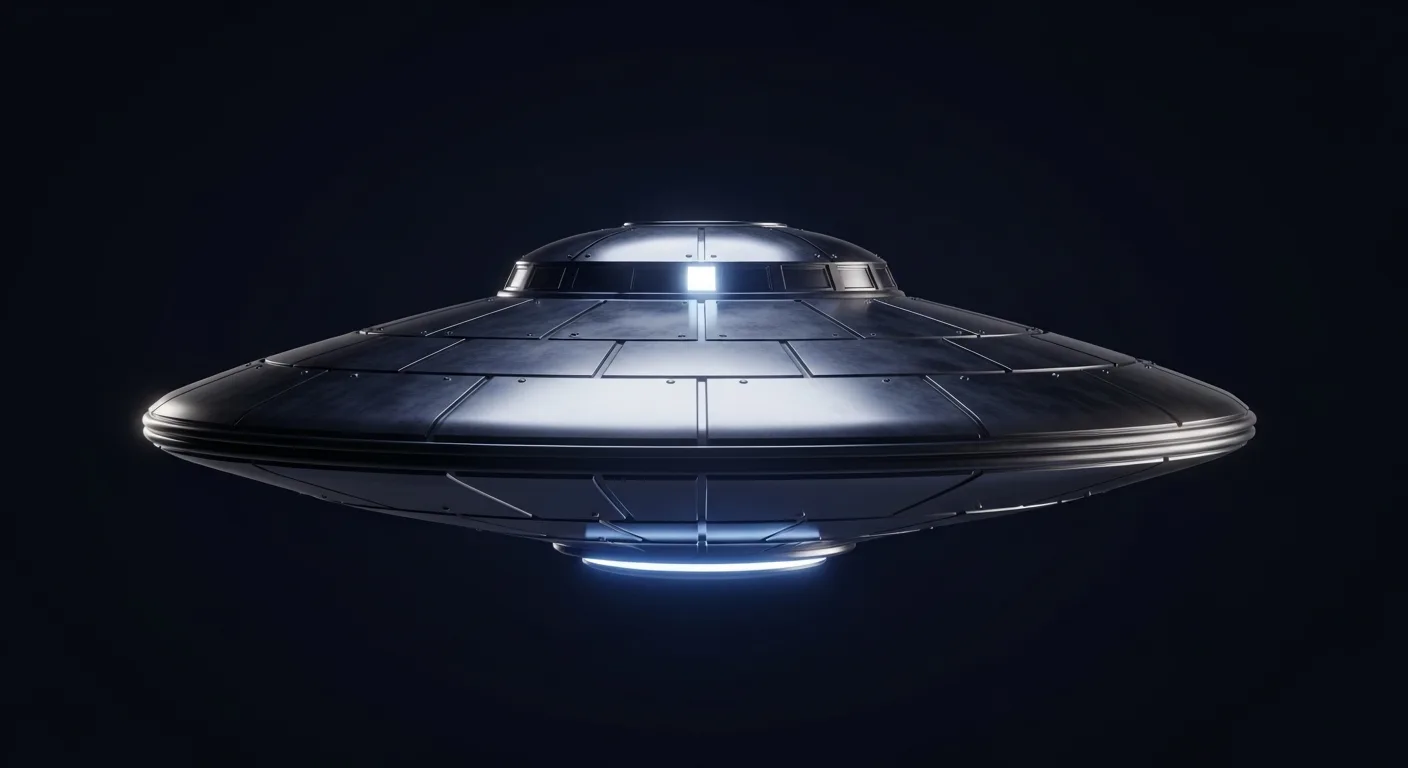
The summer of 1952 brought sweltering heat to the nation’s capital, but the temperatures were not the only thing making Washington uncomfortable. On two consecutive weekends in late July, unidentified flying objects invaded the most heavily restricted airspace in the United States, appearing on multiple independent radar systems, witnessed by civilian and military personnel alike, and prompting the scrambling of interceptor jets that proved utterly incapable of catching them. The incidents over the White House and Capitol Building represented the most audacious intrusion into American sovereign airspace in the nation’s history, and the response they provoked—from the military, the press, and the public—would reshape the way the United States government dealt with the UFO phenomenon for decades to come.
A Nation Already on Edge
To understand the full impact of the Washington UFO incidents, one must appreciate the climate of anxiety that pervaded the United States in the summer of 1952. The Cold War was at one of its most intense periods. The Korean War ground on with no clear resolution in sight. Soviet nuclear capabilities were advancing rapidly, and the prospect of atomic attack on American cities was treated not as a distant possibility but as a near-term probability. Civil defense drills were commonplace, and the nation’s air defense network was being expanded and modernized at enormous expense to detect and intercept Soviet bombers before they could reach their targets.
In this atmosphere of heightened vigilance, reports of unidentified flying objects had been accumulating at an alarming rate. The summer of 1952 saw a dramatic spike in UFO sightings across the country, with reports pouring into military installations and civilian authorities at a pace that overwhelmed existing channels. Project Blue Book, the Air Force’s official UFO investigation program based at Wright-Patterson Air Force Base in Ohio, was receiving dozens of reports daily, far more than its small staff could adequately investigate. Something was happening in American skies, and no one in a position of authority could explain what it was.
The air defense radar network that ringed the nation’s major cities was designed to detect incoming Soviet bombers, and the operators who manned those stations were trained professionals accustomed to distinguishing genuine targets from weather anomalies, electronic interference, and other false returns. When these same operators began tracking objects that behaved unlike anything in any nation’s arsenal—objects that hovered motionless, accelerated instantaneously, and reversed direction without any discernible turn radius—the implications were profoundly unsettling. Either the radar systems upon which national survival depended were fundamentally unreliable, or something was operating in American airspace that defied every known principle of aeronautics.
The First Weekend: July 19-20
The first wave of the Washington incident began late on the evening of Saturday, July 19, 1952, at Washington National Airport, now known as Ronald Reagan Washington National Airport. At approximately 11:40 PM, Edward Nugent, an air traffic controller working the radar scope at the Airport Traffic Control center, noticed a cluster of seven targets appear on his screen in an area southeast of Andrews Air Force Base. The objects were not following any established airway, had filed no flight plans, and were not responding to radio contact. Nugent called over his senior controller, Harry Barnes, who would become one of the key witnesses to the events that followed.
Barnes studied the returns carefully. They were solid, consistent, and behaving in ways that immediately ruled out weather phenomena or equipment malfunction. The objects appeared to be moving at roughly 100 to 130 miles per hour, a leisurely pace that suddenly, without warning, would spike to extraordinary velocities. Barnes later estimated that some of the objects accelerated to speeds in excess of 7,000 miles per hour—far beyond the capability of any aircraft then in existence, and well beyond what most aeronautical engineers considered physically possible for a material object operating within the atmosphere.
At the same time, controllers at Andrews Air Force Base, located approximately ten miles southeast of the Capitol, were picking up the same objects on their independent radar system. This was critical: two separate radar installations, operated by different personnel using different equipment, were tracking the same targets in the same locations. The possibility of equipment malfunction or operator error was effectively eliminated. Whatever these objects were, they were real, and they were physically present in the airspace over the nation’s capital.
The objects were tracked moving into the prohibited airspace directly over the White House and the Capitol Building. This was—and remains—some of the most tightly controlled airspace on Earth. No aircraft enters this zone without explicit authorization, and violators face immediate interception by armed fighter jets. Yet these objects moved through the restricted zone freely, apparently unbothered by any concern for the legal or military consequences of their actions.
Visual confirmation came from multiple sources throughout the night. Staff Sergeant Charles Davenport at Andrews Air Force Base observed a bright orange object in the sky that corresponded precisely to the radar returns being tracked. Airline pilots flying in the area reported seeing brilliant lights moving in patterns consistent with the radar data. Capital Airlines pilot S.C. Pierman, flying into Washington, counted six bright lights moving in ways he had never seen any conventional aircraft perform. He remained in radio contact with Barnes at National Airport throughout his observations, and Barnes confirmed that the lights Pierman was watching corresponded exactly to the targets on his radar scope.
The objects continued their activity until approximately 5:30 AM on Sunday morning, when they gradually dispersed. For nearly six hours, unidentified craft had operated with impunity over the most sensitive airspace in the Western world, tracked by multiple radar systems and witnessed by trained observers both in the air and on the ground.
The Week Between
The week that followed was one of barely contained alarm within the military and intelligence communities. The Air Force was in an acutely embarrassing position. Its primary mission—defense of the nation’s airspace—had been challenged in the most dramatic way possible, and it had no explanation for what had occurred. Worse, the incident had attracted significant press attention, and reporters were asking pointed questions that Air Force spokespeople were unable to answer.
Behind closed doors, urgent consultations took place at the highest levels. The matter was briefed to President Harry Truman, who reportedly asked his Air Force aide what the objects were and was told, candidly, that no one knew. Truman instructed the military to investigate thoroughly and to be prepared in case the objects returned. Intelligence analysts considered and discarded various hypotheses: Soviet secret weapons, experimental American aircraft that had strayed off course, atmospheric phenomena. None withstood scrutiny.
The radar operators and air traffic controllers involved in the incident were interviewed extensively. Their testimony was consistent, detailed, and delivered with the matter-of-fact professionalism of people accustomed to making life-and-death judgments based on what their instruments told them. Harry Barnes, who had supervised the National Airport radar room during the incident, was unequivocal in his assessment: the targets were solid objects, not weather returns, not anomalous propagation, and not equipment artifacts. He had been tracking aircraft on radar for years and knew the difference between a genuine target and a false one.
Fighter interceptors were placed on heightened alert at Newcastle Air Force Base in Delaware, the nearest facility with jets capable of responding to intrusions over the capital. Pilots were briefed on the situation and instructed to intercept and identify any unidentified objects that appeared in the restricted zone. If the objects returned, the Air Force intended to be ready.
The Second Weekend: July 26-27
They returned. On the evening of Saturday, July 26, the objects reappeared on radar screens at Washington National Airport and Andrews Air Force Base, once again penetrating the restricted airspace over the White House and Capitol. The coincidence of timing—exactly one week after the first incident—added to the sense that whatever was behind the phenomenon was acting with deliberate intent rather than appearing randomly.
This time, the military response was swift. F-94 Starfire interceptors were scrambled from Newcastle, their afterburners lighting the sky as they raced toward Washington at maximum speed. The jets arrived over the capital within minutes and began searching for the objects their radar controllers were guiding them toward.
What followed was a game of cat and mouse that left the interceptor pilots frustrated and shaken. As the F-94s approached the locations where radar showed the objects to be, the targets would vanish from the scope—only to reappear in a different part of the sky moments later. It was as if the objects were aware of the jets’ approach and were deliberately evading them. Lieutenant William Patterson, one of the F-94 pilots, reported that he did manage to establish visual contact with the objects at one point, describing them as a cluster of brilliant blue-white lights. He requested permission to fire on them but was denied. The lights then surrounded his aircraft, forming a ring around his jet. Patterson, an experienced combat pilot not given to panic, radioed the ground in a voice that controllers later described as strained, asking for instructions. Before any guidance could be given, the lights broke formation and streaked away at speeds Patterson’s aircraft could not hope to match.
The objects remained active throughout the night, appearing and disappearing on radar, seemingly toying with the interceptors sent to chase them. At one point, the jets had to return to base to refuel, and during the interval when the skies over Washington were undefended, the objects reappeared in force over the restricted zone, as if they knew the interceptors were gone. When fresh jets arrived, the objects once again dispersed and played their evasive game.
By dawn on Sunday, July 27, the objects had departed for the final time. Two consecutive weekends of unprecedented aerial incursion over the nation’s capital had produced hundreds of radar tracks, dozens of visual sightings, and absolutely zero answers.
The Pentagon Press Conference
The public reaction to the two weekends of sightings was intense. Newspapers across the country ran front-page stories about UFOs over the White House, and the volume of telephone calls to the Pentagon and other government agencies was so great that some officials worried the communication channels needed for actual defense could be overwhelmed. The fear that public hysteria about UFOs might be exploited by an enemy to mask a genuine attack was taken seriously at the highest levels of the intelligence community.
On July 29, 1952, Major General John Samford, the Air Force Director of Intelligence, held a press conference at the Pentagon. It was the largest press gathering at the military headquarters since the end of World War II, a measure of the intensity of public interest in the events. General Samford, a calm and measured officer, faced a room packed with reporters demanding to know what had been flying over their capital.
Samford’s explanation was temperature inversion—a weather phenomenon in which a layer of warm air trapping cooler air beneath it can cause radar signals to bend and reflect off the ground, producing false returns on radar screens. He acknowledged that visual sightings had occurred but suggested that witnesses may have been seeing stars or meteors whose appearance was distorted by the same atmospheric conditions that were causing the anomalous radar returns.
The explanation was received with skepticism by many in the press corps and outright rejection by the radar operators who had tracked the objects. Harry Barnes publicly disputed the temperature inversion theory, pointing out that he and his colleagues were experienced radar professionals who routinely dealt with weather-related interference and knew exactly what temperature inversions looked like on their scopes. The Washington returns, he insisted, were nothing of the sort. They were solid targets that moved with purpose and intelligence, and no amount of warm air could explain their behavior.
Subsequent analysis supported the operators’ assessment. While temperature inversions were indeed present over Washington on both weekends, weather scientists noted that such conditions were common during summer in the region and did not typically produce the kind of strong, sustained, fast-moving radar returns that had been tracked. The inversion theory might explain scattered, stationary false targets, but it could not account for objects that moved at thousands of miles per hour, that responded to the approach of interceptors, and that were simultaneously tracked by multiple radar systems and visually confirmed by multiple independent witnesses.
National Security Implications
The Washington incidents sent shockwaves through the national security establishment that extended far beyond the question of whether the objects were extraterrestrial in origin. At the most fundamental level, the events demonstrated that the nation’s air defense system was incapable of protecting its most vital airspace from an intruder of unknown nature and intent. If these objects could operate freely over the White House, they could operate freely anywhere, and the entire premise of continental air defense was called into question.
The Central Intelligence Agency took a particular interest in the incidents, not primarily because of the objects themselves but because of the public reaction they provoked. The CIA’s concern was that mass UFO sightings could overwhelm military communication channels, create widespread panic, and provide cover for a Soviet sneak attack. In January 1953, the CIA convened the Robertson Panel, a group of prominent scientists tasked with reviewing the UFO evidence and recommending a policy response. The panel concluded that while UFOs did not represent a direct threat to national security, public interest in them did, and recommended a program of debunking and public education designed to reduce the volume of UFO reports.
The Robertson Panel’s recommendations shaped Air Force UFO policy for the next two decades. Project Blue Book shifted from genuine investigation to what many of its own personnel later described as a public relations exercise designed to explain away sightings rather than truly investigate them. The culture of dismissal and ridicule that surrounded UFO reports for the remainder of the twentieth century can be traced directly to the institutional response to the Washington incidents of 1952.
The Witnesses’ Legacy
The men and women who witnessed the events over Washington carried their experiences for the rest of their lives. Harry Barnes, who perhaps more than anyone else was in a position to know what the radar was showing, never wavered in his conviction that the objects were real, solid, and under intelligent control. Edward Nugent, who first spotted the targets, gave consistent testimony for decades. The airline pilots, military observers, and Air Force personnel who saw the lights and tracked the objects maintained their accounts despite professional pressure to recant or minimize.
Lieutenant William Patterson’s encounter—surrounded by lights at altitude, alone in his cockpit, requesting permission to fire—became one of the most dramatic episodes in UFO history. Patterson spoke about the incident reluctantly in later years, but when he did, his description remained vivid and unshaken. Whatever had surrounded his aircraft that night was, in his professional judgment as a military aviator, not a weather phenomenon, not a reflection, and not a product of his imagination.
The ground witnesses, too, contributed an important layer to the evidence. People on the streets of Washington, at Andrews Air Force Base, and at various locations around the metropolitan area reported seeing lights in the sky that corresponded to the radar tracks. Their testimony was independent, unsolicited in many cases, and consistent with what the instruments were showing. The convergence of radar evidence, pilot testimony, and ground observations created a body of evidence that was difficult to dismiss by any single explanation.
A Turning Point in UFO History
The 1952 Washington UFO incidents stand as a watershed moment in the history of the UFO phenomenon. Before Washington, UFO sightings were largely treated as curiosities—interesting stories from remote locations involving individuals whose credibility could be questioned. After Washington, the phenomenon could no longer be dismissed so easily. These were not isolated witnesses in rural areas; these were trained radar operators, military officers, commercial airline pilots, and air traffic controllers operating sophisticated equipment in the heart of the nation’s capital. The evidence was not a blurry photograph or a single eyewitness account; it was multiple independent radar tracks confirmed by multiple visual observers over two consecutive weekends.
The incidents also established the template for the government’s response to UFO sightings that would persist for generations: initial alarm, followed by a hastily constructed conventional explanation, followed by institutional pressure to move on and forget. The temperature inversion theory served its purpose in the short term, giving the press and public a plausible-sounding explanation that allowed the matter to recede from the front pages. But it satisfied almost no one who had actually been involved in the events, and the gap between the official explanation and the testimony of the witnesses planted seeds of distrust in government transparency that have never fully dissipated.
More than seven decades later, the Washington UFO incidents remain among the best-documented and most compelling cases in the UFO literature. The radar data, the pilot testimony, the ground observations, and the military response form a coherent picture of something extraordinary happening over the nation’s capital—something that the most powerful military on Earth could neither identify nor intercept. Whatever flew over the White House on those hot July nights in 1952, it demonstrated a capability that no known technology could match, operated with apparent impunity in the most defended airspace in the world, and left behind questions that remain unanswered to this day.
The restricted zone over the White House still exists, more tightly enforced than ever in the post-September 11 era. Sophisticated radar systems, surface-to-air missiles, and interceptor aircraft stand ready to engage any unauthorized intrusion. But for two weekends in the summer of 1952, none of it mattered. The objects came, they were tracked, they were chased, and they departed on their own terms. The most protected airspace in America was, for those brief hours, not protected at all, and the implications of that failure continue to resonate through the corridors of power and the annals of the unexplained.
Sources
- Project Blue Book — National Archives — USAF UFO investigation files, 1947–1969
- CIA UFO/UAP Reading Room — Declassified CIA documents on UAP
- Chronicling America — Historic US newspapers (1690–1963)