Pinar del Rio, Cuba UFO Sighting (November 11, 1957) — FBI Files
FBI records detail a 1957 sighting of a silent, disc-shaped object hovering near Matahambre, Cuba, during the height of the Cold War.
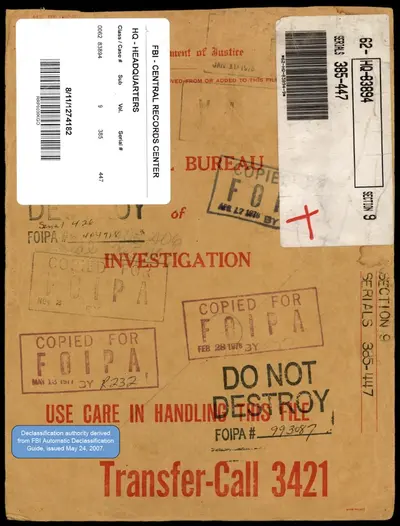
Historical Context
The sighting in Pinar del Rio occurred during a period of intense geopolitical tension characterized by the height of the Cold War. In 1957, the Caribbean basin was a focal point of intelligence gathering and surveillance due to the strategic importance of the region to United States interests. During this era, the United States government maintained rigorous monitoring of the skies for any unauthorized aerial activity that could signify Soviet or other foreign technological advancements. This atmosphere of heightened vigilance contributed to the systematic documentation of Unidentified Flying Objects (UFOs), as many such sightings were analyzed through the lens of national security and the potential for new aerospace weaponry.
At the time, the United States Air Force was actively managing various research programs, including Project Blue Book, to investigate reports of unidentified aerial phenomena. While many reports were dismissed as misidentifications of natural phenomena or conventional aircraft, the intelligence community remained concerned about objects that exhibited flight characteristics inconsistent with known technology. The reporting of such incidents often followed established bureaucratic channels, where local field offices of the Federal Bureau of and Investigation (FBI) would route sightings to headquarters if they were perceived to involve threats to vital installations or significant anomalies in restricted airspace.
The Incident
On November 11, 1957, an unidentified-object incident was recorded in Pinar del Rio, Cuba. The details of this event remained restricted from the general public for decades until the documents were released on May 8, 2026, as part of the Presidential Unsealing and Reporting System for UAP Encounters (PURSUE). The report originated from two individuals who had arrived in the Pinar del Rio region and observed an anomaly near Matahambre.
The witnesses described the presence of a disc-shaped object that appeared to be hovering in the sky. According to the documentation, the object was significantly larger than any ordinary aircraft typically seen in that specific area. A notable characteristic of the sighting was the lack of acoustic signature; the witnesses described the object as being completely silent during its flight. The observation concluded when the object disappeared rapidly, moving toward the sea. The official file contains a specific, descriptive phrase from the report, characterizing the object as a “flying disc in the shape of a man’s hat.” While the document provides these specific visual and auditory details, it does not specify the total number of witnesses present during the event.
Investigation and Classification
The processing of this case followed the standing protocols of the FBI, where various field offices, such as those in Knoxville, Albuquerque, and Los Angeles, were tasked with routing UFO reports to central headquarters. This was particularly common when reports originated near sensitive or strategic locations. Because the incident took place in Cuba, it fell under the purview of agencies monitoring the Caribbean for any deviations from standard aerial traffic.
The All-domain Anomaly Resolution Office (AARO) has designated all records released under the PURSUE program as unresolved by default. The federal government has not issued a definitive conclusion regarding whether the Pinar del Rio object was anomalous or conventional. In the context of 1950s aerial phenomena, researchers often considered various conventional candidates for such sightings. These included experimental high-altitude aircraft, weather balloons—specifically those associated with the Project Mogul series—and atmospheric optical phenomena such as lenticular clouds or sundogs. Additionally, astronomical bodies like Venus, the Moon, or meteors positioned near the horizon were frequently cited as potential sources of misidentification in reports of disc-shaped objects. The Pinar del Rio case remains part of the broader archive of unidentified aerial phenomena that continue to undergo scrutiny through modern declassification efforts.