Trenton, New Jersey UFO Sighting (July 4) — FBI Files
FBI records detail a July 4 unidentified object sighting in Trenton, New Jersey, documented during the mid-century wave of American flying saucer reports.
Historical Context
The summer of 1947 represents a pivotal era in the history of American ufology, characterized by a sudden and intense surge in reports of unidentified flying objects. This period, often referred to as the first wave of “flying saucer” sightings, was catalyzed by the Kenneth Arnold sighting in June 1947 and the subsequent Roswell incident in July 1947. During this time, the phenomenon was frequently interpreted through the lens of emerging Cold War anxieties and the rapid advancement of aeronautical technology. The public and government agencies alike were navigating a landscape where the distinction between secret military hardware, such as experimental high-altitude reconnaissance craft, and potentially extraterrestrial visitors remained profoundly ambiguous.
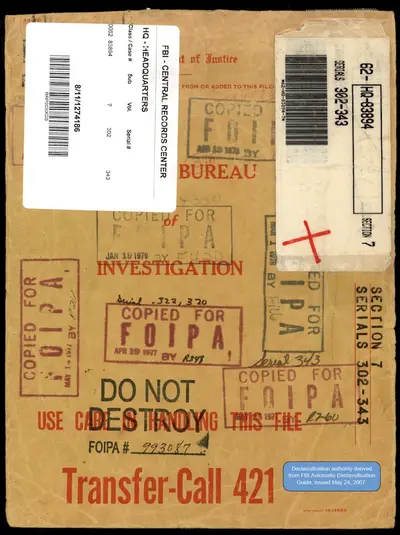
In the mid-20th century, the federal government established specific bureaucratic channels to manage the influx of anomalous reports. The Federal Bureau of Investigation utilized a structured system to process these sightings, particularly when they appeared to intersect with national security interests. Field offices in cities such as Knoxville, Albuquerque, and Los Angeles were tasked with collecting data and routing UFO reports to headquarters. This protocol was primarily driven by the Bureau’s mandate to protect vital installations and monitor any aerial activity that might threaten the integrity of sensitive military or industrial sites.
The Trenton Incident
On July 4, an unidentified object incident occurred in Trenton, New Jersey. The details of this specific event were preserved within FBI files and remained shielded from public view for decades. The documentation regarding the Trenton sighting was eventually released to the public on May 8, 2026, as part of the Presidential Unsealing and Reporting System for UAP Encounters (PURSUE). This release was part of a broader transparency initiative designed to provide the citizenry with access to declassified government records concerning Unidentified Anomalous Phenomena.
The records indicate that the Trenton sighting occurred amidst a broader pattern of activity on that day. On the Fourth of July, twelve separate reports of saucers were received from widely separated locations across the United States. While the sheer volume of reports across the country suggested a widespread phenomenon, the specific investigation into the Trenton sighting yielded a different conclusion. Upon review, the sighting in Trenton, New Jersey, was determined to be a fireworks display. The released documentation does not specify the total number of witnesses involved in the Trenton observation.
Classification and Analysis
The Trenton case is classified as a visual sighting reported by ground or air observers. In the study of anomalous phenomena, such cases are analyzed to determine if the observed object possesses characteristics that cannot be explained by known physical or atmospheric processes. The investigation of such sightings often involves distinguishing between conventional objects and true anomalies.
Under the current oversight of the All-domain Anomaly Resolution Office (AARO), all records released through the PURSUE program are designated as unresolved by default. This designation reflects a state of scientific and investigative neutrality. The federal government has not reached a conclusion regarding whether the events documented in these files were anomalous or conventional, and it has not ruled out either possibility.
When evaluating sightings from the late 1940s, investigators consider several conventional candidates. These include experimental aircraft being tested by the military, weather balloons—specifically those associated with the Project Mogul series—and various atmospheric optical phenomena such as sundogs or lenticular clouds. Additionally, astronomical objects such as the Moon, Venus, or meteors positioned near the horizon are frequently scrutinized as potential sources for reported unidentified objects. The Trenton case, while ultimately attributed to a fireworks display, remains a documented component of the broader historical archive of aerial observations.