Utsuro-bune Encounter
Japanese fishermen encountered a strange, hollow vessel containing a beautiful woman with unusual features. The 'hollow ship' is considered by some researchers to be an early UFO close encounter.
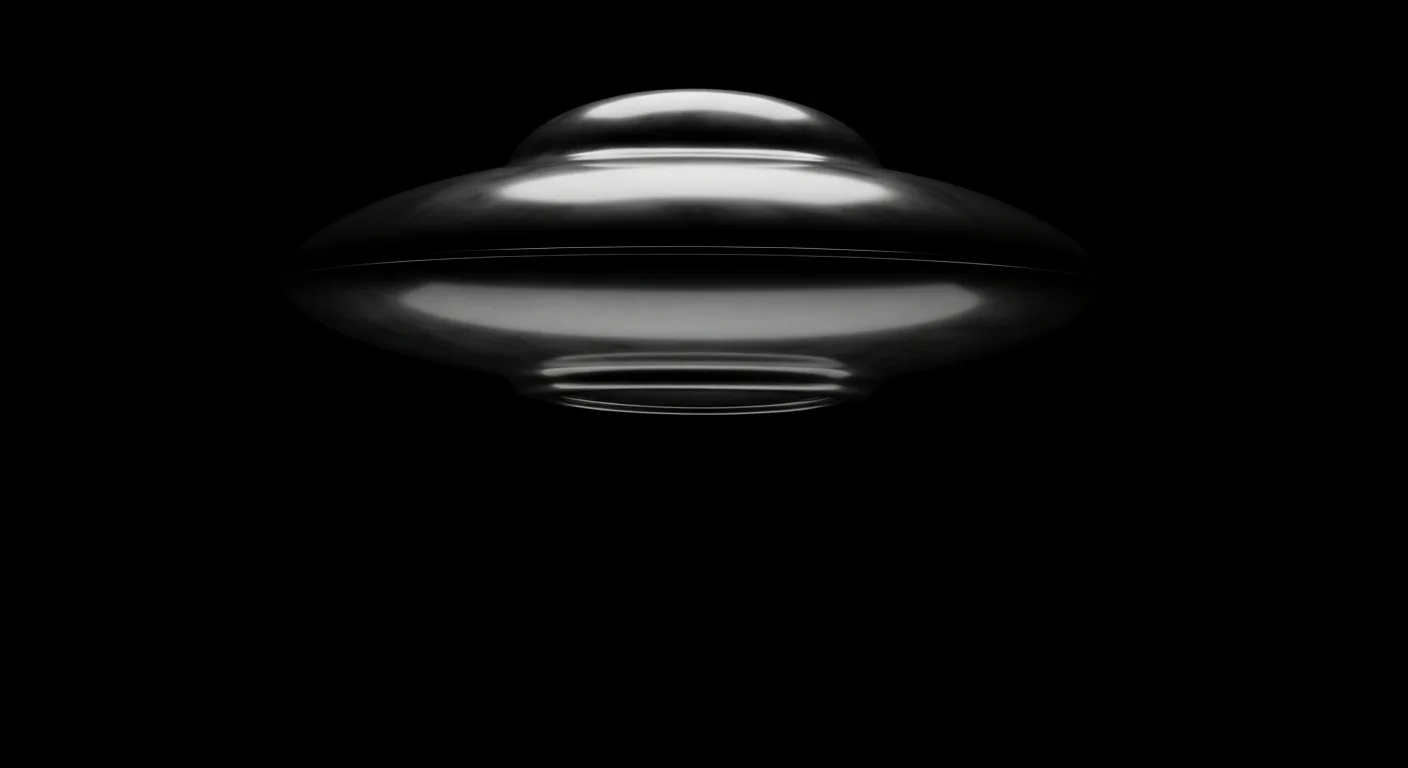
On a cold February morning in 1803, fishermen working the waters off the coast of Hitachi Province in Japan made a discovery that would become one of the most enigmatic episodes in Japanese folklore. Drifting among the waves, they encountered a vessel unlike anything they had ever seen, and inside it sat a woman whose appearance marked her as something other than merely foreign. The incident, recorded in multiple Edo-period manuscripts complete with detailed illustrations, continues to fascinate researchers who see in the “hollow ship” either an early UFO encounter or a mysterious cultural artifact that defies easy explanation.
A Strange Vessel Appears
The morning of February 22, 1803, began like any other for the fishermen of Harayadori, a coastal village in what is now Ibaraki Prefecture. They launched their boats into the cold winter sea, casting their nets as generations before them had done. But as the morning mists began to clear, one of the fishermen spotted something unusual bobbing on the waves. An object was drifting toward shore, and it was clearly no fishing vessel or cargo ship.
As the fishermen drew closer, they found themselves confronting a craft that seemed to belong to no nation they knew. The vessel was rounded, almost disc-shaped when viewed from above, with a domed top covered in what appeared to be red lacquered wood of exceptionally fine quality. The upper portion gleamed with a luster that suggested craftsmanship far beyond ordinary shipbuilding. Bands of metal encircled the vessel’s middle section, and most remarkably, the craft featured windows or ports made of what the fishermen took to be glass or crystal, allowing observers to peer inside the darkened interior.
The vessel measured approximately three meters in height and five meters in diameter, large enough to contain a small cabin but too oddly shaped for any practical maritime purpose the fishermen could imagine. When they managed to bring the strange craft to shore and examine it more closely, they understood why the accounts would call it “utsuro-bune,” or hollow ship. The interior was largely empty space, padded with strange fabrics and containing only the craft’s single occupant.
The Woman Inside
Seated calmly within this impossible vessel was a young woman whose appearance marked her immediately as someone from beyond the shores of Japan. Her skin was pale as porcelain, far lighter than any Japanese complexion. Her hair, or in some accounts her eyebrows, showed a reddish hue that the fishermen had never seen on any human being. She was dressed in garments of obvious richness and quality, though cut in no style known to Japanese fashion.
The woman regarded the fishermen without fear but also without attempting to communicate. When they spoke to her, she responded in a language none of them recognized, not Chinese, not Dutch (the only Europeans with any presence in isolationist Japan), not any tongue they had ever encountered. Despite their attempts to make themselves understood through gestures and signs, meaningful communication proved impossible.
Most intriguing was the box the woman clutched against her body, a container roughly sixty centimeters in length that she absolutely refused to let anyone touch or examine. Whenever the fishermen attempted to see what it contained, she pulled it away and held it more tightly against herself. Her attachment to this mysterious container seemed almost maternal, as though it held something of immense personal value that she would protect at any cost.
Recorded for Posterity
What elevates the utsuro-bune incident from mere folklore to a subject of serious study is its documentation in multiple period manuscripts. The account appears in at least three independent Edo-period texts: the “Toen Shosetsu” of 1825, the “Hyouryuu Kishuu” of 1835, and the “Ume no Chiri” of 1844. Each of these sources includes illustrations of the vessel that, despite variations in artistic style, show remarkable consistency in depicting the basic characteristics of the craft.
The illustrations across these sources show a disc or bell-shaped vessel with a rounded top, crystalline windows arranged around the upper portion, and metal bands encircling the middle. Some versions include what appear to be inscriptions or symbols on the interior of the vessel, characters that resemble no known writing system. The consistency of these depictions across independent sources suggests either a common tradition based on actual observation or remarkably coordinated cultural transmission of a particular set of details.
The Fate of the Visitor
The accounts differ somewhat on what ultimately happened to the woman and her vessel. In some versions, the fishermen, after failing to communicate with her and finding the situation inexplicable, simply pushed the hollow ship back out to sea, allowing it to drift away with its mysterious occupant still inside. They reasoned that she had arrived by whatever means brought her, and she should depart the same way. Involving the authorities would only bring unwanted attention to their village and possibly trouble for themselves.
Other versions suggest the fishermen dismantled part of the vessel, finding the materials and construction completely alien to their experience. These accounts mention that pieces of the craft were kept as curiosities, though no such artifacts have ever been positively identified in historical collections.
The Sealed Nation
To understand the impact this encounter would have had on Edo-period Japanese observers, one must appreciate the extreme isolation of Japan during this period. The Tokugawa shogunate had sealed the nation from virtually all foreign contact for two centuries by 1803. The only foreigners permitted in Japan were a small number of Dutch traders confined to a tiny artificial island in Nagasaki harbor. The appearance of any foreigner elsewhere in Japan would have been extraordinary; the appearance of a woman of clearly non-Asian features, arriving in a vessel of incomprehensible design, would have seemed nothing short of supernatural.
The fishermen had no framework for understanding what they encountered. This was not a shipwrecked sailor from any nation they knew of. This was not a vessel that could be explained by any maritime technology of which they had knowledge. In the absence of other explanations, supernatural or otherworldly interpretations would have seemed not merely plausible but almost necessary.
Modern Interpretations
In the late twentieth century, UFO researchers began examining the utsuro-bune accounts with fresh eyes and found striking parallels to modern close encounter reports. The disc-shaped vessel with its dome and windows resembles classic flying saucer descriptions. The being inside, human in form but clearly different from ordinary humans, matches the pattern of humanoid occupant reports. The communication barrier, the mysterious container, even the apparent technology far beyond contemporary capabilities, all fit patterns familiar from modern UFO literature.
Some researchers have proposed that the utsuro-bune represents an early close encounter of the third kind, interpreted through the cultural framework available to nineteenth-century Japanese observers. The woman may have been not a foreigner at all, but a being from somewhere far stranger than any earthly nation. Her vessel may have been not a ship but a craft capable of journeys the fishermen could not imagine.
Alternative Explanations
Historians and folklorists have offered more prosaic interpretations of the utsuro-bune incident. Some suggest a Russian woman may have been the vessel’s occupant, perhaps a survivor from a whaling ship or Arctic expedition whose unusual lifeboat design was unfamiliar to Japanese eyes. Russia maintained a presence in the northern Pacific, and Russian women might indeed appear strikingly pale and different to Japanese observers. The language barrier and exotic appearance could be explained by nothing more mysterious than cultural unfamiliarity.
Others have proposed that the utsuro-bune story may be entirely literary invention, drawing on existing folklore motifs about mysterious visitors from the sea. Japan possesses a rich tradition of stories about supernatural beings arriving by water, and the utsuro-bune might represent a creative elaboration on these traditional themes rather than a report of actual events.
The “hollow ship” terminology itself appears in earlier Japanese folklore, suggesting that such stories formed part of an existing cultural tradition rather than representing unique historical incidents. The specific date and location given in the accounts may have been added later to lend verisimilitude to a traditional tale.
The Enduring Mystery of the Box
One element that persistently captures attention across all versions of the account is the woman’s box, the container she guarded with such fierce protectiveness. What could it have contained that made her willing to face unknown people in an unknown land rather than allow anyone to examine it? Speculation ranges from personal keepsakes to technological devices to something for which we have no category at all.
The box adds a tantalizing element of mystery to an already enigmatic account. It suggests that whatever the woman’s nature and origin, she carried something of profound importance, something she valued above her own safety or comfort. The fishermen’s decision not to force the issue, to respect her obvious attachment to the container, speaks to a fundamental decency that transcends the strangeness of the encounter.
A Puzzle Without Solution
The utsuro-bune incident remains one of the most intriguing historical accounts that might be interpreted as evidence for UFO phenomena. The multiple manuscript sources, the consistent illustrations, and the specific details resist easy dismissal. Yet the lack of physical evidence, the passage of more than two centuries, and the possibility of literary invention make definitive conclusions impossible.
Whether the fishermen of Hitachi Province encountered a shipwrecked foreigner in an unusual lifeboat, a being from another world in her damaged craft, or nothing at all beyond the imaginings of later storytellers, we cannot say with certainty. What we can say is that the hollow ship of 1803 represents a fascinating intersection of folklore, history, and the persistent human experience of encountering the unexplained.
The woman in the vessel, whoever or whatever she was, has drifted back into the unknown, her strange ship carrying her and her secrets beyond the reach of investigation. She left behind only questions, recorded in ink and paper by witnesses who could not explain what they saw any more than we can today.
Sources
- National Diet Library, Japan — Japanese historical documents